Nature Finds a Way
All photos courtesy Betsy Cross
Betsy Cross
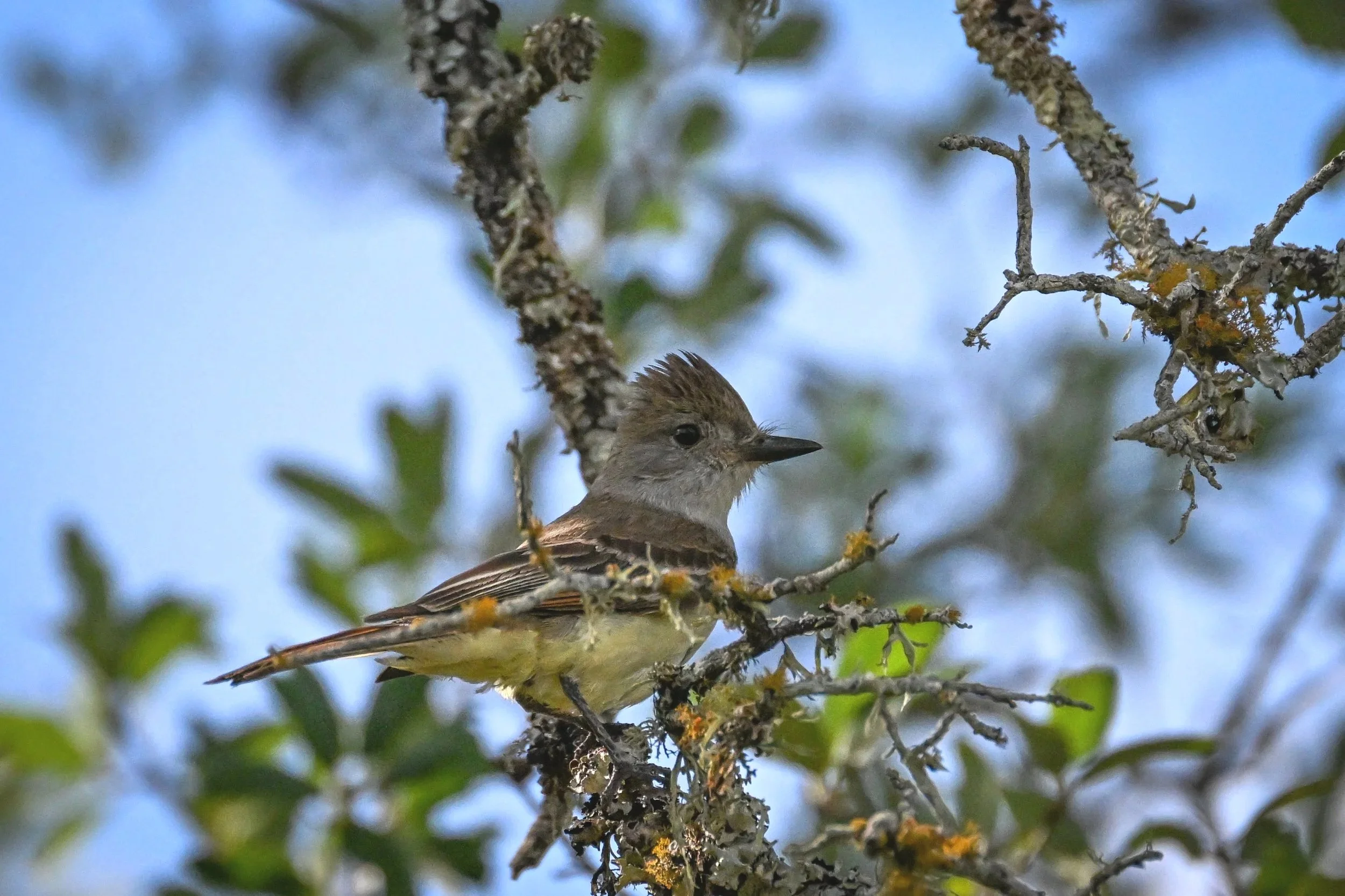
Ash-throated Flycatchers are secondary cavity nesters, meaning they use nest holes created by woodpeckers as well as naturally occurring cavities in standing dead trees. They also readily nest in artificial cavities, including nest boxes, fence posts, metal posts, mailboxes, guy-wire supports, and other structures. The species is considered of low conservation concern, as populations increased by approximately 0.7 percent per year between 1966 and 2019 (reference Cornell Lab’s AllAboutBirds).
Jacob’s Well Natural Area
Ash-throated Flycatchers are common in Hays County during the spring and summer seasons. Our nest boxes offer them an alternative habitat for raising their young. At Jacob’s Well, we maintain 11 nest boxes across the property. During the past eight years, I've documented Ash-throated Flycatchers nesting both in these boxes and in natural woodpecker cavities. This year, three of the 11 boxes were occupied by these flycatchers, more than in any previous nesting season.
While Cornell Lab's All About Birds notes that "the female presumably builds the nest," I've observed both the male and female flycatchers working together while building their nest. The photos below at Box 4 are from May 2019.
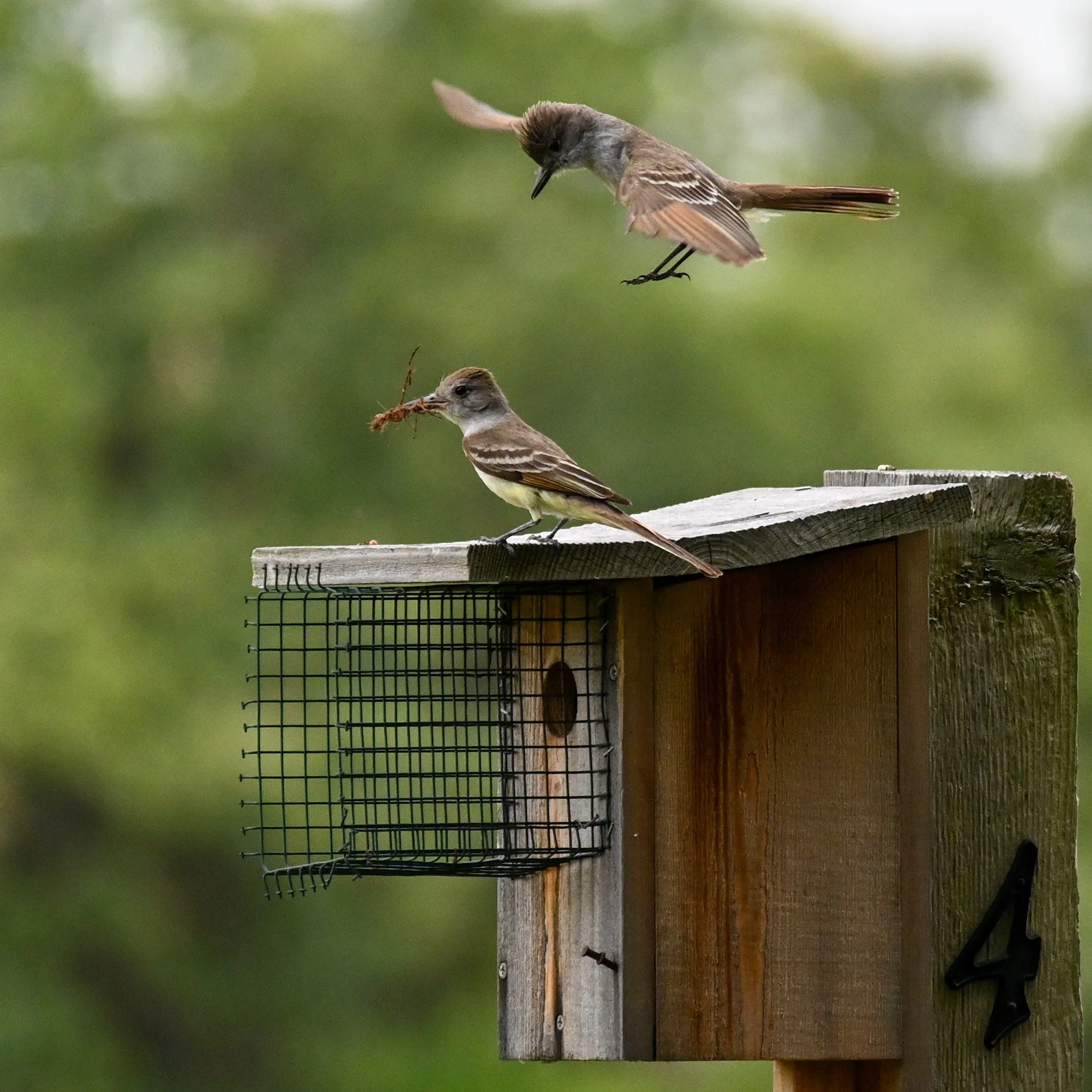
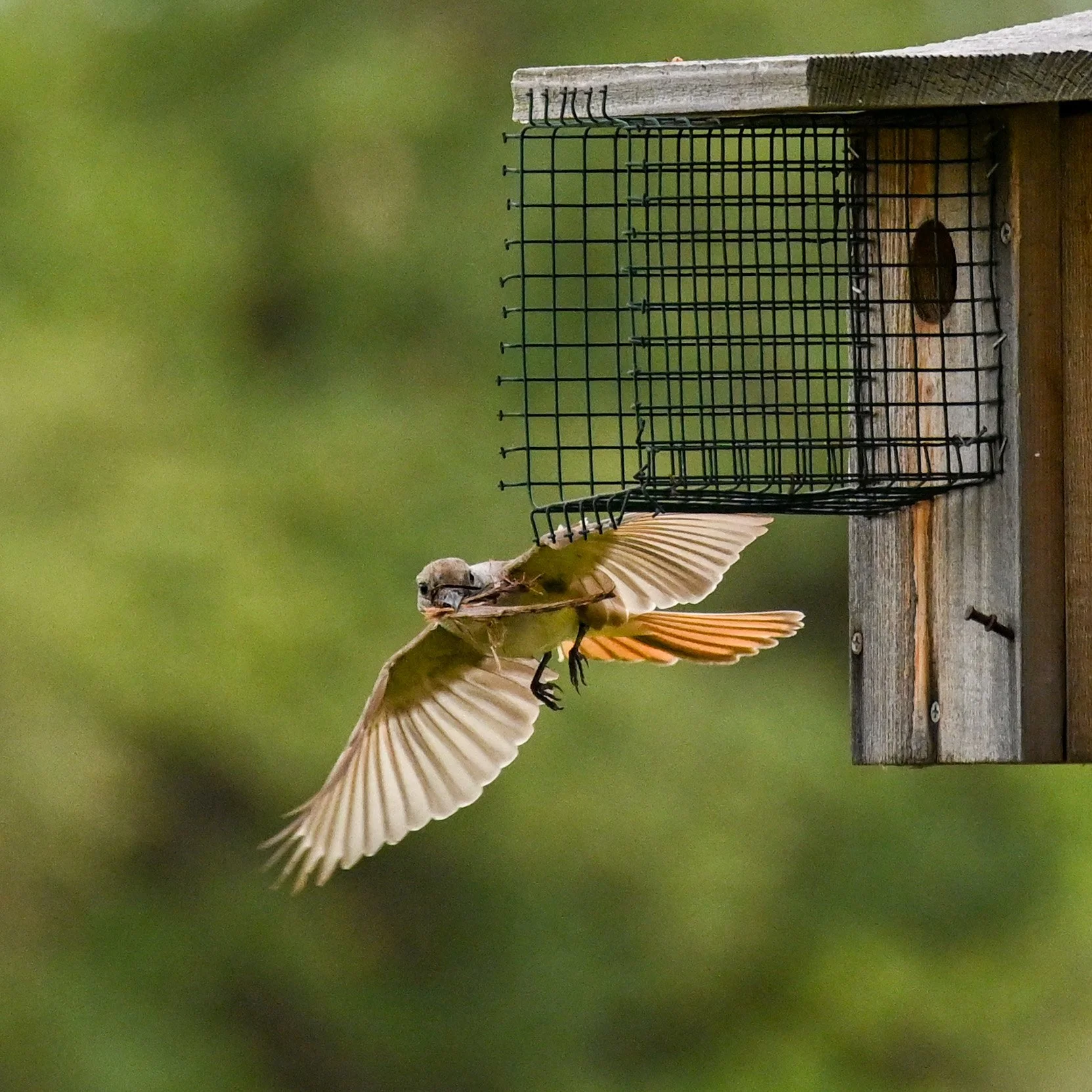
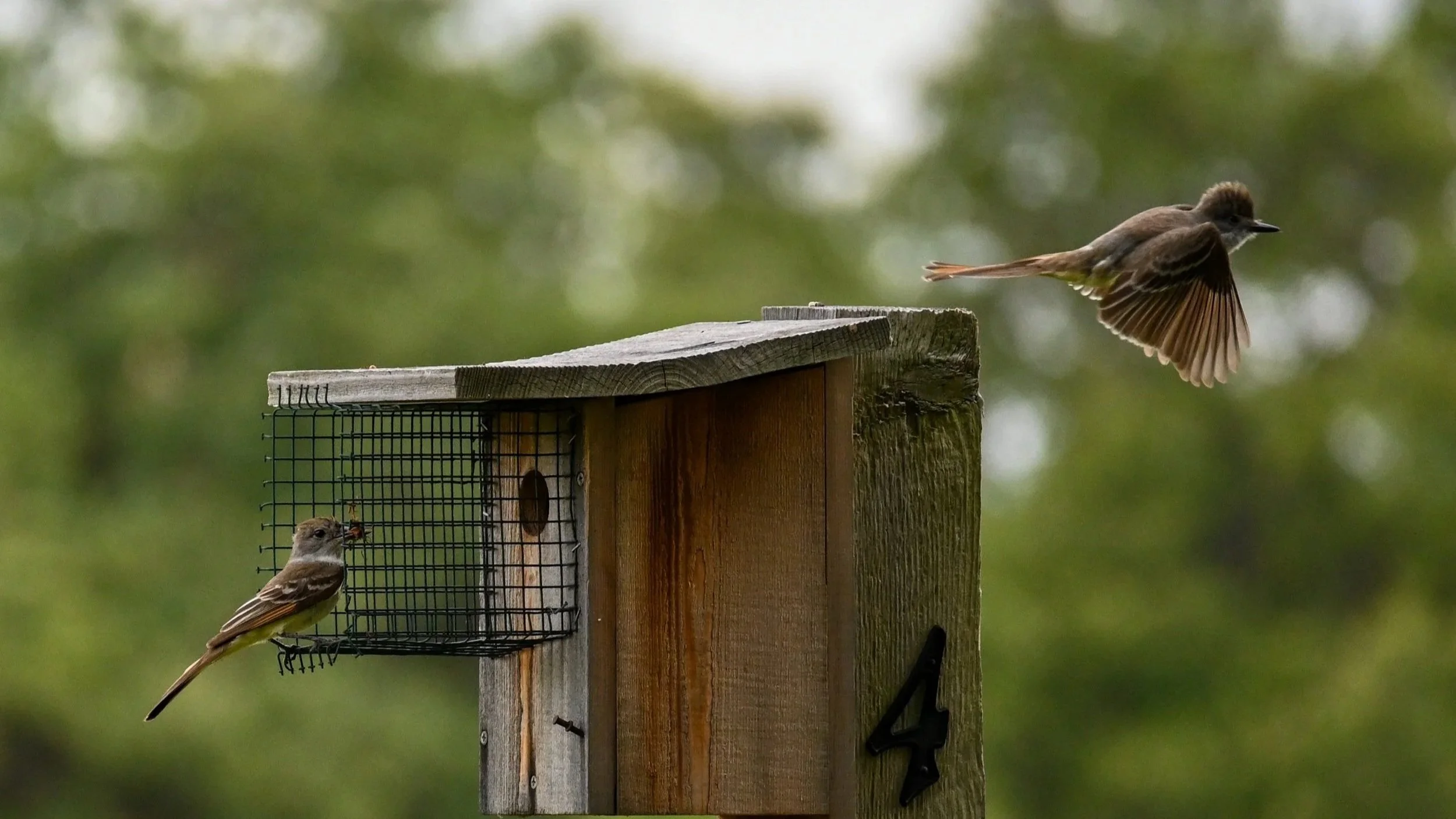
This season, Box 4 hosted two broods of flycatchers.
The first 2026 Ash-throated Flycatcher brood contained three eggs. Two young flycatchers fledged during the week of May 24.
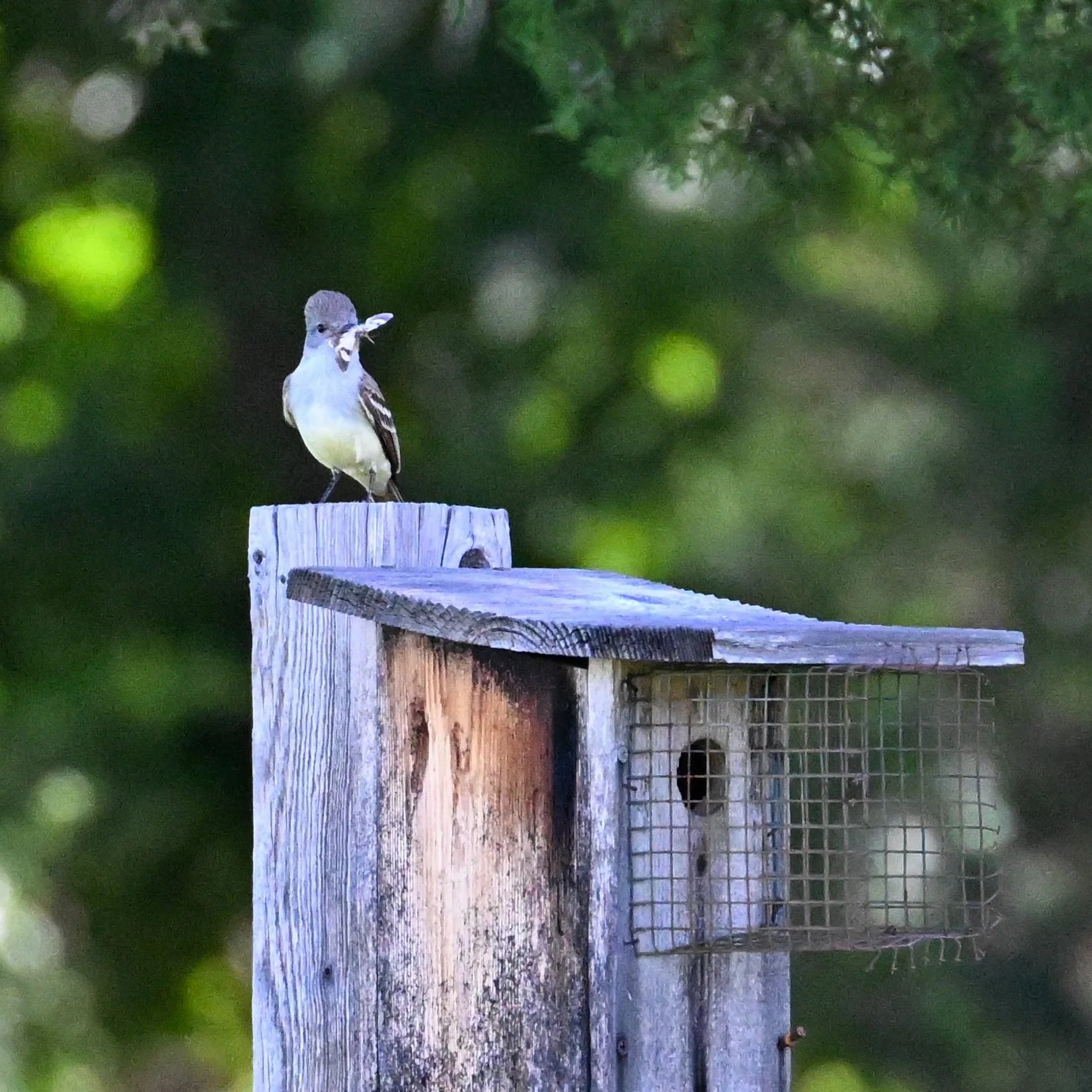
One of the parents arrives with food for the nestlings on May 24.
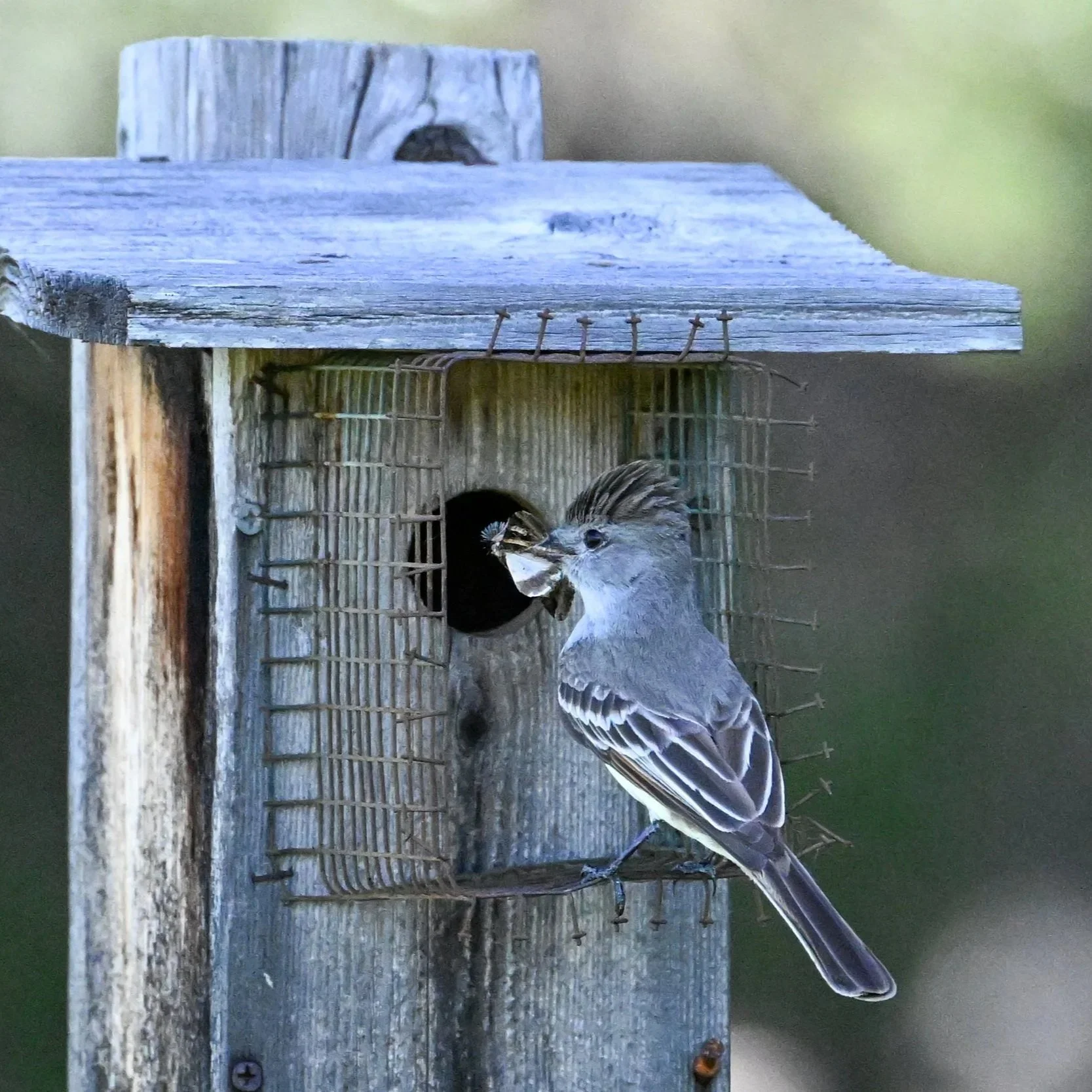
She enters the box with the food.
When I checked the box on May 31, I removed the old nest along with one unhatched egg, and then I cleaned the box.
A week later, on June 6, a new nest had been started, and by June 14, it contained four new Ash-throated Flycatcher eggs nestled in a heavily fur-lined cup.
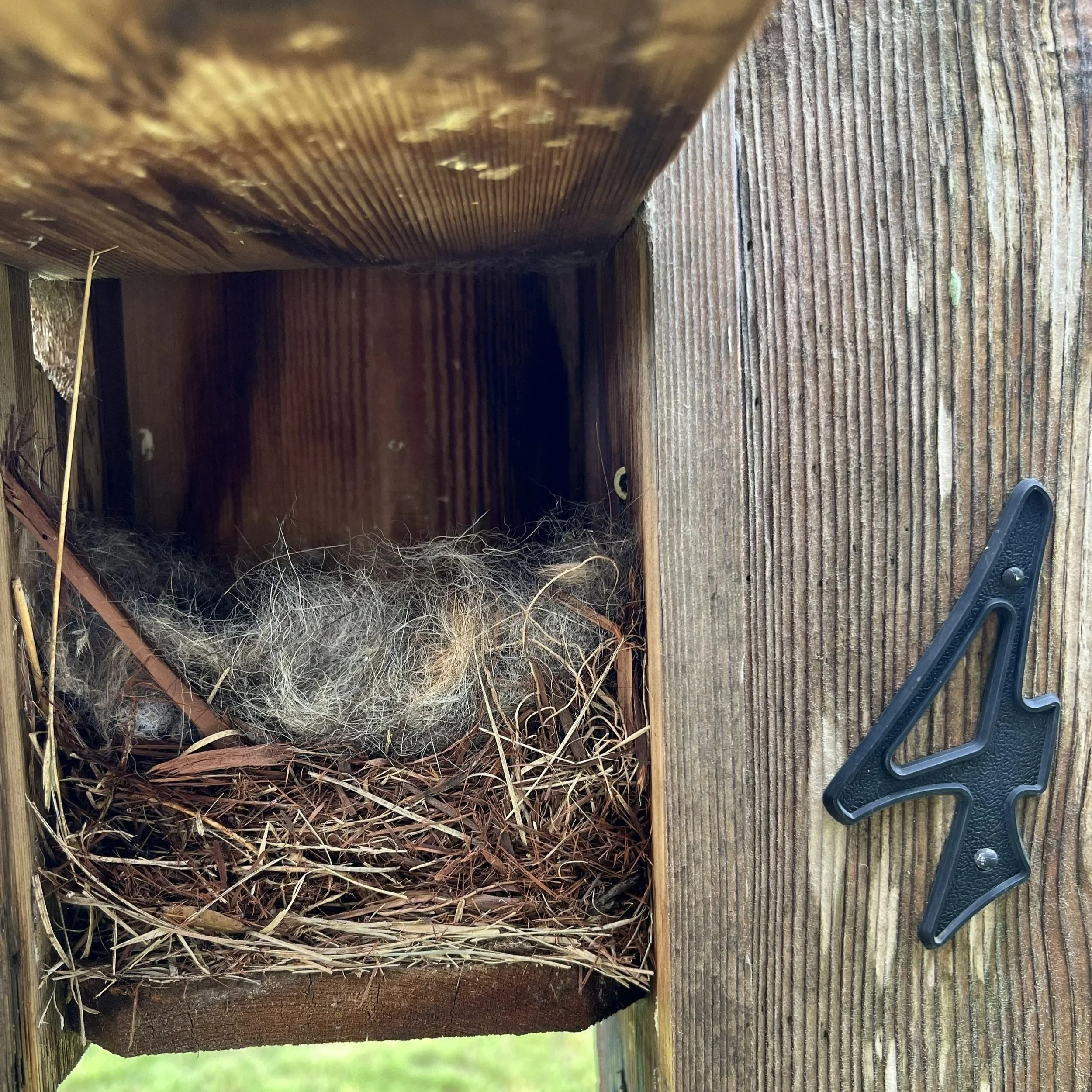
June 14
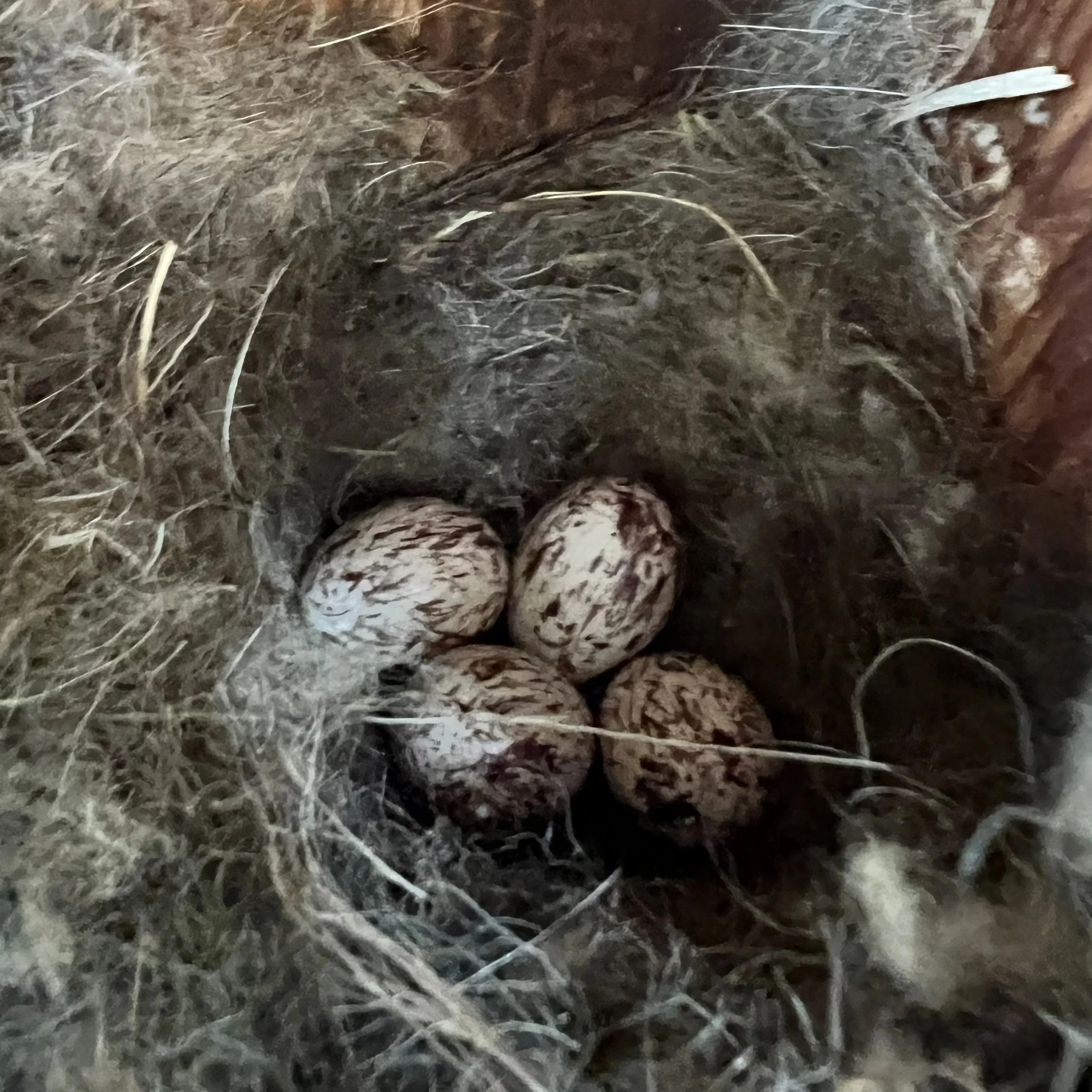
Four eggs
Everything appeared normal when I checked the box on June 20. But when I returned on June 27, the scene was dramatically different.
Our Jacob’s Well nest boxes are protected by two predator guards: a stovepipe baffle around the post below the box and a Noel guard around the entrance hole. Although these greatly reduce predation, determined predators occasionally breach one or both defenses.
Whenever I see nest material pulled through the entrance hole of box and caught in the Noel guard, I know predation has likely occurred. Most often, the eggs or nestlings are already gone.
That was exactly what I saw as I approached Box 4 on June 27.
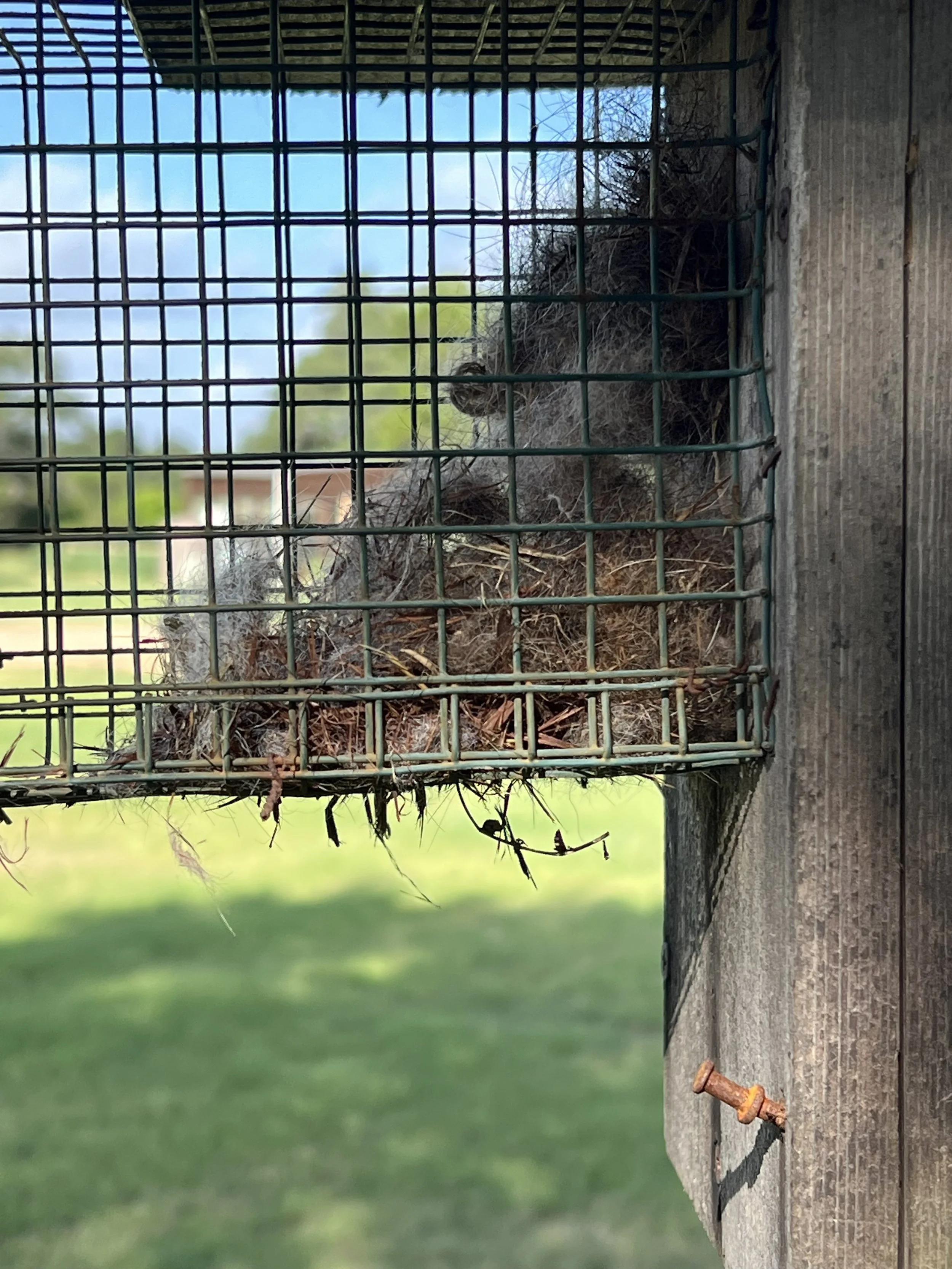
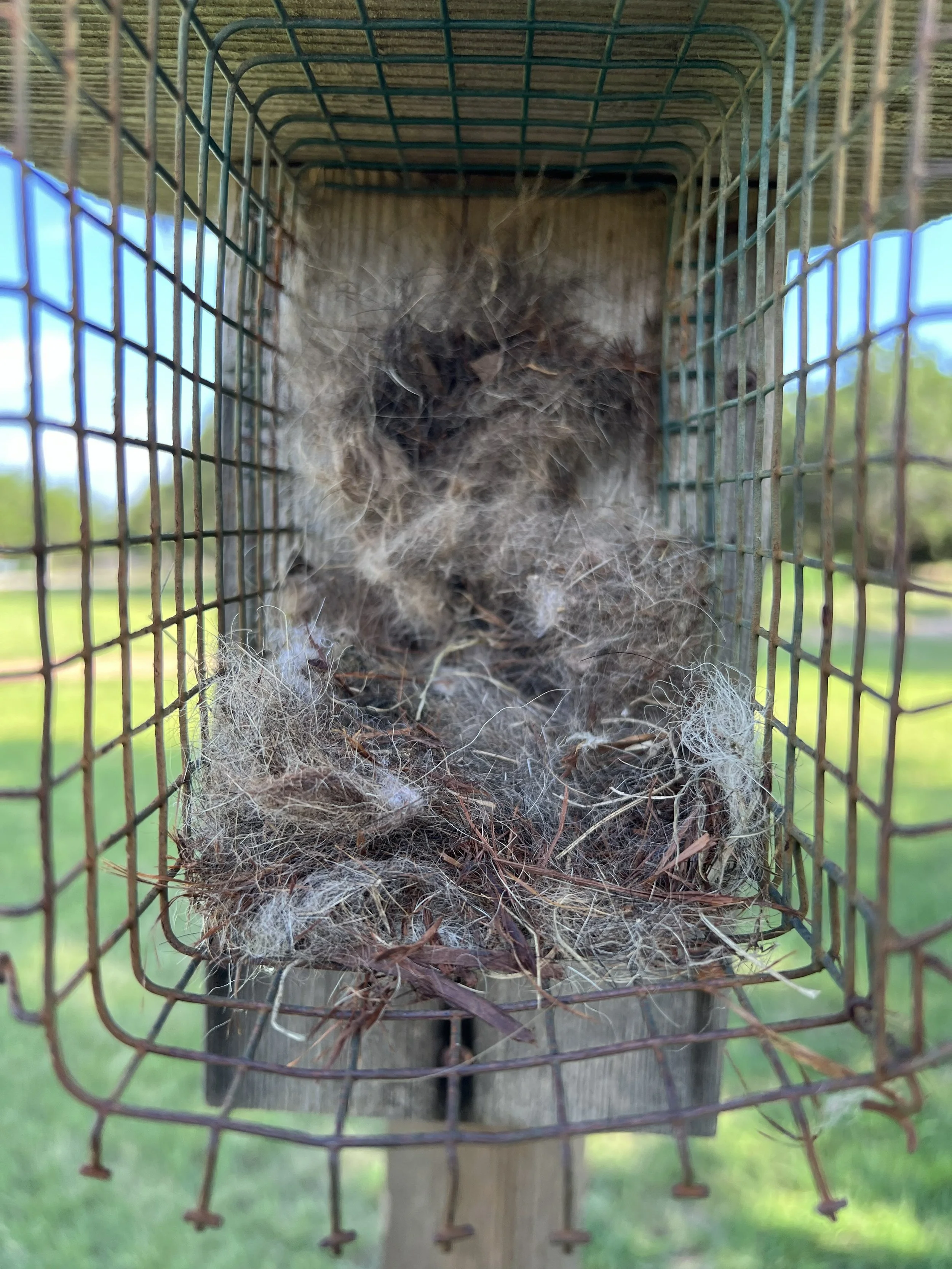
The Jacob's Well staff were preparing for their Saturday morning guided tour near the Nature Center. I called them over to see the situation before opening the box.
What we found inside stunned us.
Three hatchlings were still alive. Two were only partially out of their eggshells.
The entrance hole was completely plugged by fur and nesting material that had been pulled through the opening. It was impossible to know when the attack had occurred or whether the chicks had begun hatching before or afterward. One egg still appeared intact.
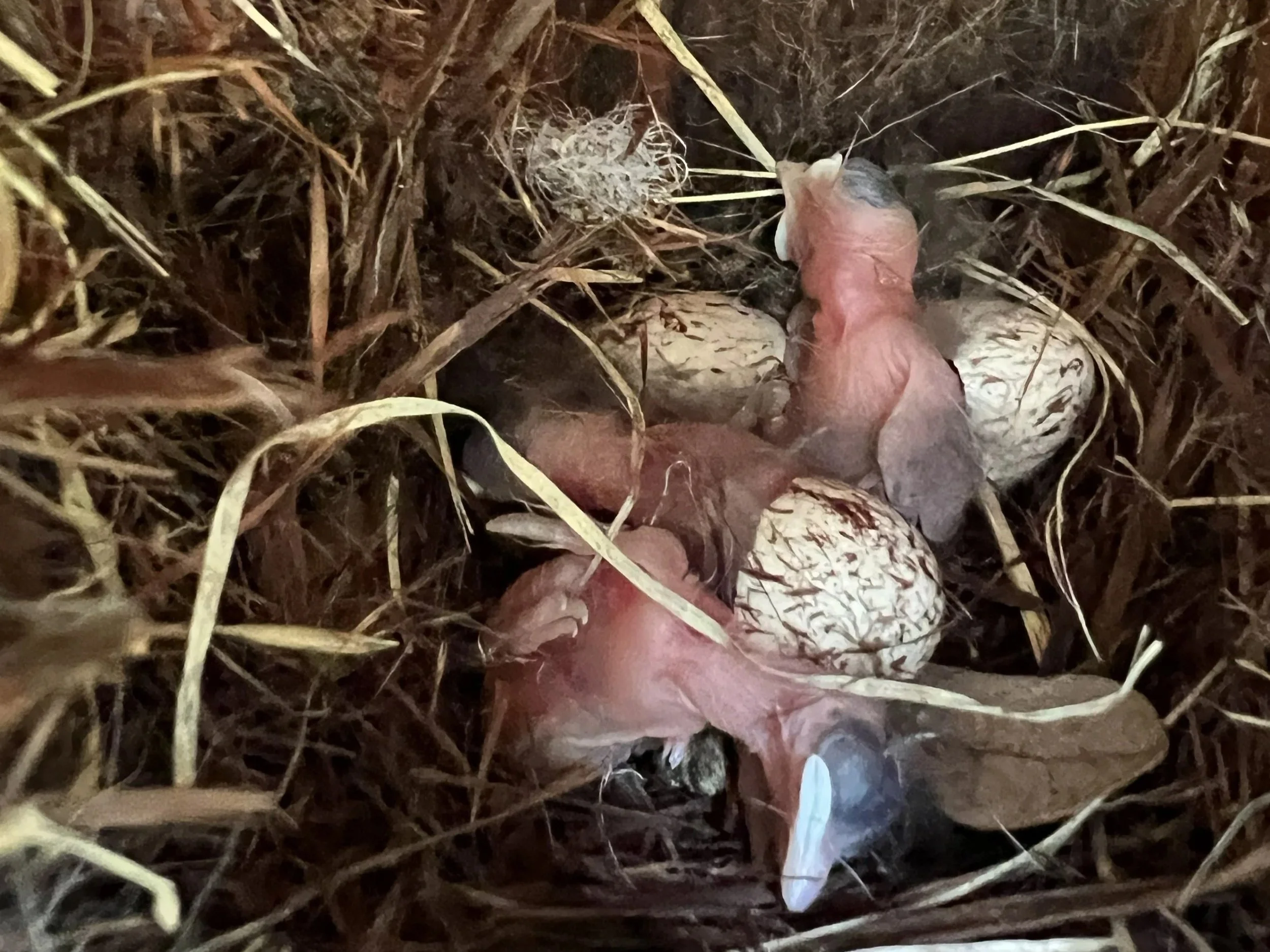
After removing all the nesting material from the Noel guard and clearing the entrance hole, I opened the box.
The predator had completely blocked access to the box by pulling nearly all of the nest material into the entrance hole. Ironically, this may have saved the hatchlings from predation. The chicks were now protected—but so well protected that the parents couldn't reach them either.
As I stood there weighing the options, it occurred to me that disturbing the newborn hatchlings by trying to replace their nest material might do more harm than good. Instead, I carefully removed the mass of fur and stuffing that blocked the entrance and left the fragile hatchlings resting on the thinnest layer of nesting material left inside the box.
We had no idea when the predation had occurred, whether the parents were still tending the nest, or whether they would return at all. I honestly believed the chicks had perhaps a 5 percent chance of surviving.
While the staff and I discussed what to do next, I heard an adult Ash-throated Flycatcher calling—a soft, short chirp…chirp…chirp. It was enough to grab my attention, and I gently closed the box.
We decided to trust Mother Nature and leave the area.
July 4
When I returned to Jacob’s Well on Saturday, July 4, just a week after the predation and emergence of the three hatchlings, I was prepared for the worst.
From my car I could see Box 4. As I tied my shoes, I watched for any sign of activity. Nothing.
I walked to the box and slowly opened the door. To my surprise, inside were several healthy, feathered nestlings.
It seemed almost magical.
I snapped a quick cell phone shot, carefully closed the box, and simply stood there smiling. They had survived. Better yet, they appeared healthy and growing quickly.
Later, the park staff confirmed they had been seeing the parent birds regularly visiting the box to deliver food. It was a day to celebrate!
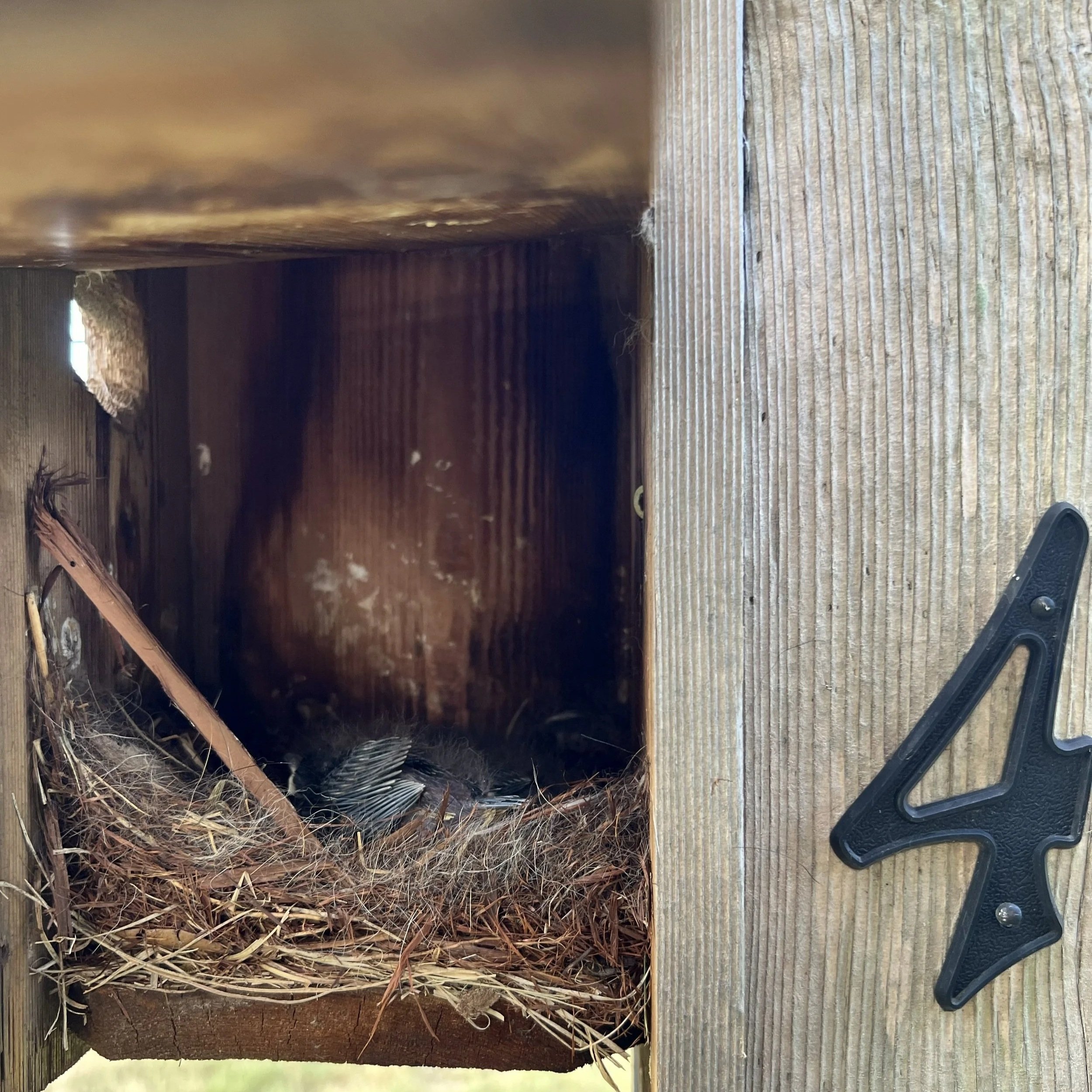
July 4, 8:11 a.m. At first glance, I saw a feathered wing. Then…
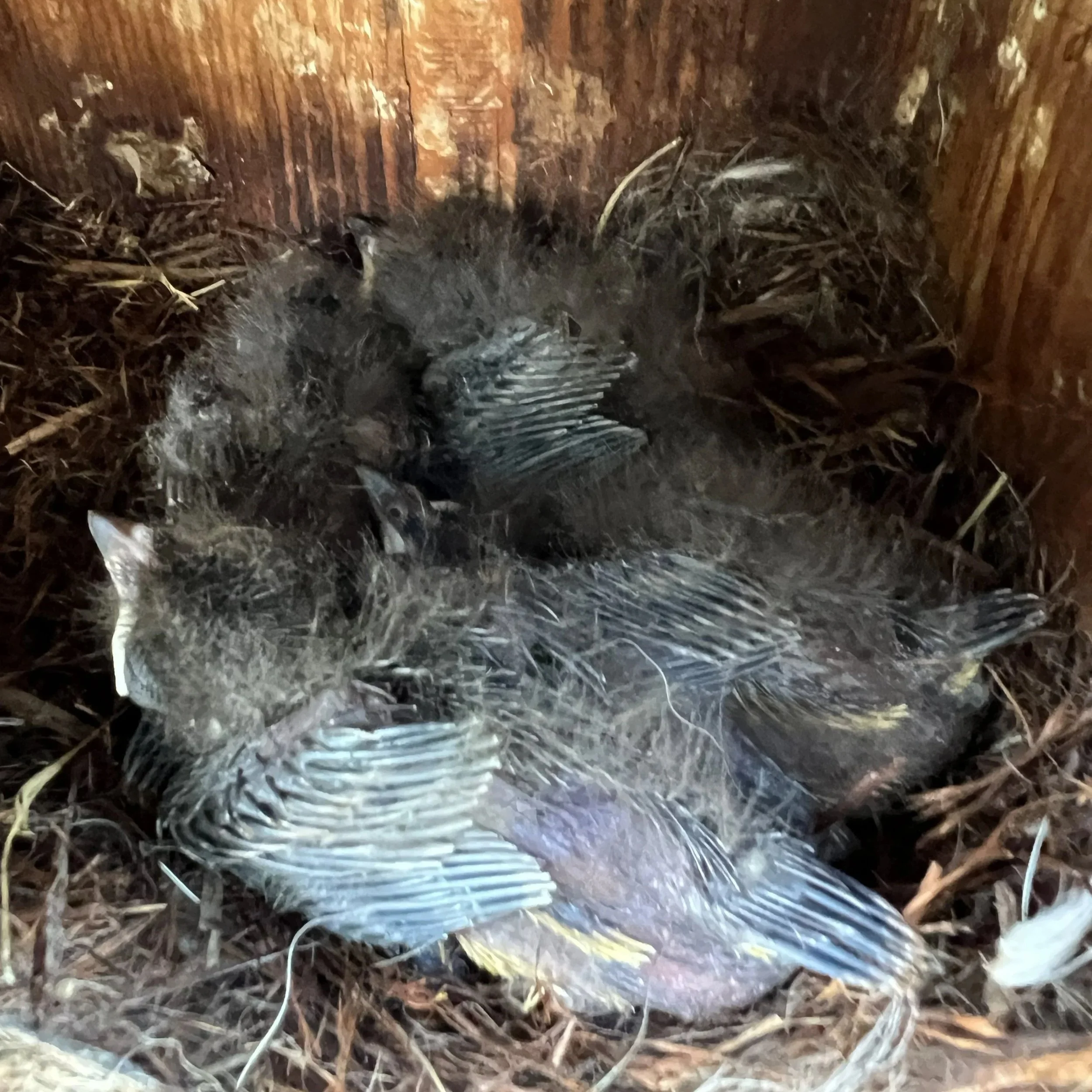
…three, or maybe four well-fed, week-old nestlings huddled together on a thin nest pad.
July 10
Six days later, I arrived at Jacob’s Well at 4:30 in the afternoon. As I approached Box 4, I heard a soft chirping inside. I carefully cracked the door open, just an inch, to peek inside. Instantly, a bird burst from the box and flew right past me.
Were the nestlings already fledging? I looked up the typical nestling period: 13-17 days. This was day 13. Had I accidentally flushed one of the fledglings? My heart sank. I followed the bird’s flight and photographed a bird near the area where it had landed. Perhaps it was one of the parents. But there was no way to know whether it was the same bird that had flown from the box.
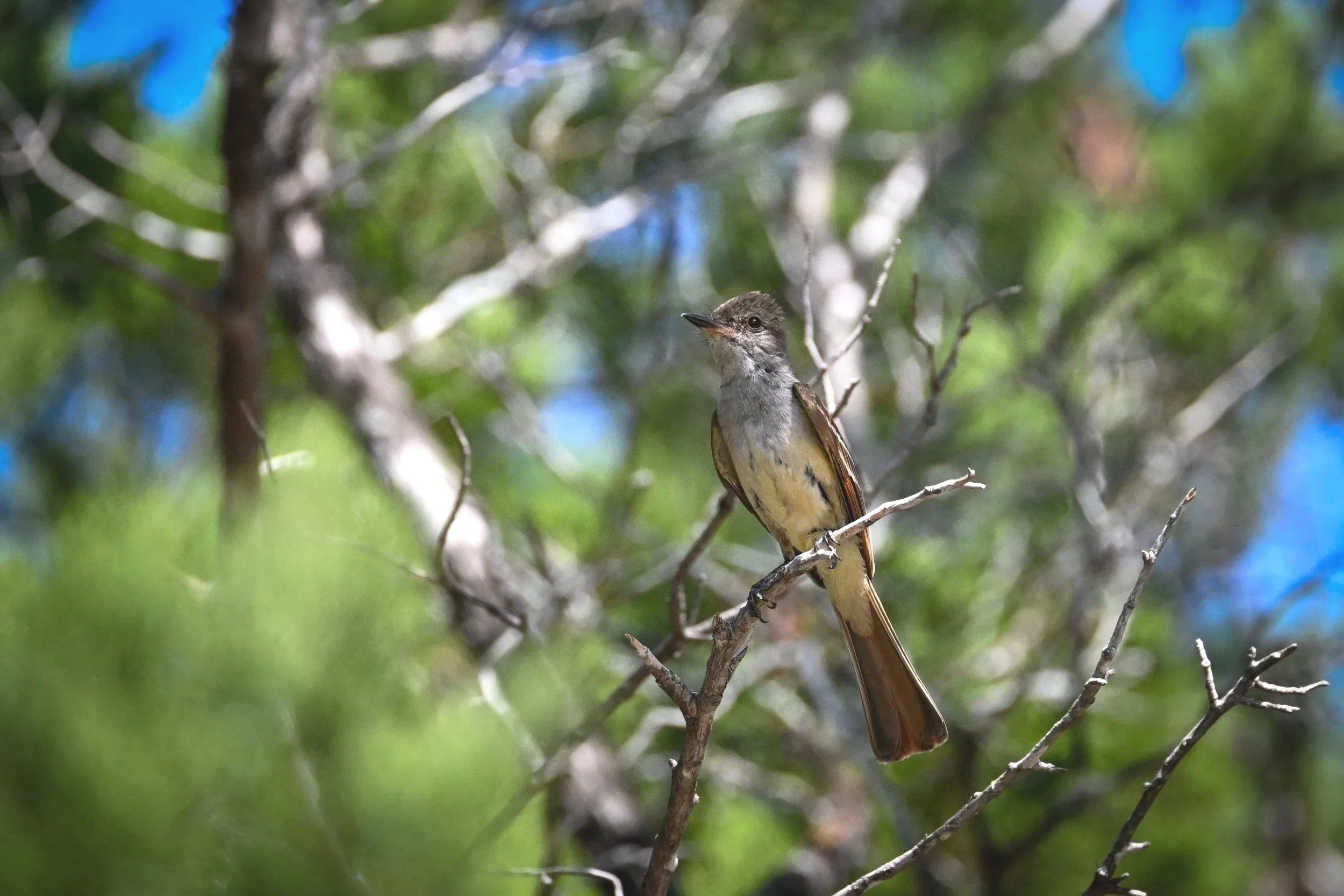
After checking the remaining 10 nest boxes on the property, I returned to Box 4. I watched as an adult flycatcher arrived carrying food. The possibility that I had interrupted the fledging process still weighed heavily on me, so I remained well away from the box, careful not to disturb the birds further.
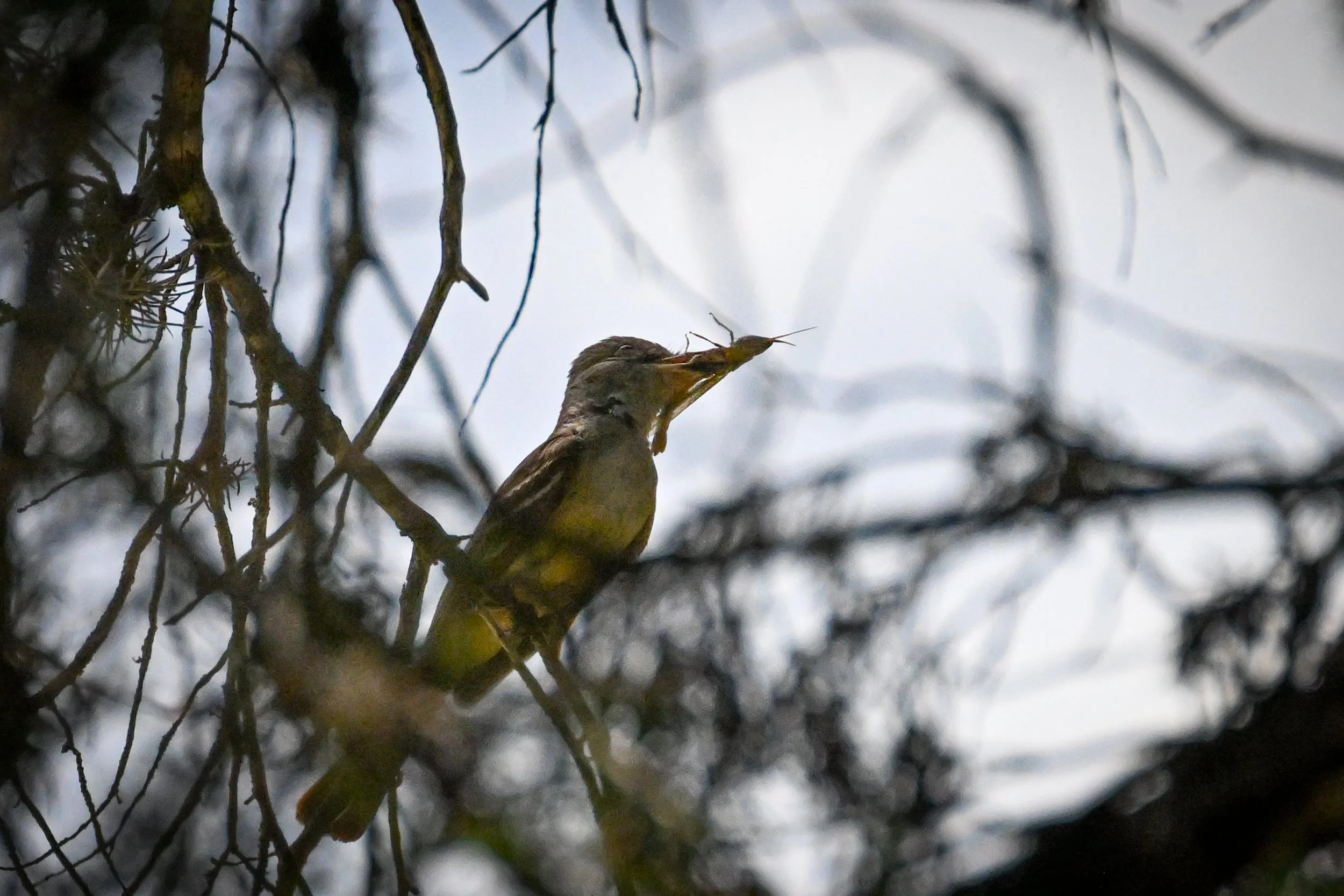
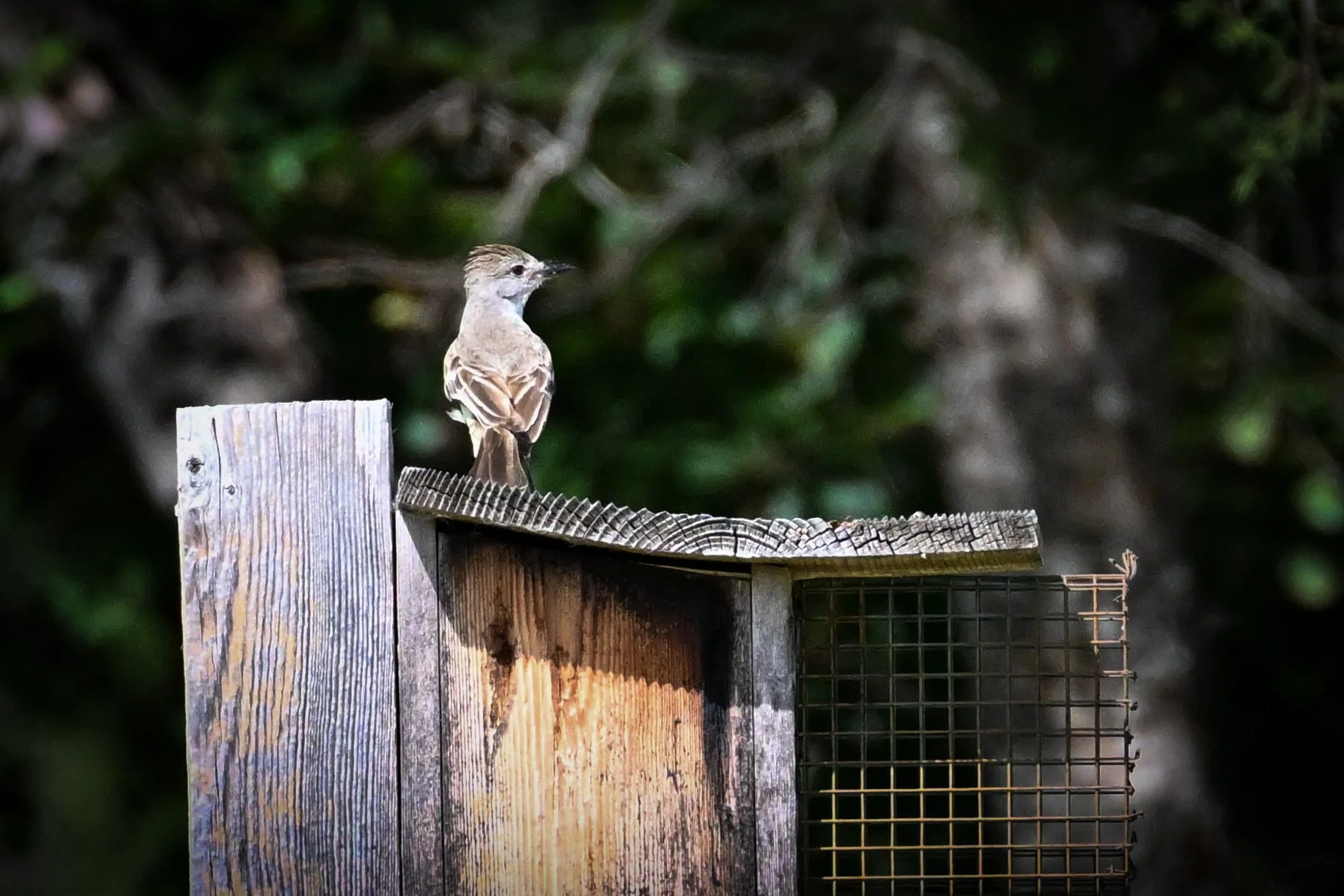
I watched from a distance for a few more minutes before deciding, once again, to trust Mother Nature. I packed my gear, climbed into my car, and headed home.
July 12
Without a second thought, I left early on Sunday morning to go check on the flycatchers. It was a wonderful surprise when I parked the car and saw one of the parents atop the box with food for the fledglings.
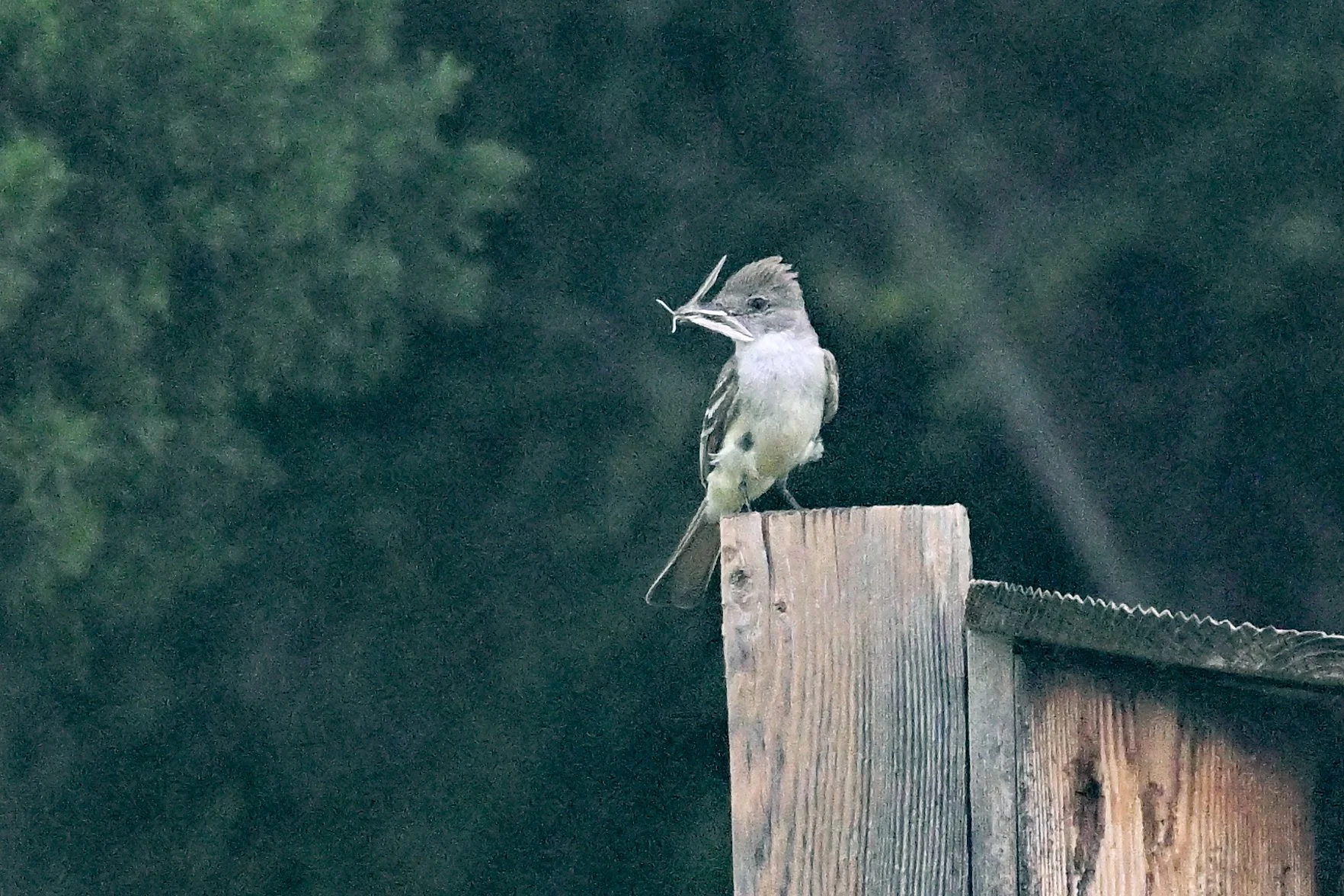
I did not approach the box at all but watched the parent take the food into the box from a distance. Watching the adult carry food into the box was an enormous relief. It suggested that whatever had happened two days earlier, the nesting cycle was continuing normally. I only stayed long enough to document this behavior.
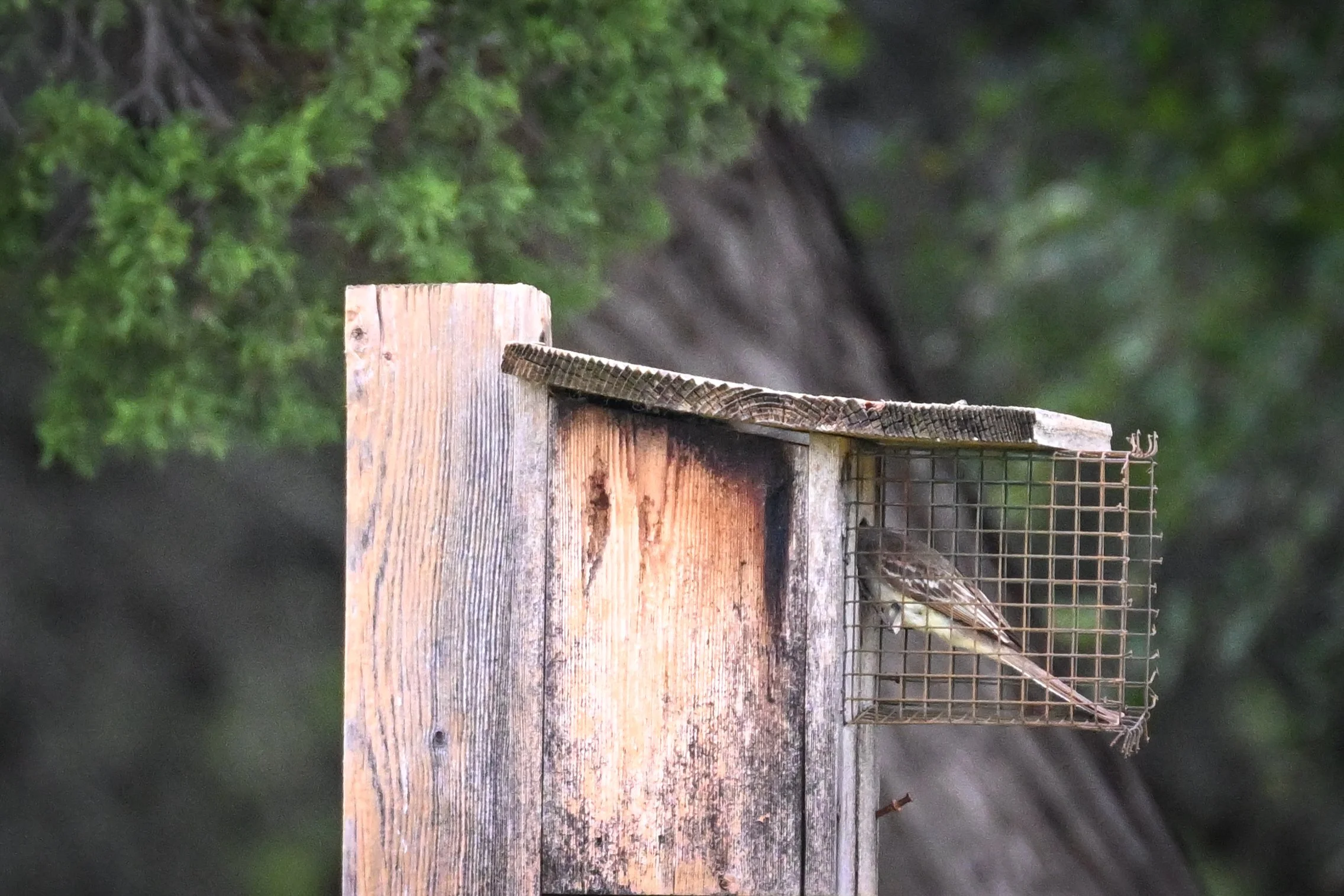
July 18
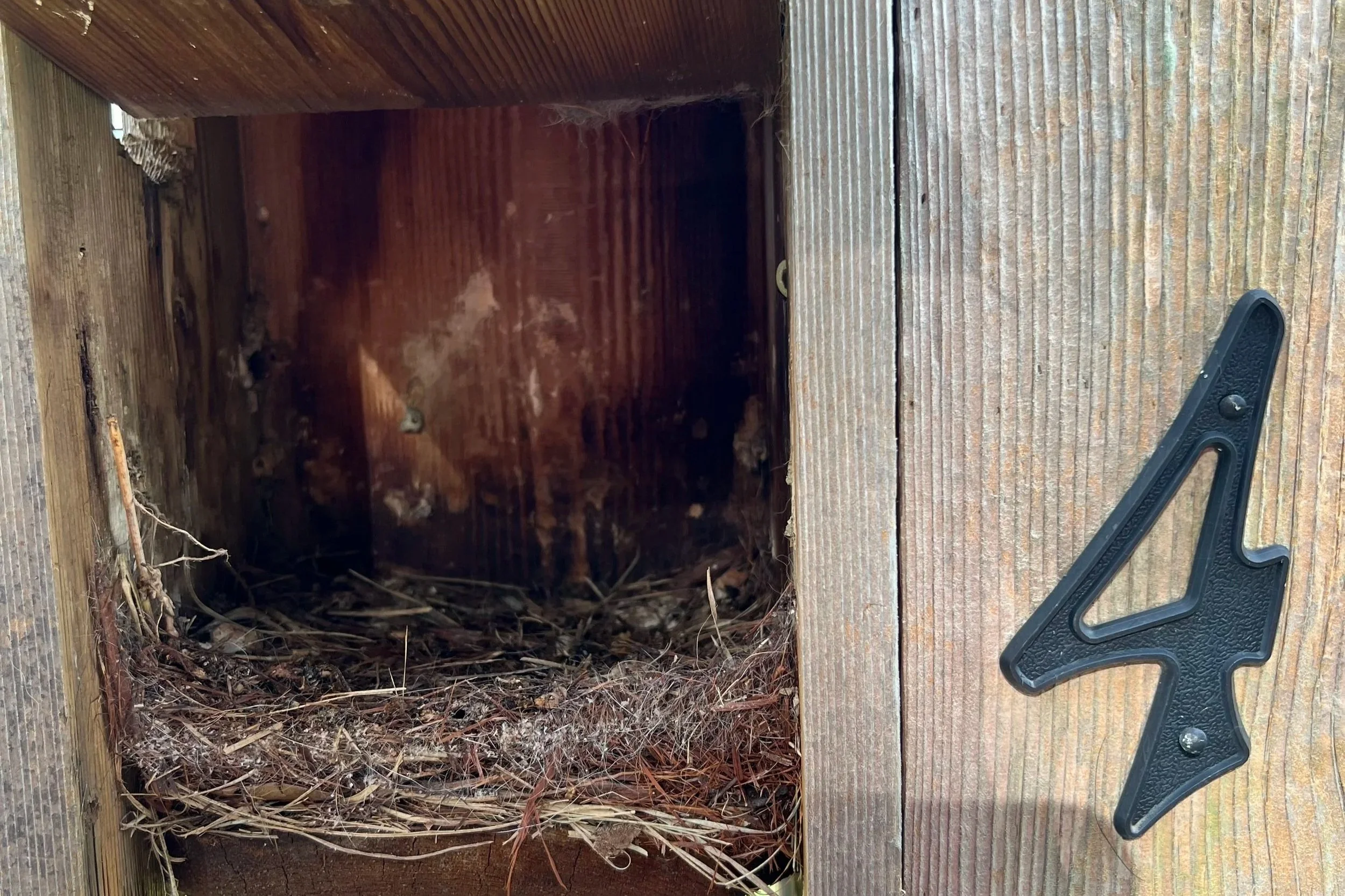
When I arrived early Saturday morning, July 18, Katherine Sturdivant, Parks Education Director, met me at the car. It had been 21 days since the hatchlings emerged from their eggs. She said the staff had not seen the flycatcher parents at the box during the week. This was not a surprise. We walked together to Box 4, where I opened it and confirmed all the young flycatchers were gone. The flattened nest was well worn and covered in hollowed-out insect bodies. Everything looked exactly as it should after four flycatchers had successfully fledged.
Katherine and I continued to walk together to the next box. She told me she had made a presentation earlier in the week at the Hays County Commissioner's Court on behalf of the Hays County Parks. She told the court a personal story of how she had once been afraid of birds and that during her tenure at Jacob’s Well she had developed a newfound enthusiasm and love for birds. She told the story of our Ash-throated Flycatchers and their survival.
As I listened, it struck me that this little family of flycatchers had touched more lives than just their own. Their remarkable story had become part of Katherine's story—a reminder that spending time in nature has a way of changing us.
Katherine shared a link to the Commissioner’s Court presentation. Her love for the work she does came through so clearly, and I could tell she touched the hearts of her audience. When we get to know the “who” of the creatures that we support, the authenticity of our work is recognized.