From One Week to the Nest
Part 1 - Stowaways Behind the Grille
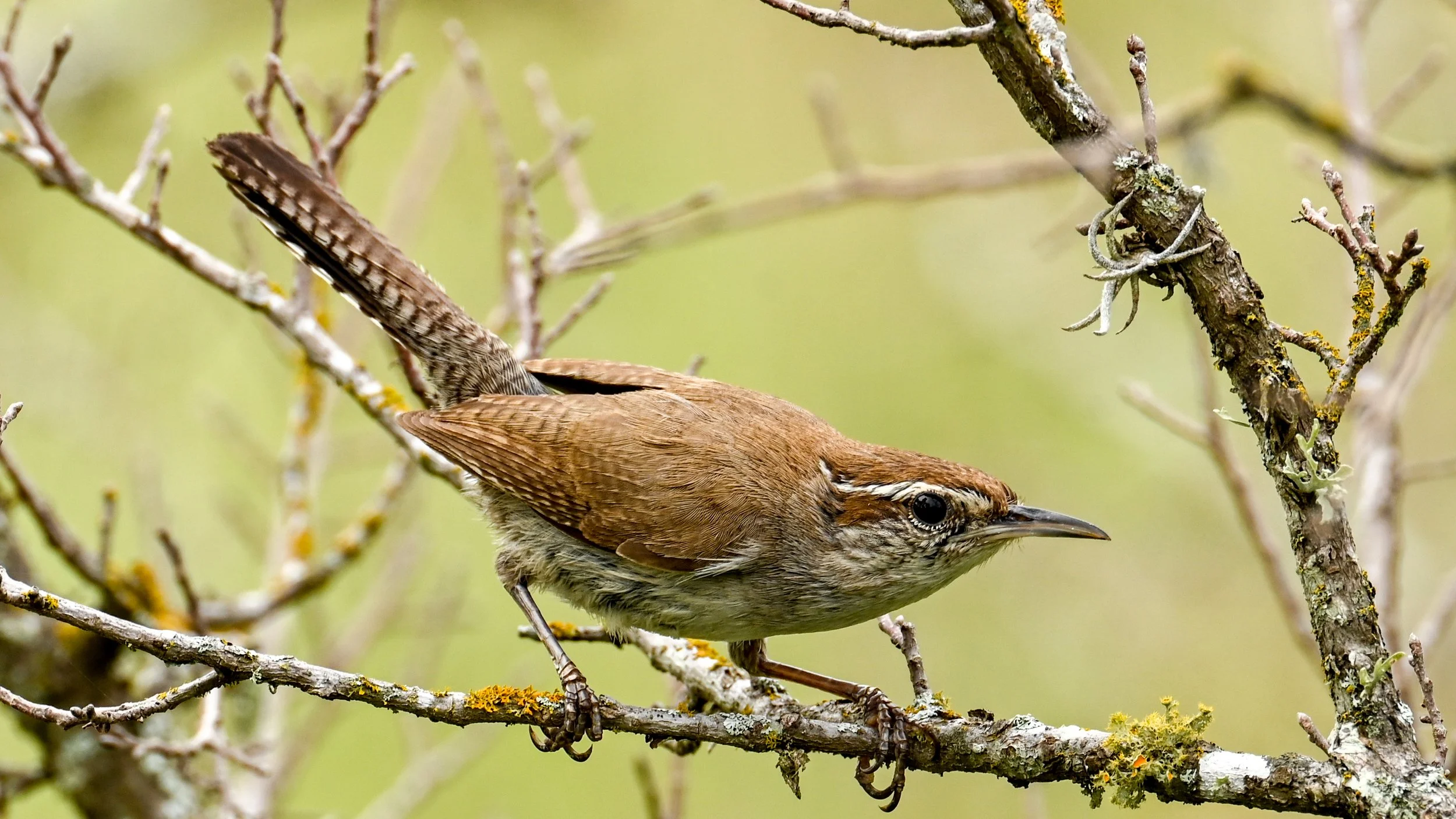
Photo courtesy Betsy Cross
Carolyn Langlinais
Bewick's Wrens readily adapt to life around people, often nesting in birdhouses, sheds, mailboxes, and other unexpected places. Occasionally, however, they choose a location that leaves their human neighbors scratching their heads.
My Bewick's wrens had a very confused real estate agent. The list of man-made structures they like to use can also include abandoned vehicles. Bobby's car never moved—an old 2004 Honda Accord. You would imagine that's where they'd build their nest. You'd be sadly mistaken.
Story of the Traveling Nursery
Though we saw the wrens flying into the grille of my Hyundai Tucson, we couldn't figure out where they were going once inside the engine compartment. We thought they had somehow gained access, and we tried many times to find the nest. We even considered removing the front side panel over the passenger-side tire to look more closely. Googling this revealed it would take several hours, and knowing our limitations, we abandoned that plan.
We don't typically spend a lot of time out at the carport, so although we knew nest building was going on, we assumed it must be a decoy nest. The oddest thing was how often a wren would be waiting for us to bring the car back. This was our main vehicle. Grocery store runs, doctor's appointments, Costco trips...and there'd be a wren waiting for us, sitting on the wheelbarrow handle. I always imagined her tapping her little foot and fretting with impatience. She (or he) would immediately fly into the grille when we stepped away from the car.
While all this nest building was going on, Bobby and I were busy every Monday and Friday deploying or retrieving bat monitors. Two monitors were set out every Monday, with trips taking us to the far corners of Hays County. Some locations took about an hour just to reach. That was only the drive to the site, not the time it took to find a suitable place to set up or the need to install a T-post at some locations. We'd often plan a lunch date after deployment before heading home. I remember one trip to San Marcos that included the defunct Quail Creek Country Club, then Five Mile Dam Park, which required quite a bit of hiking and installing a post, with a stop at Chuy's for lunch. We came home on I-35 doing 75 miles an hour. Just the week before, I'd taken the car through the car wash.
Yep, there were baby birds, but I didn't find them until a few days after our long jaunt.
Video on June 2, courtesy Carolyn Langlinais
I used my phone's video camera to peek behind the grille and finally spotted the babies. There were four nestled in the space behind the front bumper. Thankfully, they looked none the worse for wear, considering all the places they'd been, including sitting in the sun while we searched for a place to deploy the bat monitor at Five Mile Dam, the ensuing Chuy's lunch, the drive home on I-35, and, not to mention, going through that car wash.
I had expected I'd be able to hear the babies once they hatched because lots of baby birds carry on when their parents show up to feed them. These babies were completely silent. Not a peep! We were very surprised to find them and even more surprised at how well they were doing. Of course, from that moment on, the car was "abandoned."
Bewick's Wrens are federally protected under the Migratory Bird Treaty Act. It is illegal to intentionally destroy, move, or possess their active nests, eggs, or young without a permit. I'm happy the babies survived all of our shenanigans!
I knew it wouldn't be long after the pin feathers fluffed out before the babies fledged. One morning I saw five wrens in the Maximilian sunflower near the carport. I suspected this was the family I'd been waiting for. Sure enough, the nest was empty.
Remembering that some birds return to reuse a nest site, I checked to see whether this was true of Bewick's Wrens. I learned that, absolutely, they would be back. So we looked into how to prevent this.
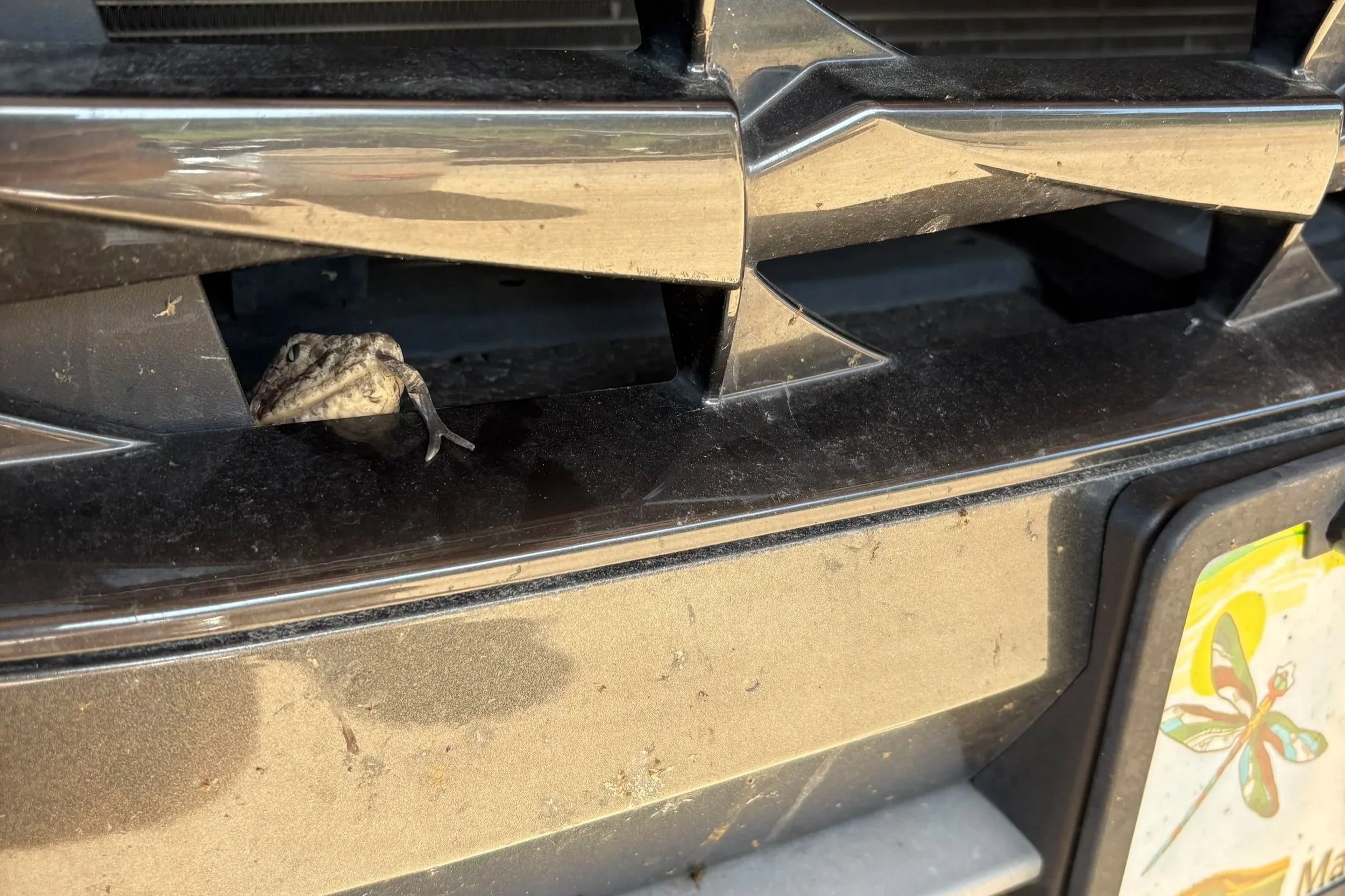
A fake snake was ordered and installed behind the bumper where the wrens had nested. Photo courtesy Carolyn Langlinais
A wren nest box was then installed right above the car. We also bought an endoscope that works with our cell phones so we can peek into all the nooks and crannies where our birds are making nests. The wrens quickly built a nest in their new nest box.
I have the use of my car again. The wrens have a nest box all their own. I just hope I remember to warn any mechanics there's a fake snake in front of the radiator.
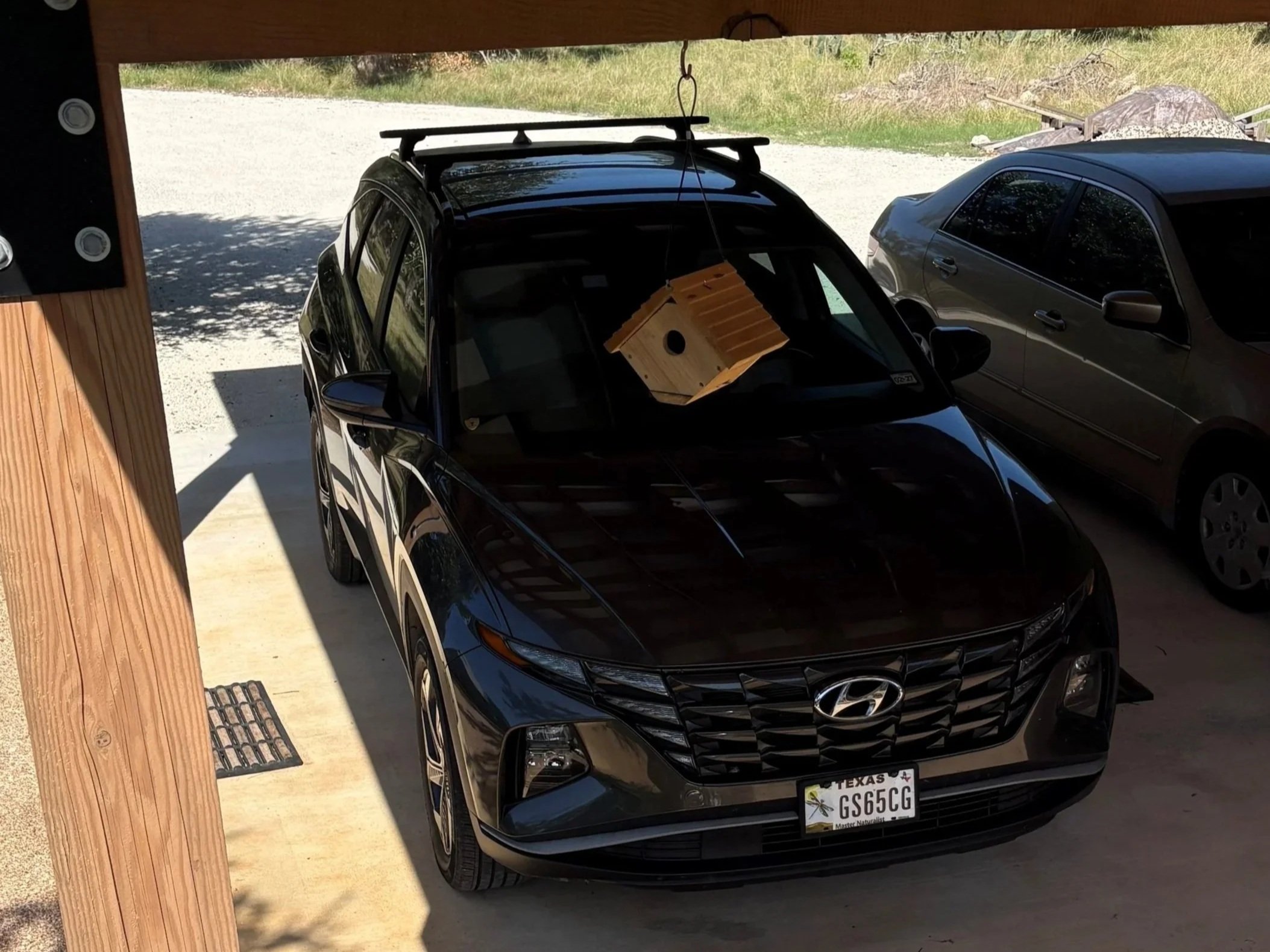
Wren nest box in the carport above the Hyundai Tucson.
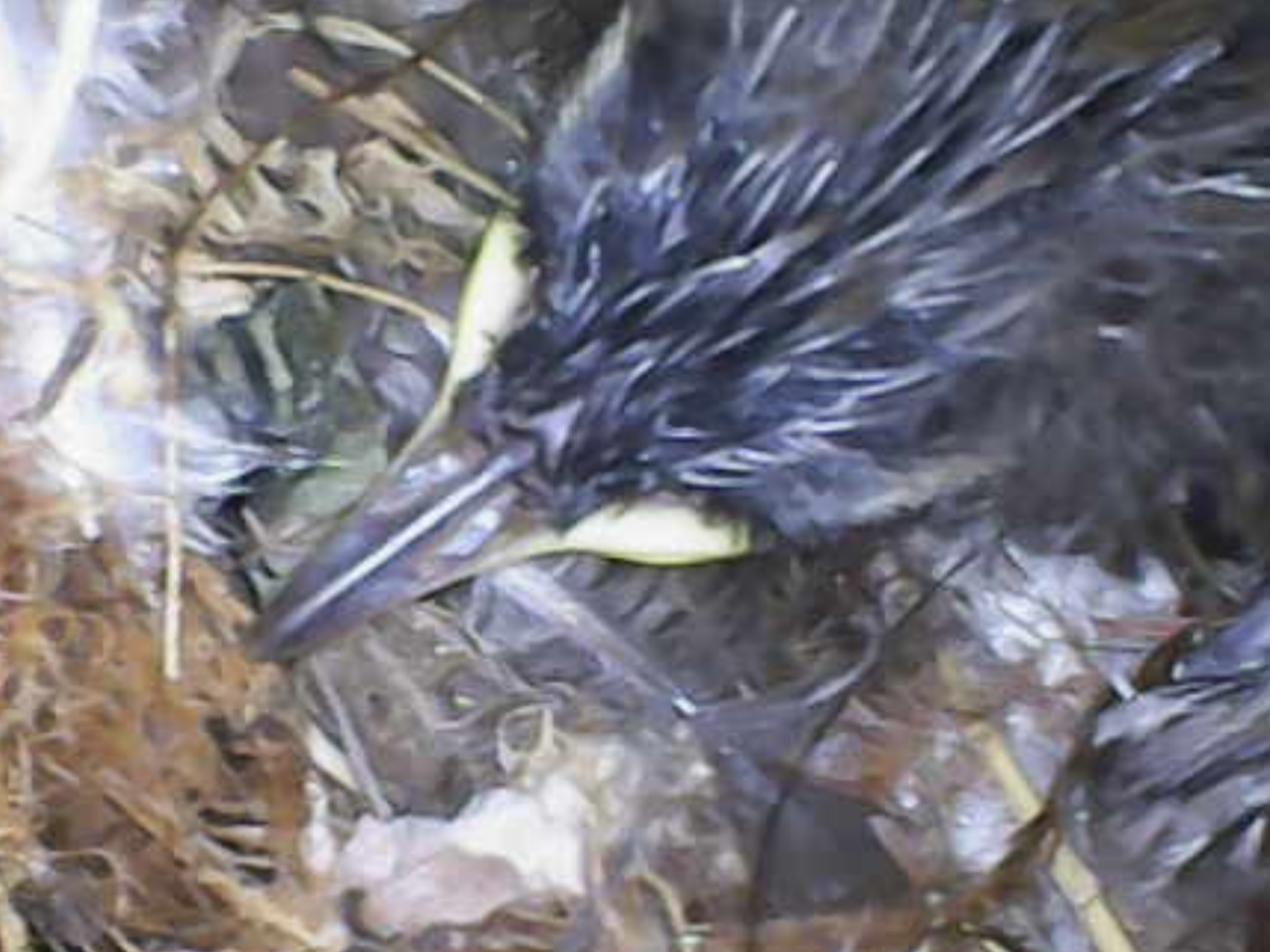
Baby Bewick’s wren inside the new carport nest box on July 14.
Photos courtesy Carolyn Langlinais
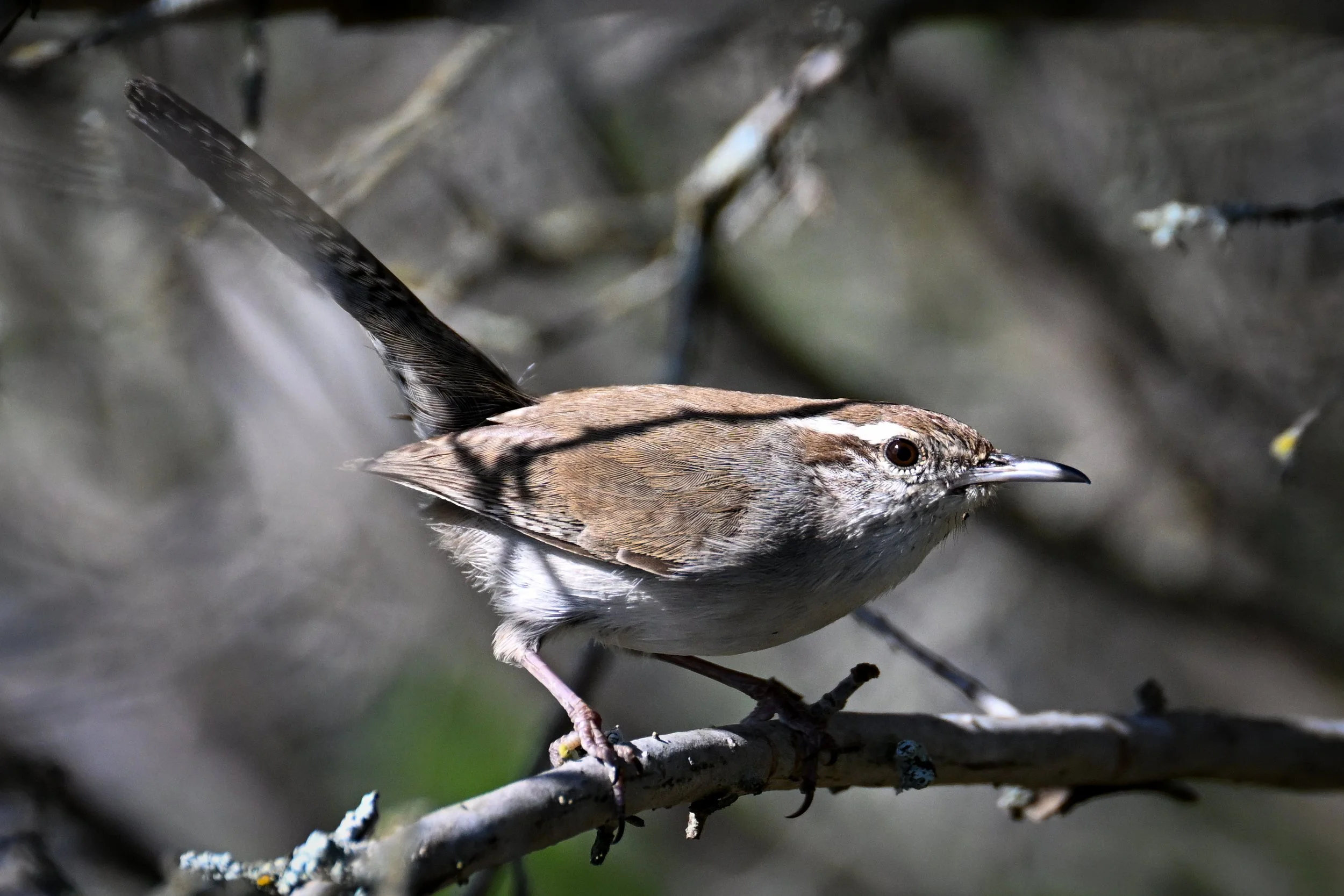
Bewick’s Wrens at a Glance
Common cavity nesters that readily use nest boxes and even unusual human-made structures.
Males often begin several nests before the pair completes one.
Females typically lay 3–8 eggs.
Both parents feed the young.
Nestlings usually fledge about two weeks after hatching.
Protected under the Migratory Bird Treaty Act—active nests may not be disturbed.
Cornell Lab of Ornitology All About Birds
Photo courtesy Betsy Cross