
Mountain Pinks: Bouquets Built for the Rocks
June 14, 2026 - Jacob’s Well Natural Area
Photos courtesy Betsy Cross
Leah Fenley Adrian
In late June, I was heading to the Dairy Queen in Brady, Texas, to pick up my kiddo from her summer visit with her grandmother. While driving between Blanco and Johnson City on U.S. Highway 281 in the Texas Hill Country, surprising flashes of brilliant pink began appearing along the roadside.
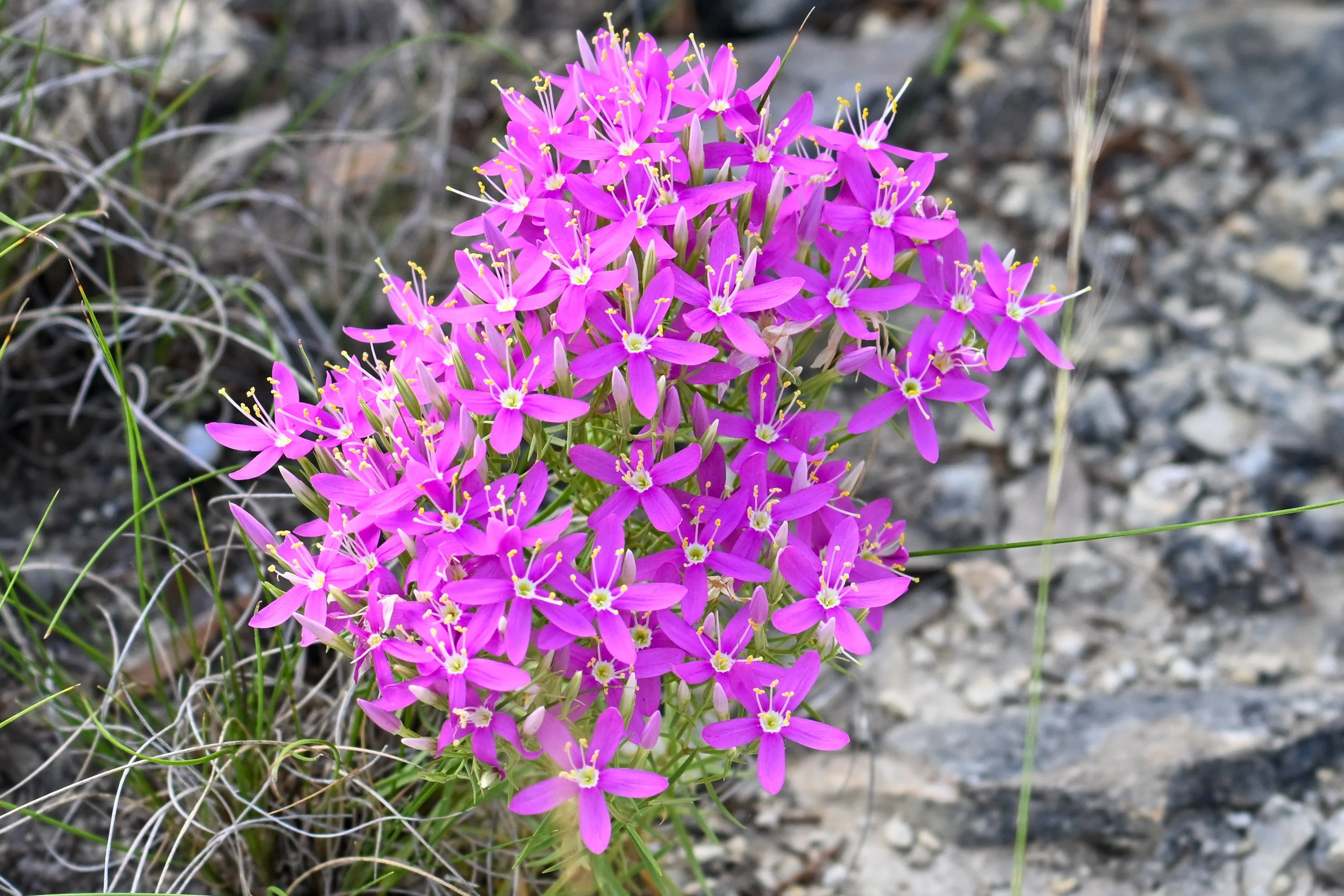
Mountain Pinks (Zeltnera beyrichii, formerly Centaurium beyrichii) rose like cheery little pom-poms from barren limestone hillsides where little else seemed to grow. They were delightfully out of place.
It took everything I had not to pull over for a closer look—or to see whether any had gone to seed. If I had not been on a schedule, I almost certainly would have. Their vivid blooms looked improbable and defiant against the pale rock: delicate in appearance, yet perfectly at home in one of the harshest-looking places along the drive.
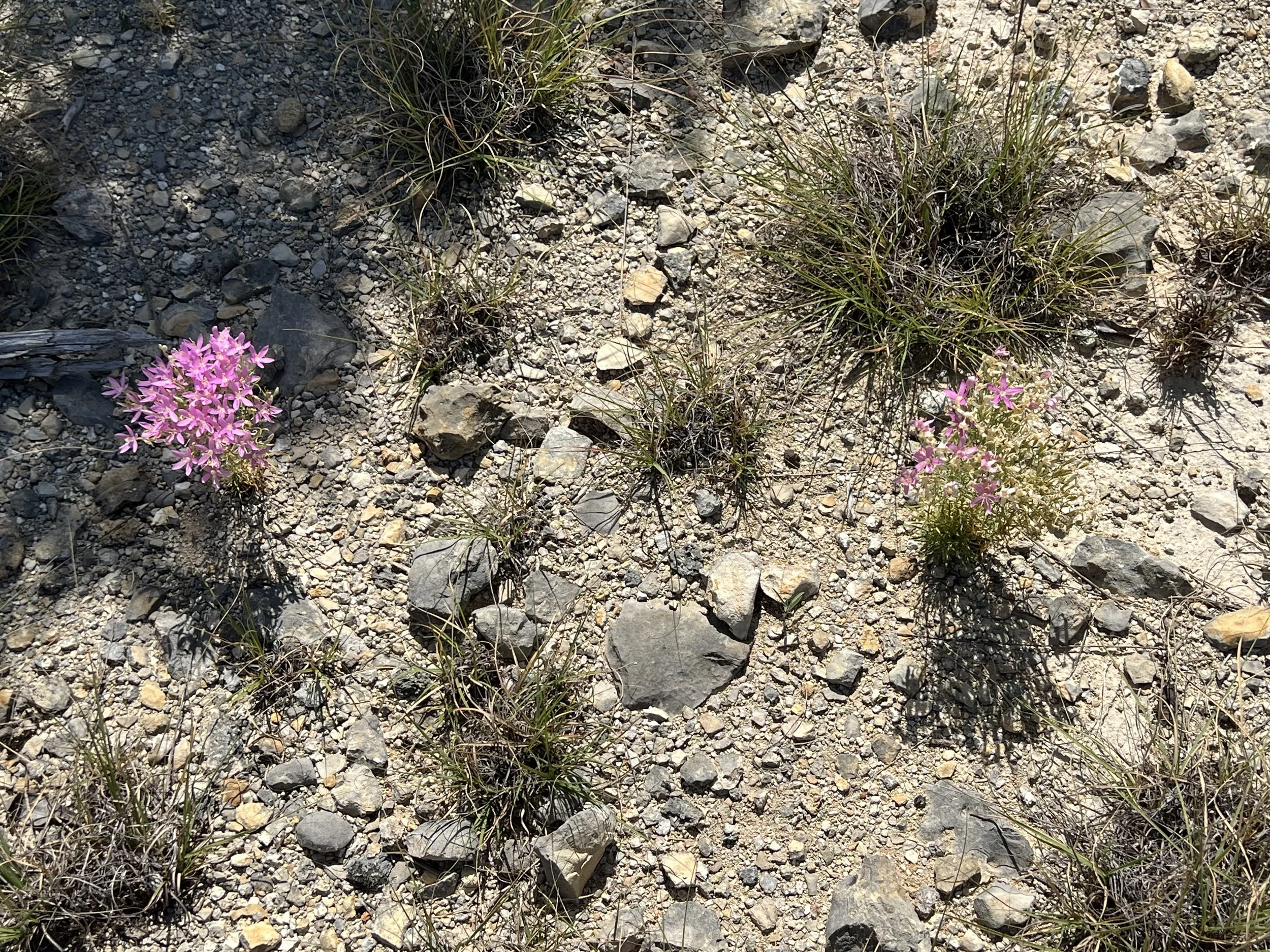
Mountain Pinks are small annual wildflowers that generally reach only 8 to 12 inches tall. Their slender stems branch repeatedly near the top, producing dozens of tiny, five-pointed flowers. Together, the blooms create the rounded bouquet shape that makes them so noticeable from the road. They flower from late spring into summer, especially on limestone slopes, rocky outcrops, and gravelly roadsides. Their narrow leaves and compact stems nearly disappear against the surrounding rock, leaving the bright flowers seemingly suspended above the hillside.
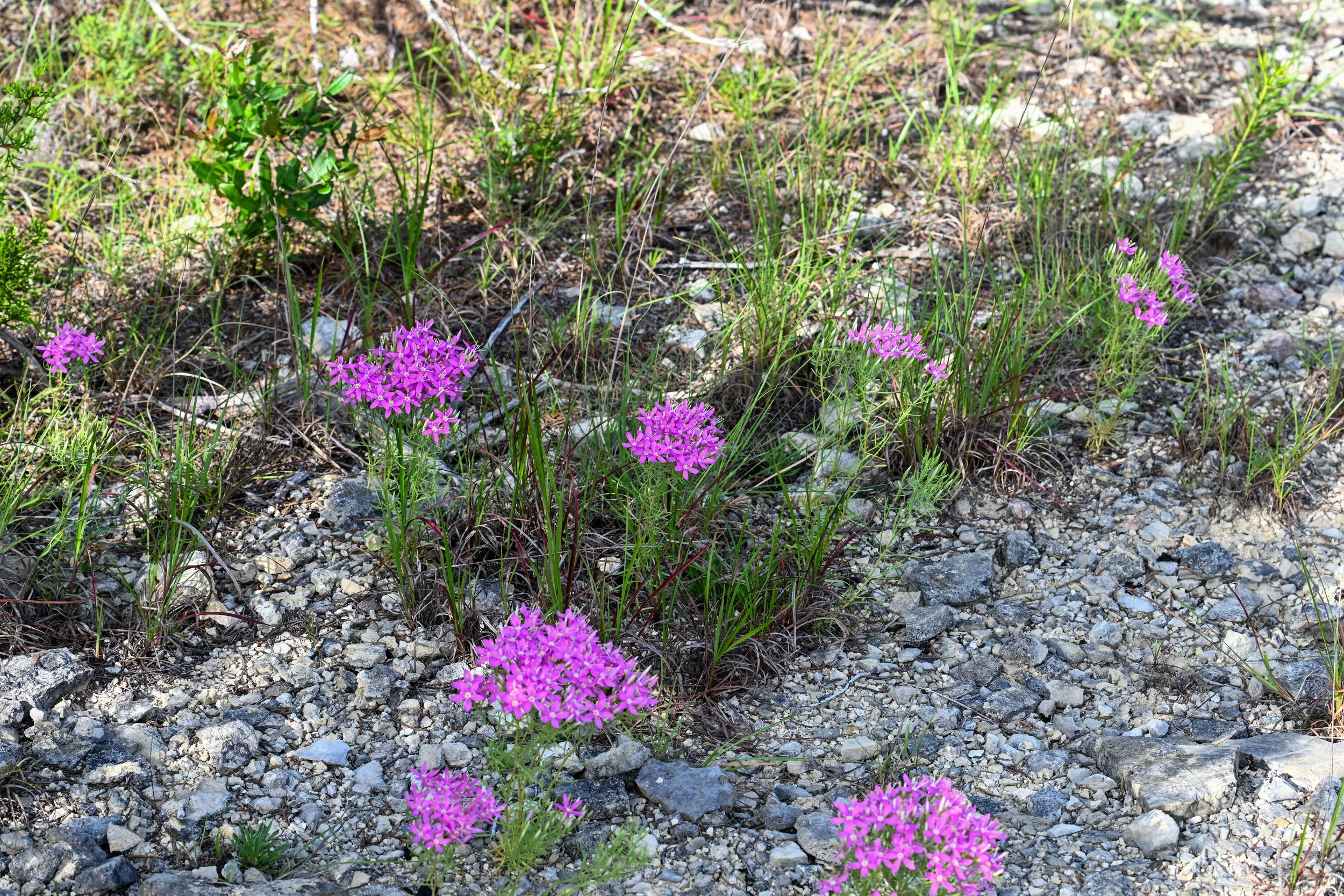
Because Mountain Pinks are annuals, each plant completes its life cycle in a single season and relies on seed to return the following year. After flowering, it produces small capsules filled with minute seeds that can settle into cracks and pockets of shallow soil.
They are lovely additions to wildflower meadows but also work well in rock gardens and other well-drained beds. With landowner permission, you can collect the capsules (I usually keep paper bags in my car for this reason). The fresh seeds can then be scattered shallowly over well-drained, rocky soil. If collecting seeds isn't your jam—or if it isn't an option—you can purchase them from sources like Native American Seed.
The seeds benefit from light during germination, so they should not be deeply buried. Keeping the soil lightly moist—but never waterlogged—gives the seedlings their best start. Like the roadside plants themselves, they seem to thrive with little fuss, provided they are given the lean limestone conditions they call home.
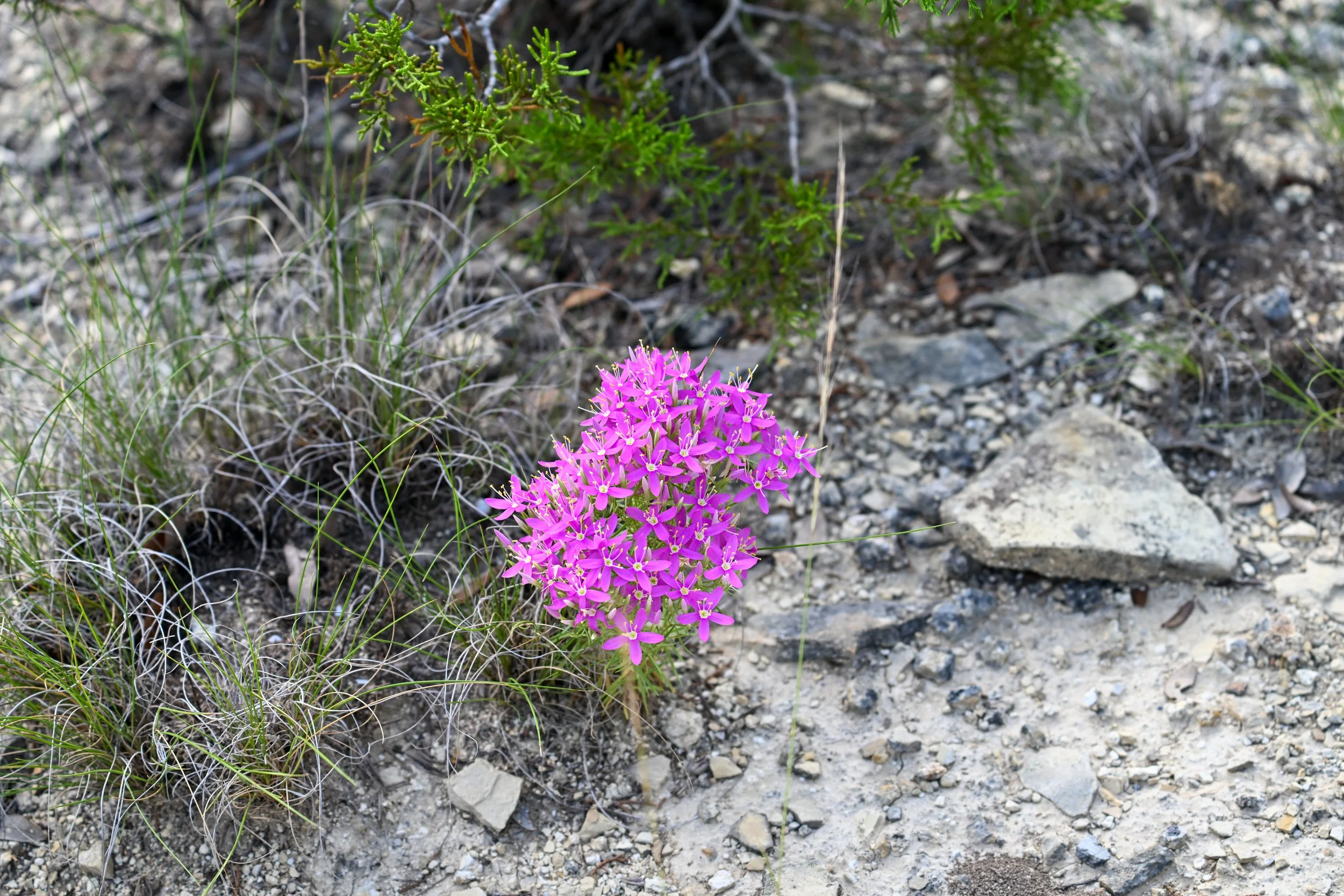
Did you snap any pictures of Mountain Pinks this year? Let us know by tagging us with #HCMN!
You can learn more and explore additional photos by visiting the Native Plant Society of Texas and Lady Bird Johnson Wildflower Center websites.
July 11