Learning from the Land
A Look at HCMN’s Fall Training Program

Photo courtesy Jill Zipperer
Jill Zipperer
As we prepare for the final training class of the year, I can’t help but reflect on what an incredible opportunity it’s been to serve as the Fall Training Class Co-Director. My Co-Director and fearless mentor, Mary O’Hara, told me that leading my first class of trainees would be an incredible experience, but I’m not sure I understood just how impactful and inspiring it would be.
The class’s elected namesake—the Free-tailed Bats—comes from our awe-inspiring field trip to Bracken Cave, where we watched over 15 million Mexican Free-tailed Bats emerge in a “batnado.”
A few fun facts about these bats (Tadarida brasiliensis):
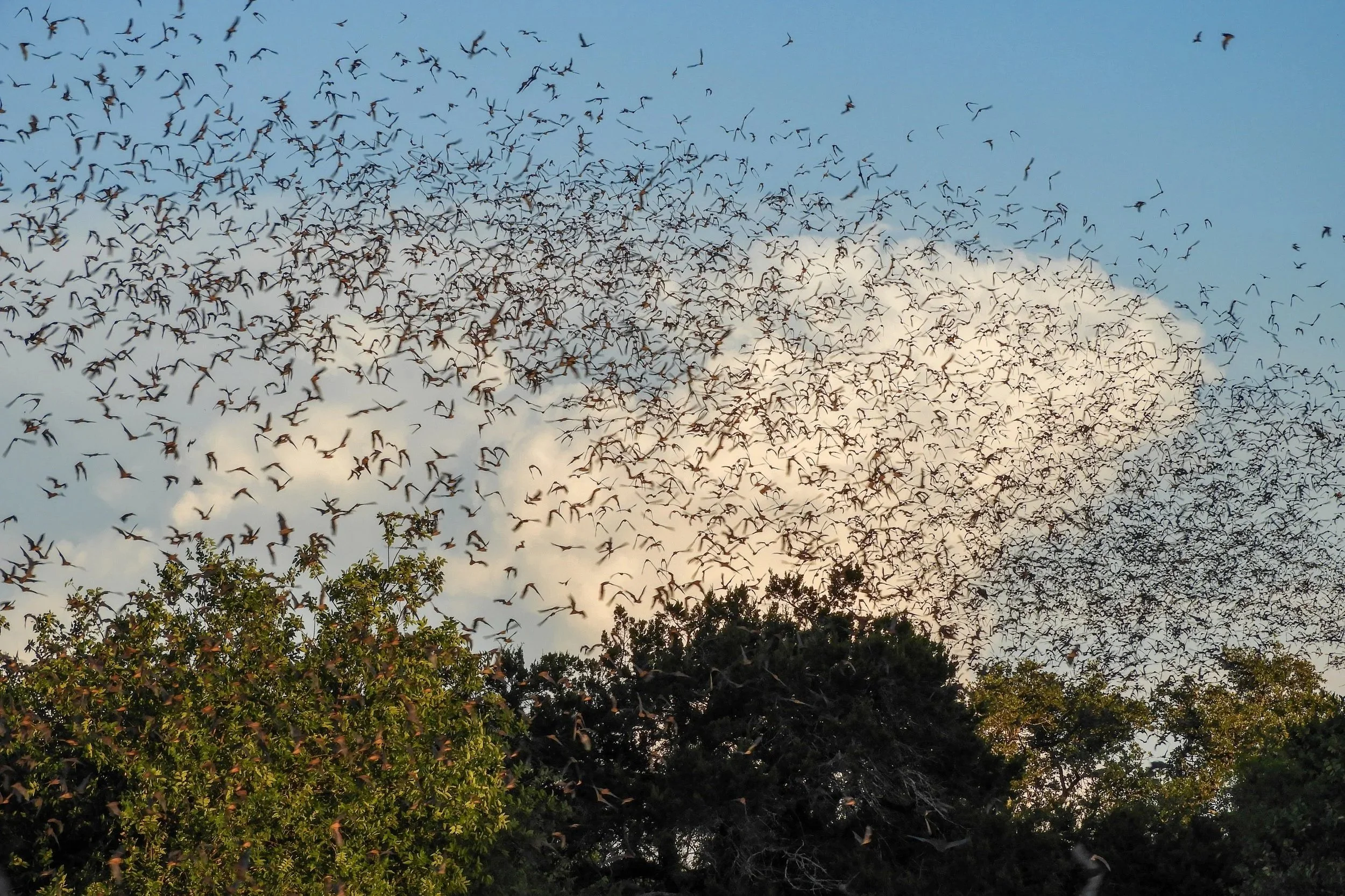
Bracken Cave Batnado Photo courtesy Betsy Cross
The Mexican Free-tailed Bat is the official state flying mammal of Texas!
They earn their name based on the fact that, unlike other bat species, their tail extends past their uropatagium (the membranous piece of skin that connects their hind legs and tail, and that aids them in flight).
They eat up to 18,000 tons of insects, like beetles and moths, annually in Texas. Yum!
Maternal colonies, or "nurseries," use their habitats to raise and protect their young, who don't join them on their evening hunts. When mama bats return from the hunt, they can find their baby amongst their millions of housemates based on the baby's scent and vocalizations. Talk about a mother's instinct!
Mexican Free-tailed Bats are one of the most abundant mammalian species in North America.
Facts sourced from Texas Parks & Wildlife Department (TPWD): https://tpwd.texas.gov/huntwild/wild/species/brazilfreetailbat/
From the start, this fall class (the Free-tailed Bats) has been vibrant with enthusiasm, joy, and curiosity. The trainees have shown up to each event with a genuine excitement for learning and for serving their community as stewards. Our newest members have blown us all away by collectively earning more than 470 volunteer hours and 315 Advanced Training hours—and that’s after only four months! Trainees have participated in a wide range of volunteer projects, from writing for the Hays Humm to pulling invasive plants along the San Marcos River (and everything in between!). We even had a few trainees join us at the 2025 Annual Texas Master Naturalist State Meeting in College Station in October. I know this class is going to continue to do incredible work in our community.
In addition to their service and volunteer work, trainees have also participated in some incredible classes led by community partners and members of our chapter. Class #1 included an introduction to the program by Chapter President Bob Adkins, a look into what it means to be a Master Naturalist by our chapter advisor and Texas Parks and Wildlife Department (TPWD) Senior Wildlife Biologist Blake Hendon, and an overview of naturalist history by yours truly. Our second class included an introduction to the Volunteer Management System by President-Elect Katie Peltier and a look at some fantastic nature journaling resources by our NatureWatch expert, David Womer. We ended that class with an incredible talk by Papa Yankee himself (a.k.a. retired National Weather Service meteorologist Dr. Paul Yura). We wrapped up July with class #3 and an exciting talk on community science from TPWD Nature Tracker Wendy Anderson. The night ended with a talk from Loren Steffy on night skies—it was so fun to see all of the trainees donning their eclipse glasses!
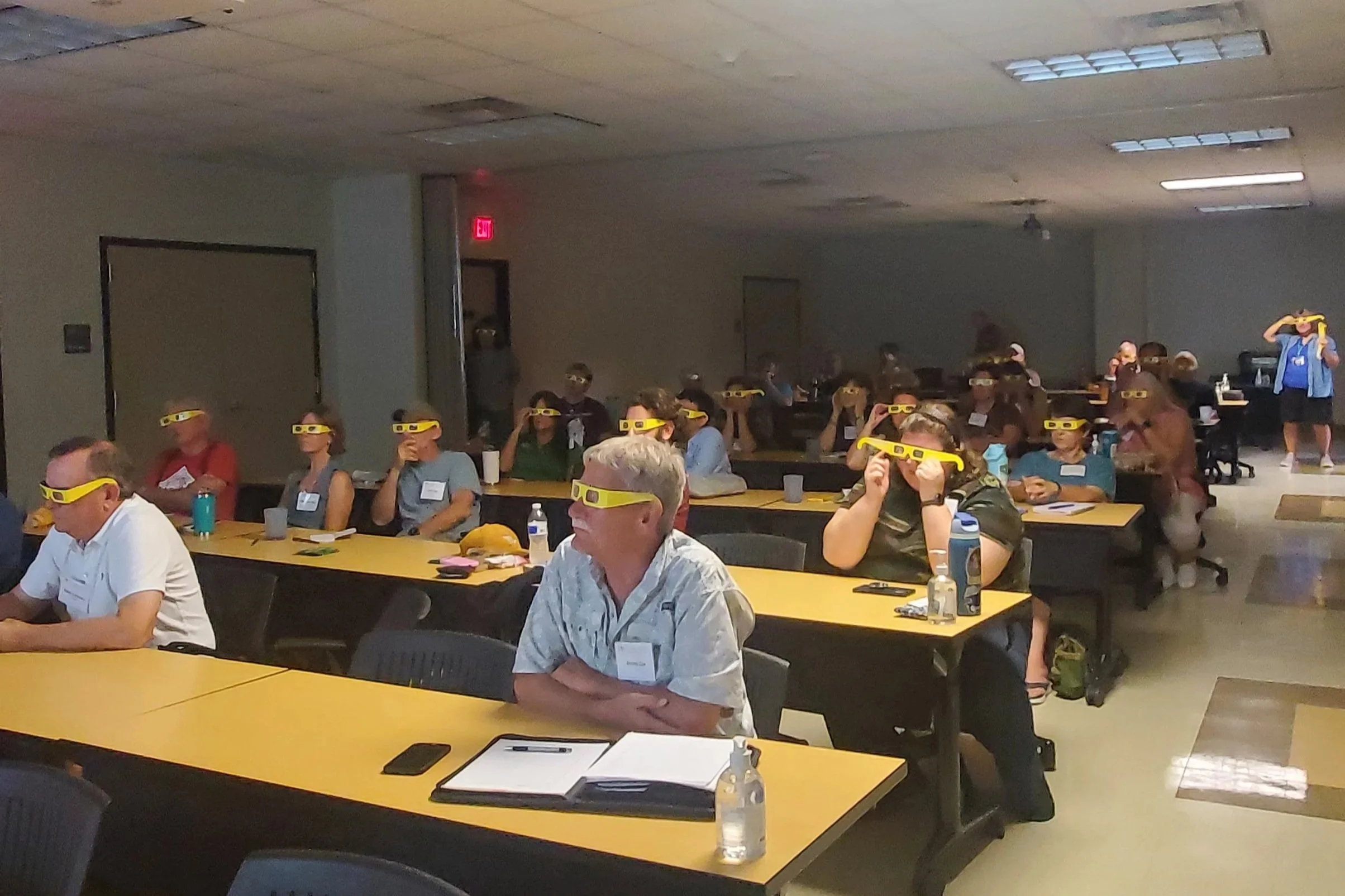
Night Skies Photo courtesy Jill Zipperer
August got off to a strong start with class #4, which included a talk from two of our very own: Dr. Kristy Daniel used her expertise in science education to speak on volunteers as teachers, and Vice-President-Elect, epidemiologist, and tick-expert-extraordinaire Dr. Kelly Pierce led us through an introduction to ecology. Class #5 featured Kristy Daniel again, as we got to put our knowledge to the test with an outdoor exploration of live oak galls and an in-class lesson on plant biology. Kelly Tarla of Texas A&M AgriLife wrapped up the evening with a great talk on rangeland ecology and ecosystem management—a topic that hit home for our property-owning trainees.
The beginning of September brought class #6 and a lesson from our affectionately named “Scat Man” David Womer. Who doesn’t love playing with scat and skulls?!

Skulls and Scat Photo courtesy Jill Zipperer
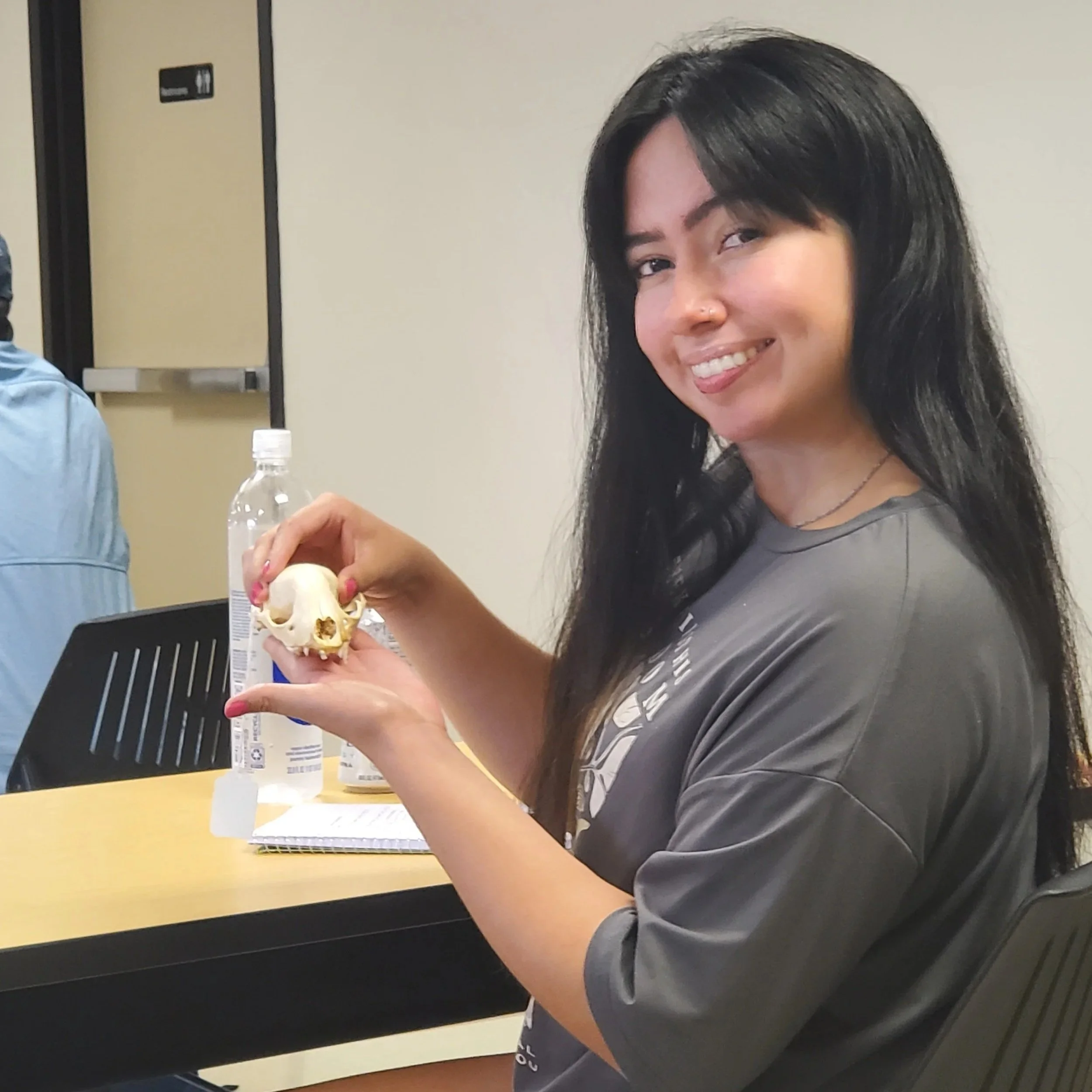
Skulls and Scat Photo courtesy Jill Zipperer
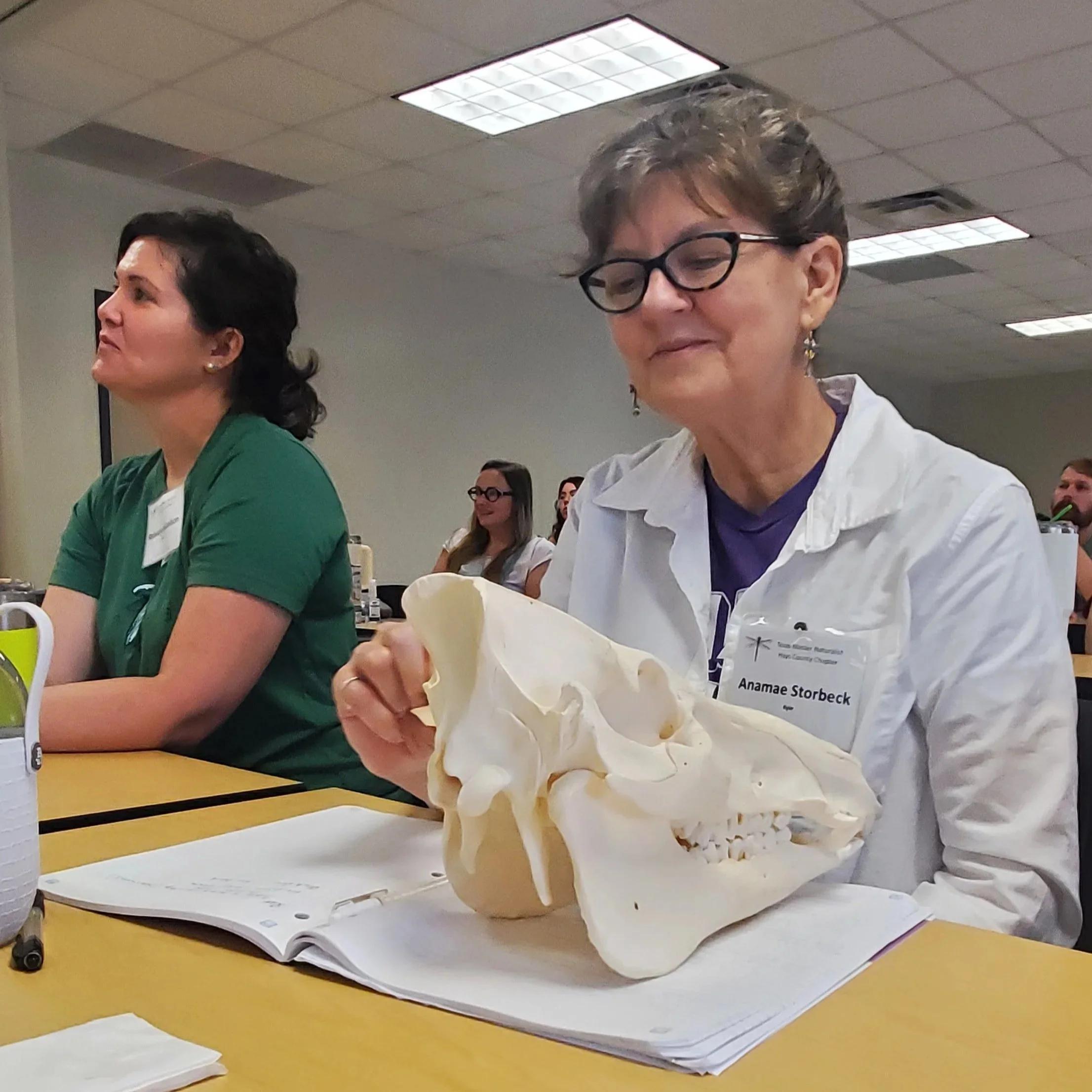
Skulls and Scat Photo courtesy Jill Zipperer
The second half of class included the much-anticipated insect talk from Texas State University Professor of Biology, Dr. Chris Nice. Although the bugs weren’t as plentiful as we had hoped, we had a great time learning to use nets, identifying the bugs we did find, and playing with the Freeman Ranch donkey, Whiskey.
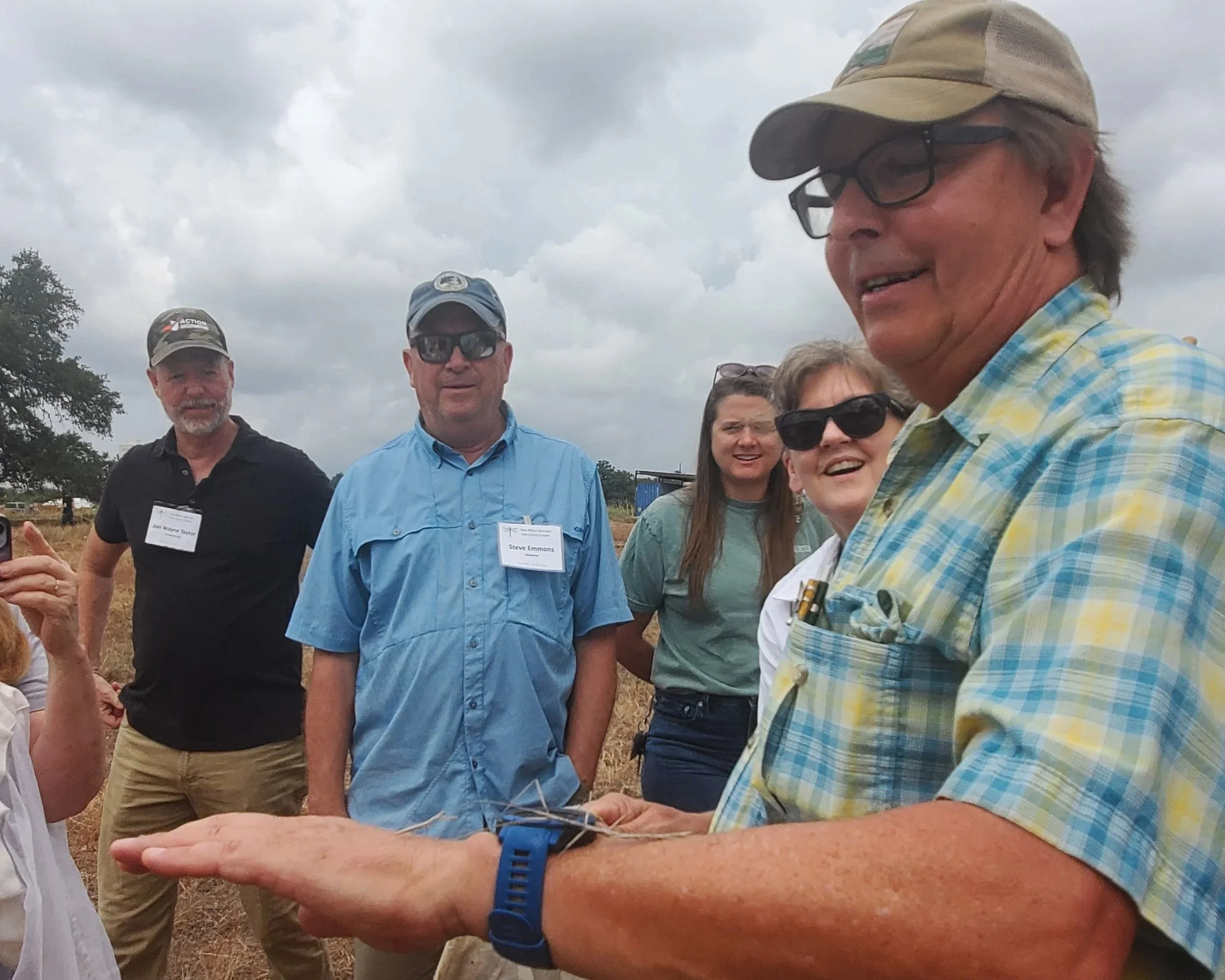
Insects with Dr. Chris Nice Photo courtesy Jill Zipperer
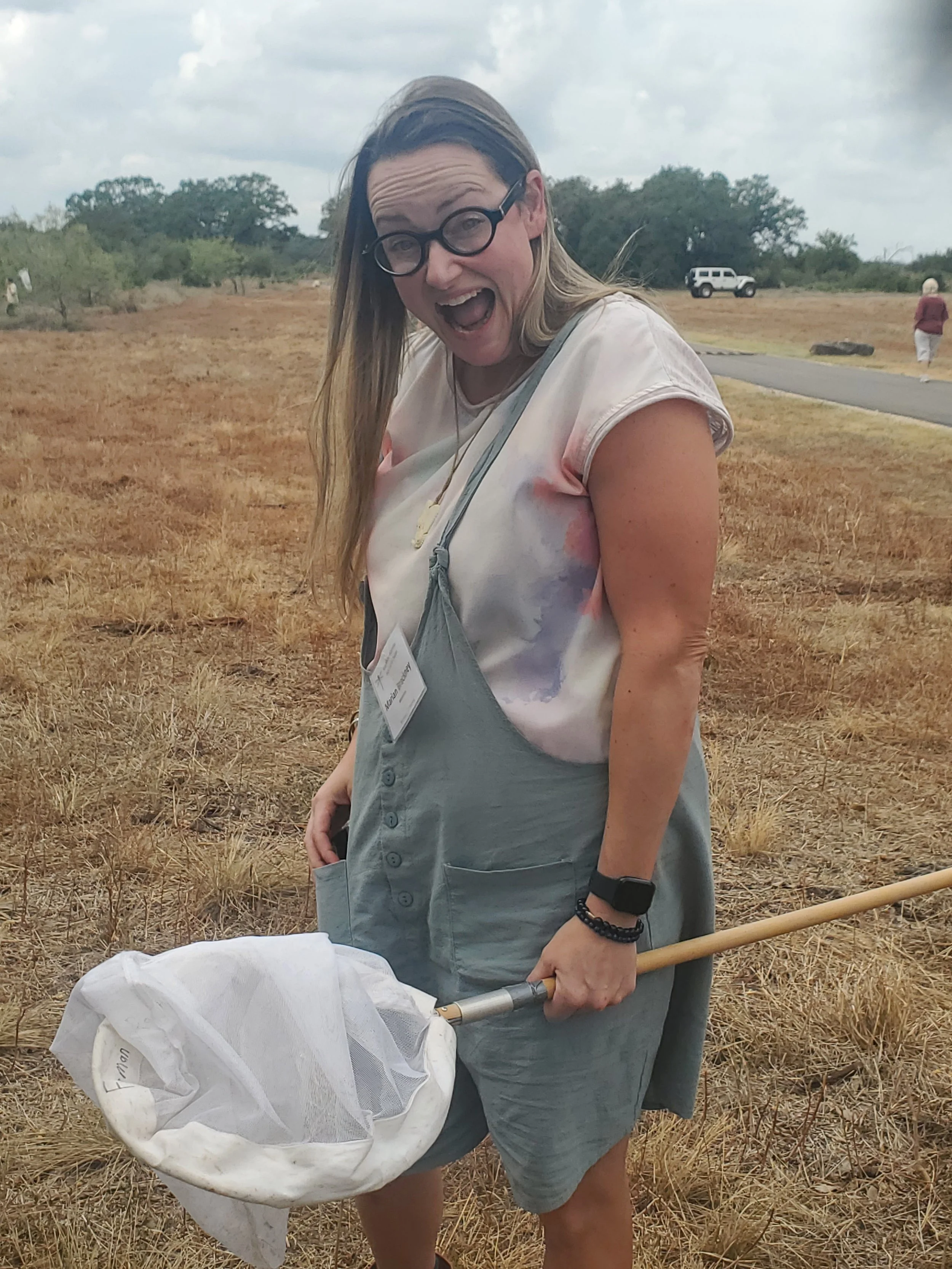
Insects Photo courtesy Jill Zipperer
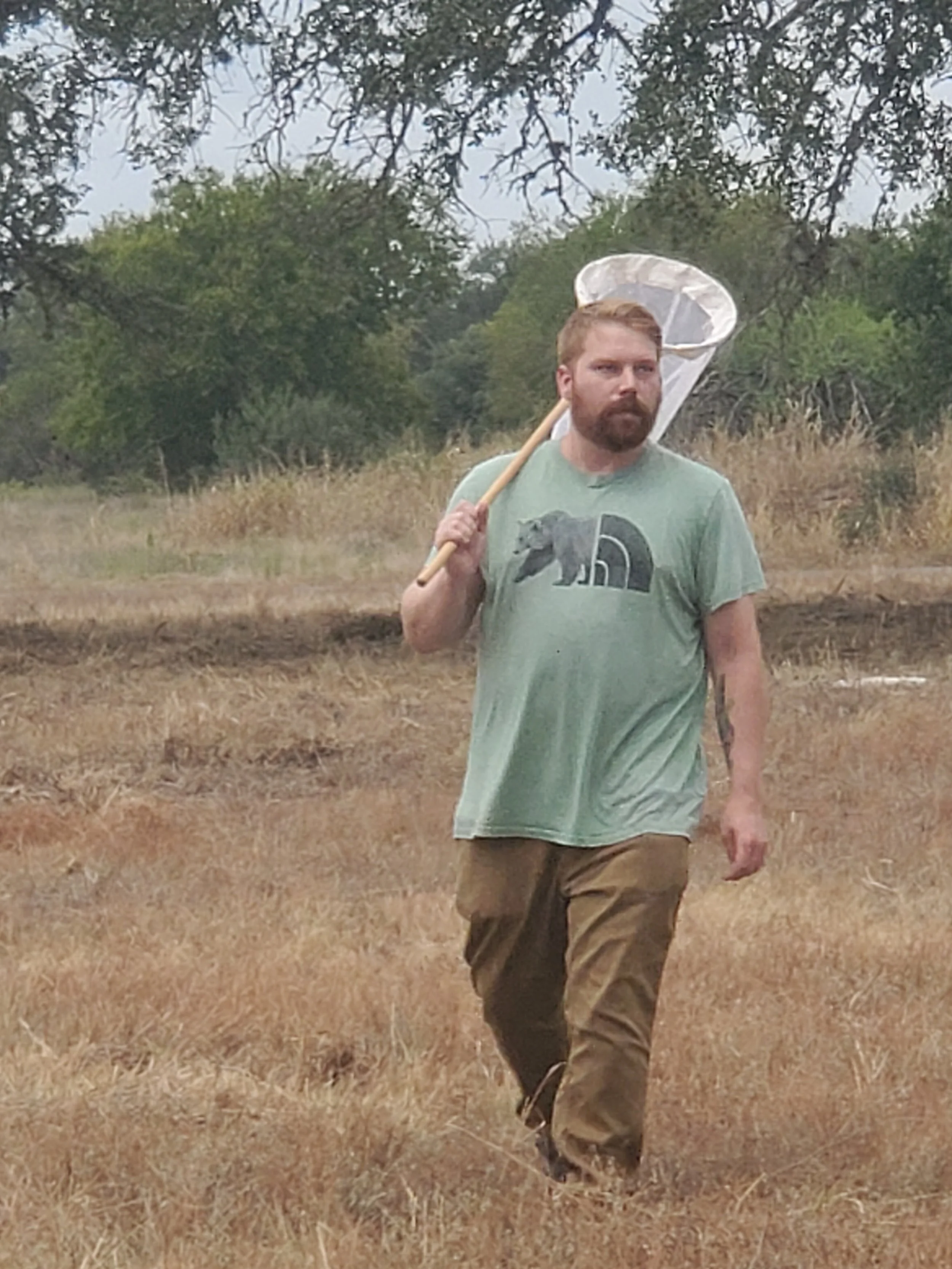
Insects Photo courtesy Jill Zipperer
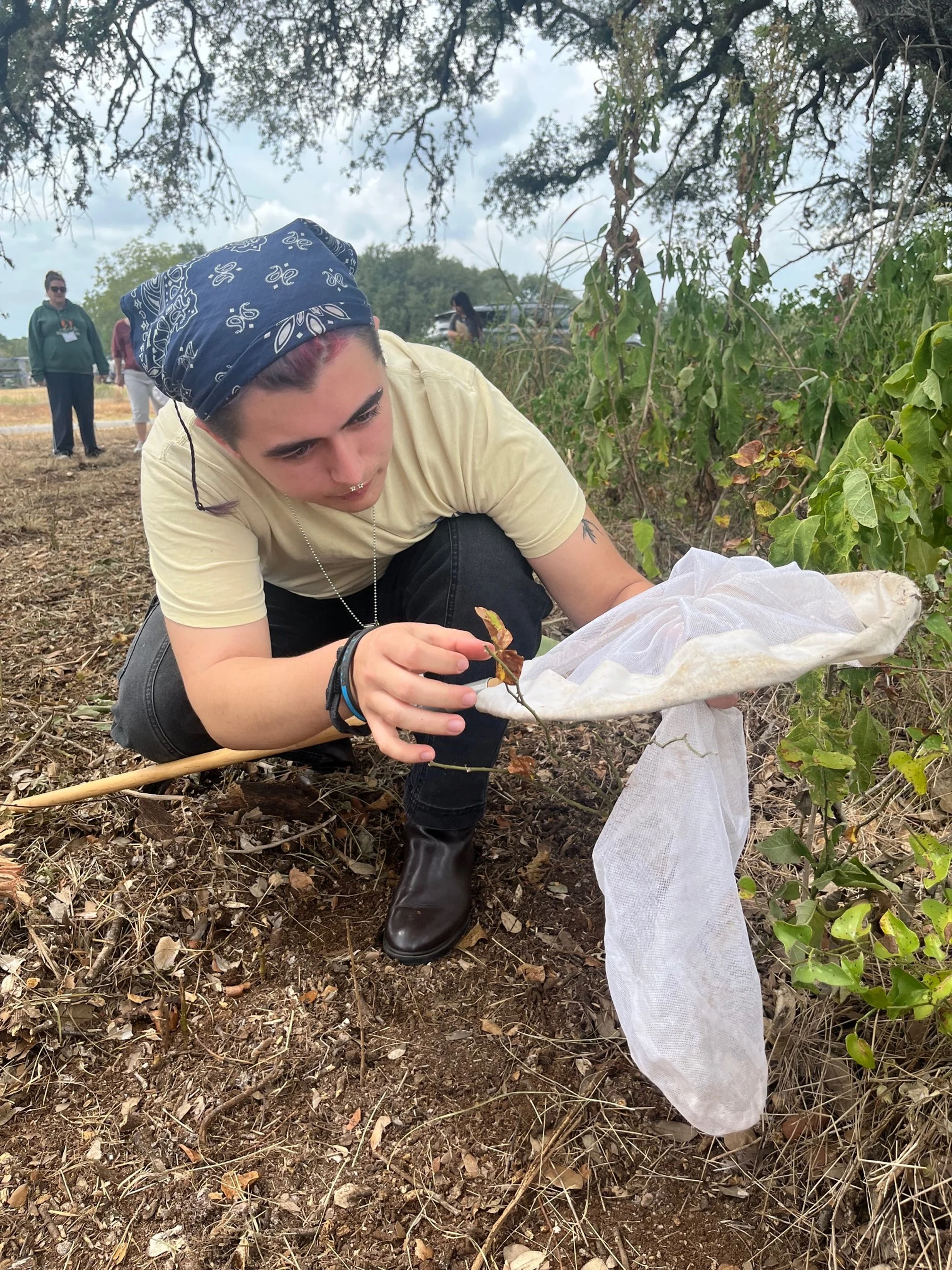
Insects Photo courtesy Emma Parsley
Next came class #7, which included a thought-provoking talk on wildlife laws and ethics from retired TPWD Game Warden Mike Mitchell, a sunset iNaturalist exploration, and an overview of volunteer opportunities in the chapter. Then came the always-exciting class #8 at the Meadows Center for Water and the Environment, which included a glass-bottom boat tour, a wetlands walk, and a timely talk on water resources from Meadows Center Executive Director Dr. Robert Mace. One of our newest class sites came next: class #9, our geology and archaeology class, hosted by the fantastic staff at Canyon Lake Gorge. Despite the tornado the night before and the thunderstorm that rolled in toward the end of our hike, we had an incredible time traveling through geologic history—we even got to see real Acrocanthosaurus tracks!
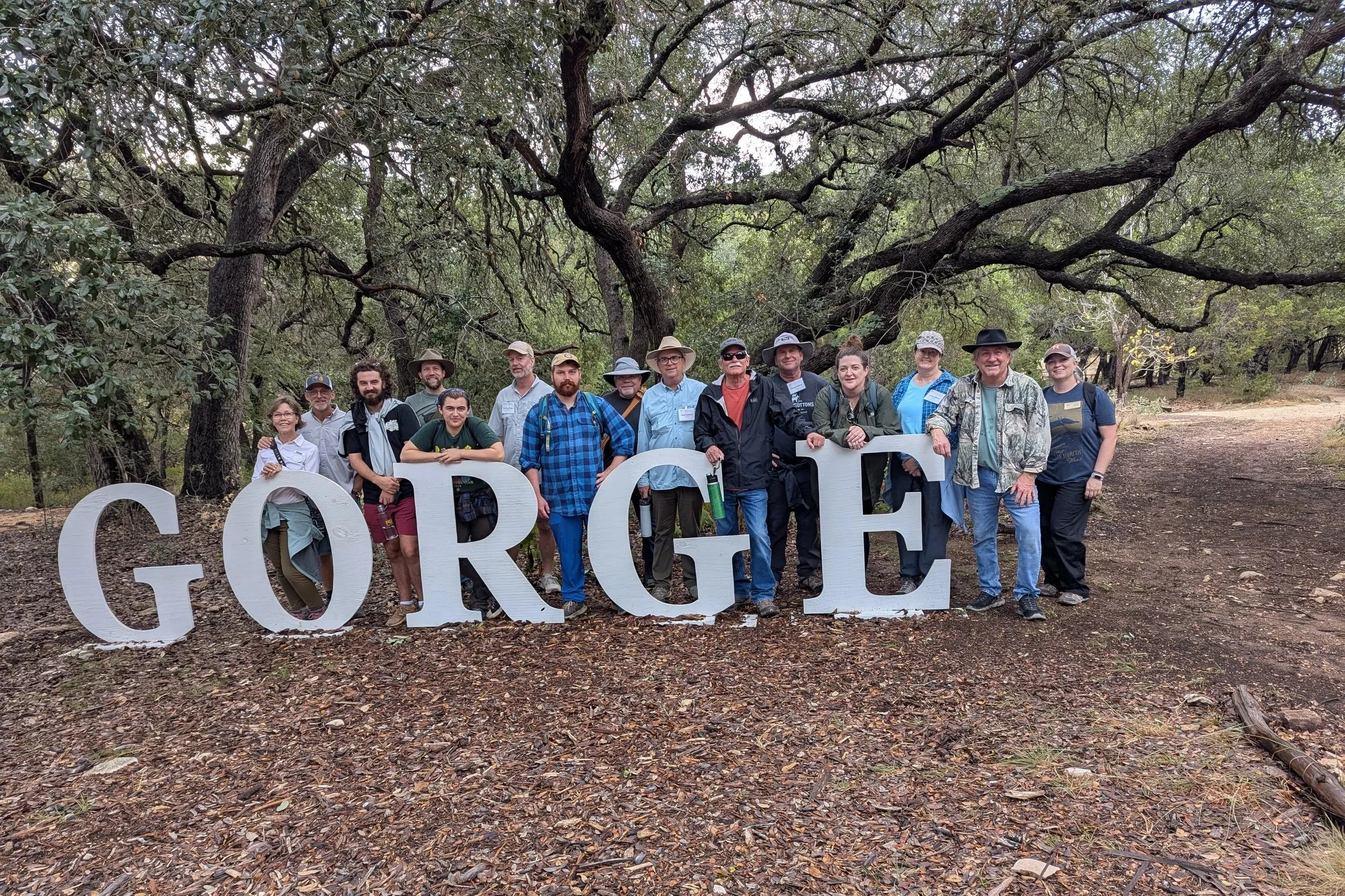
Canyon Lake Gorge Photo courtesy Katie Simoneaux
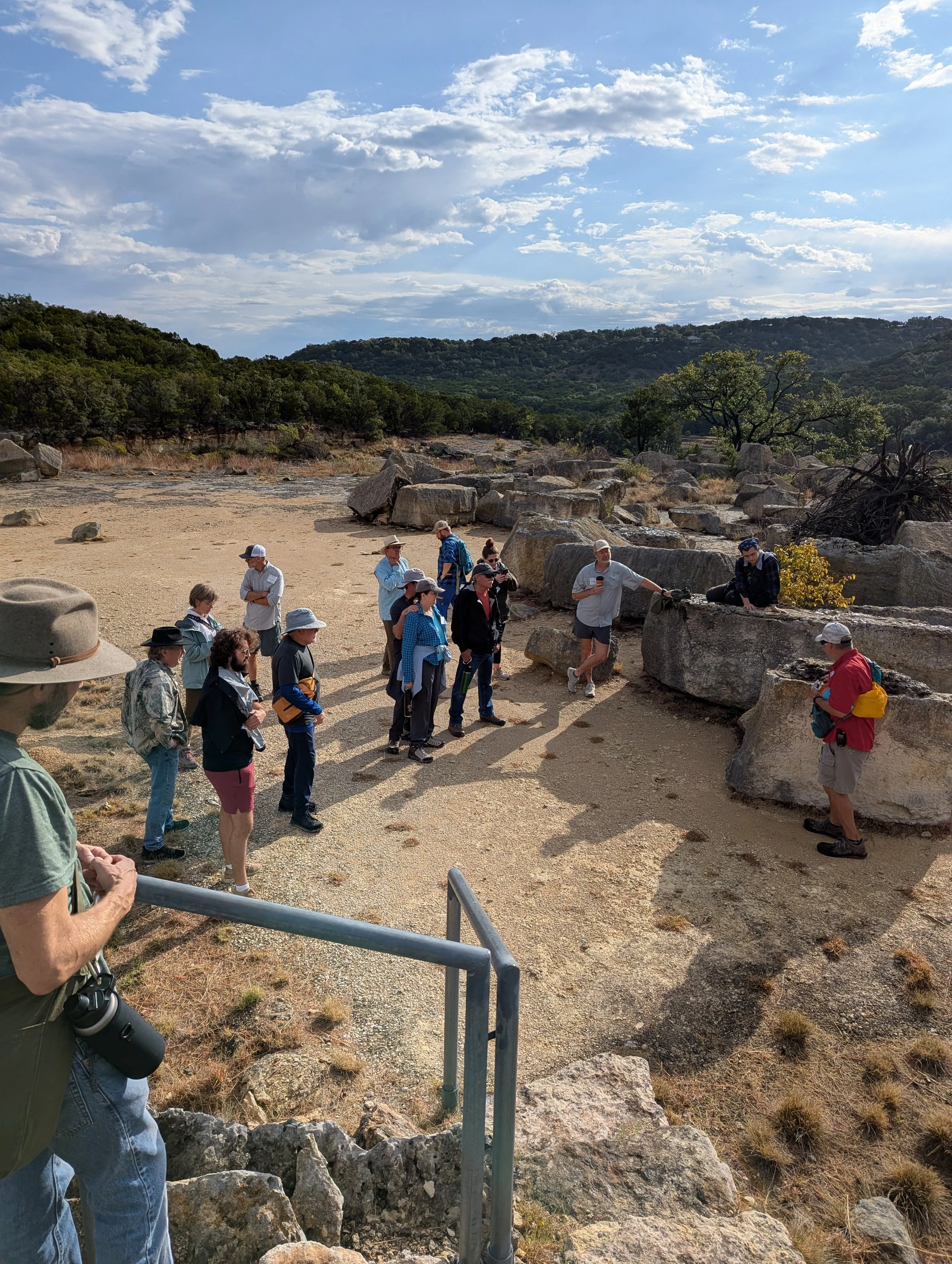
Canyon Lake Gorge Photo courtesy Katie Simoneaux
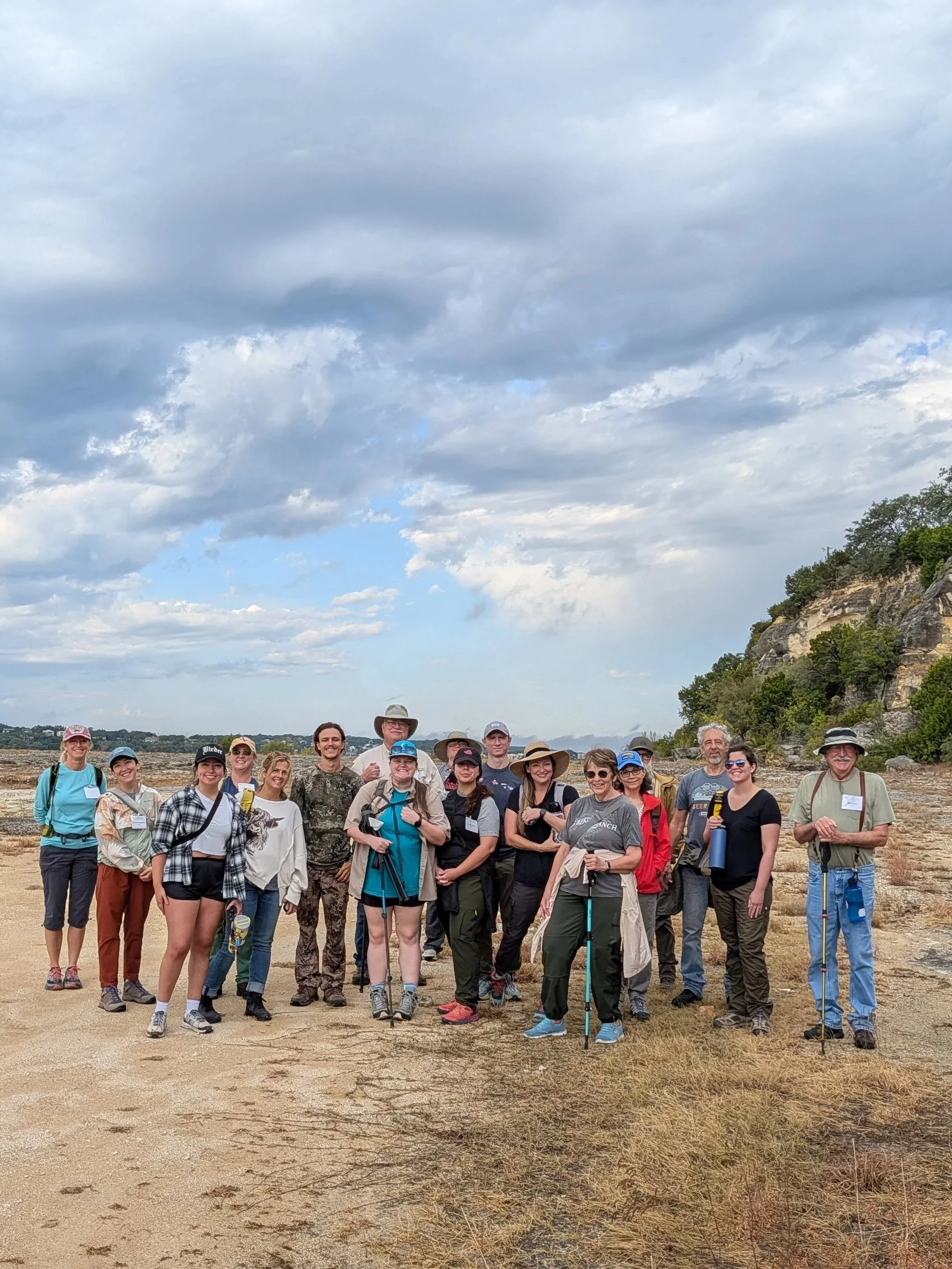
Canyon Lake Gorge Photo courtesy Jill Zipperer
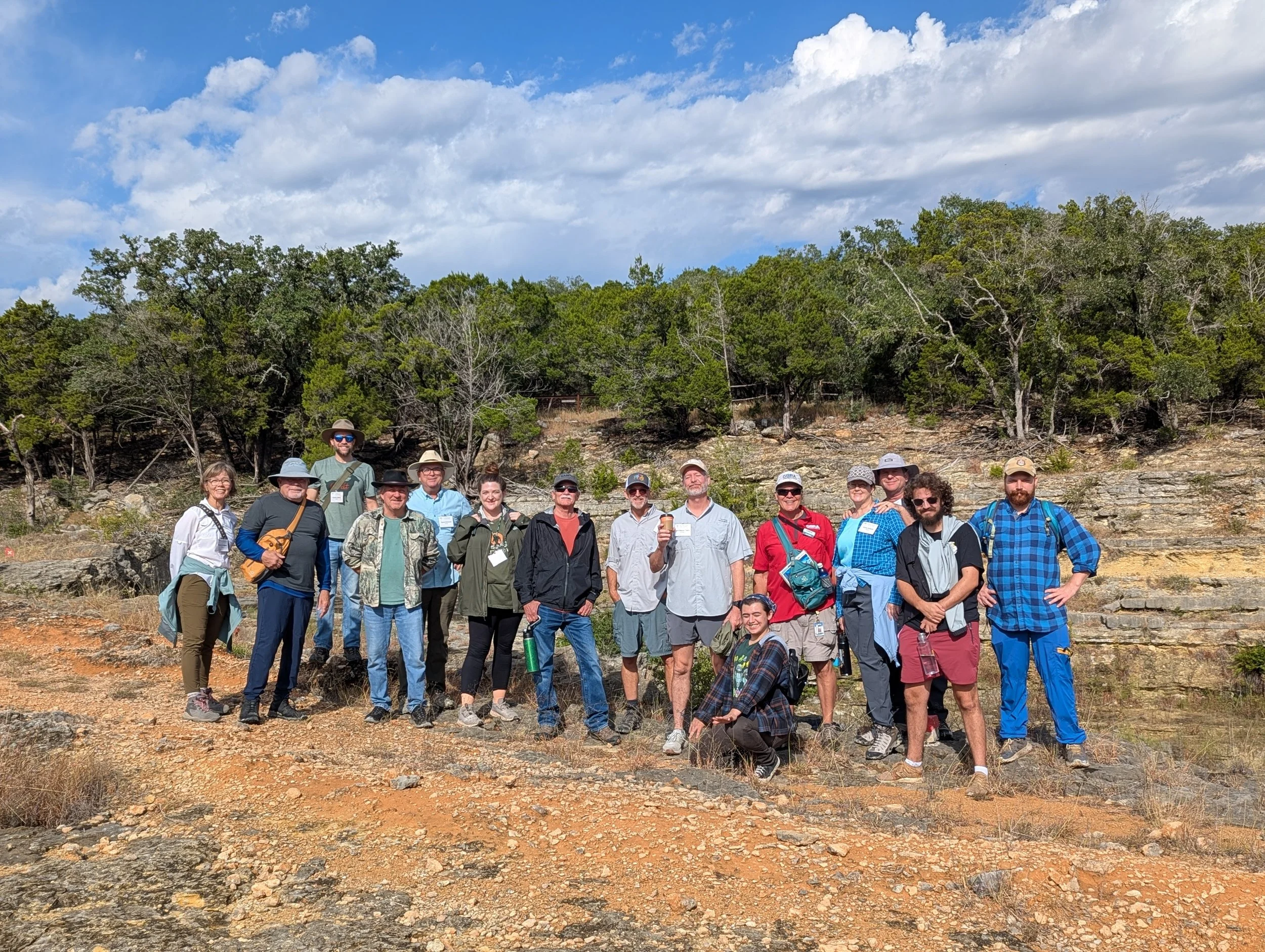
Canyon Lake Gorge Photo courtesy Katie Simoneaux

Canyon Lake Gorge Photo courtesy Katie Simoneaux
Our final three classes were packed with more fun and exploration. November started off with class #10, which included hilarious and inspiring talks from TPWD biologist Melissa Felty, who taught us all about mammals, and Watershed Association project leader Zane Liston, who brought out a love of lichens in us we didn’t know we had!
Class #11 saw us at John Knox Ranch for a beautiful autumn day. We learned all about aquatic macroinvertebrates, mussels, and fish from TPWD biologists Dr. Archis Grubh, Stephen Curtis, and Travis Tidwell.
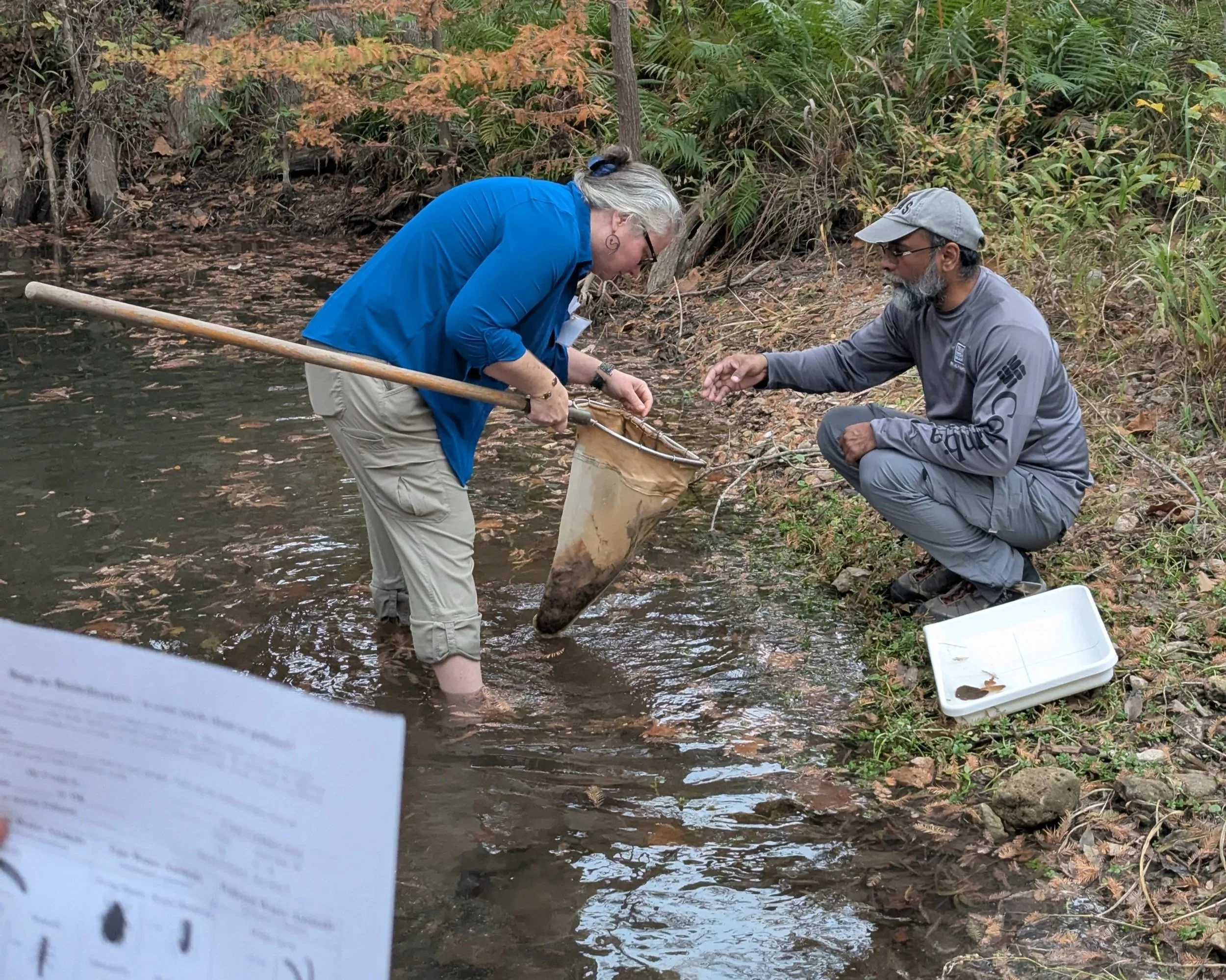
John Knox Ranch Photo courtesy Katie Simoneaux
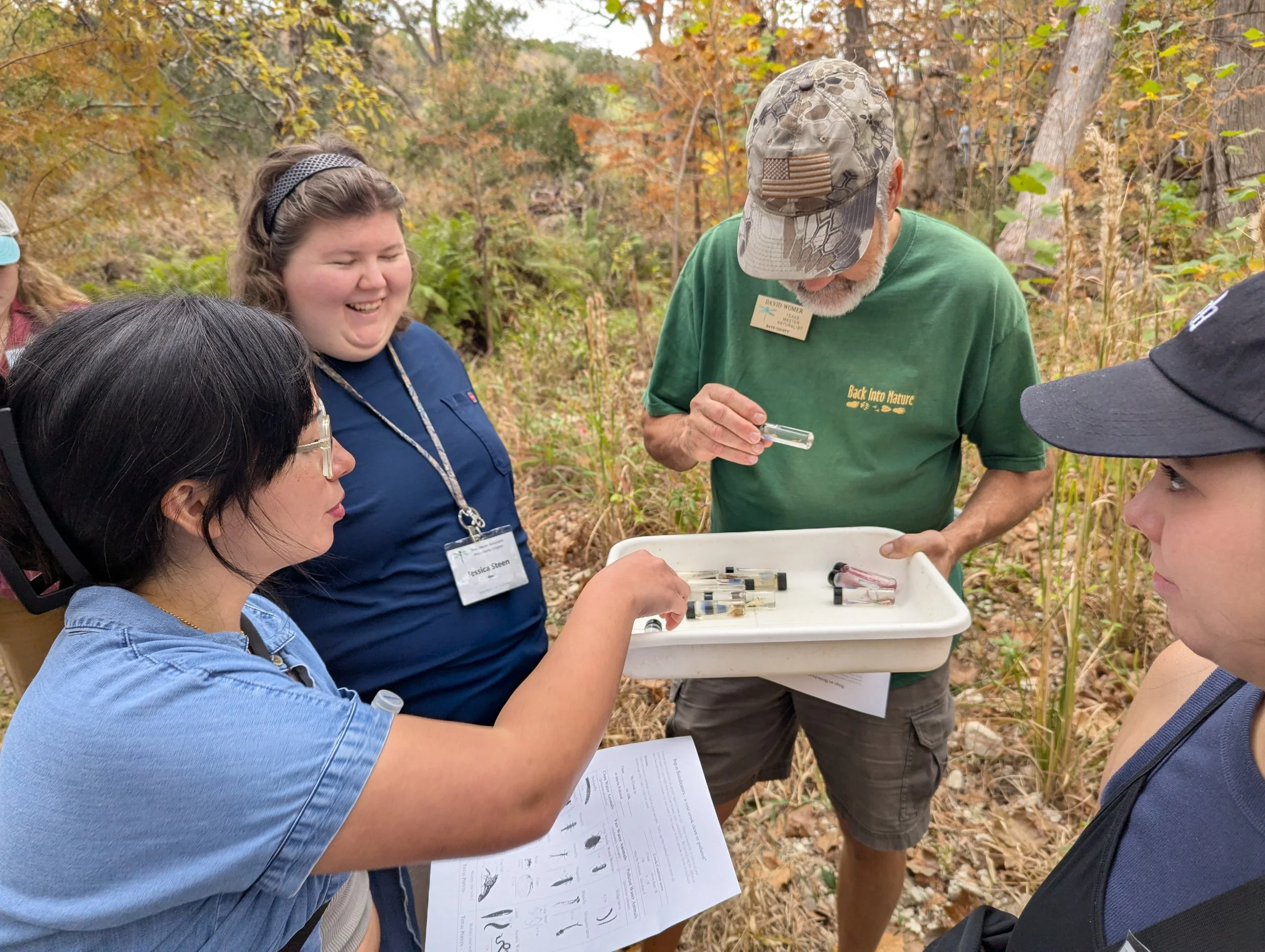
John Knox Ranch Photo courtesy Katie Simoneaux
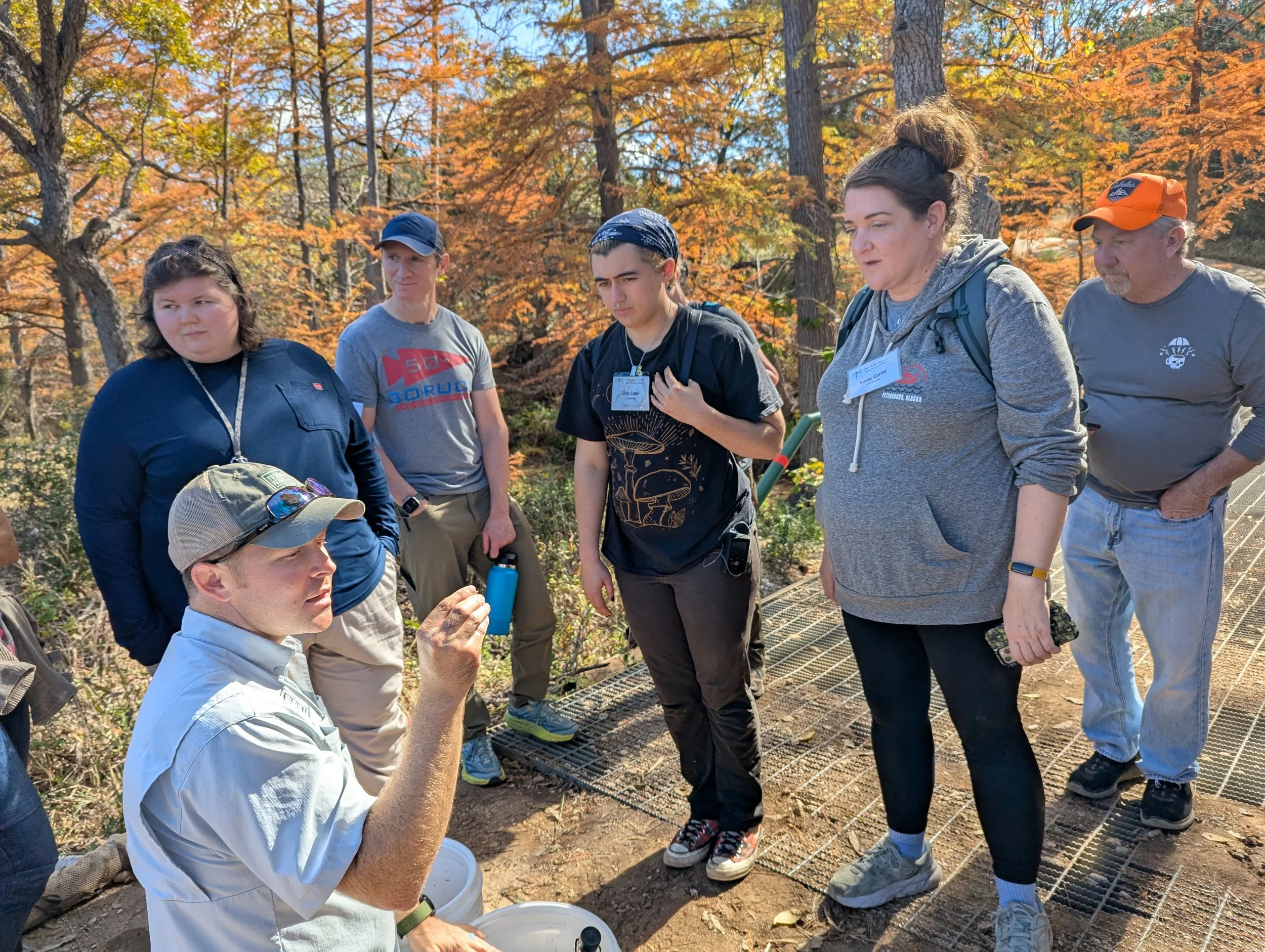
John Knox Ranch Photo courtesy Katie Simoneaux
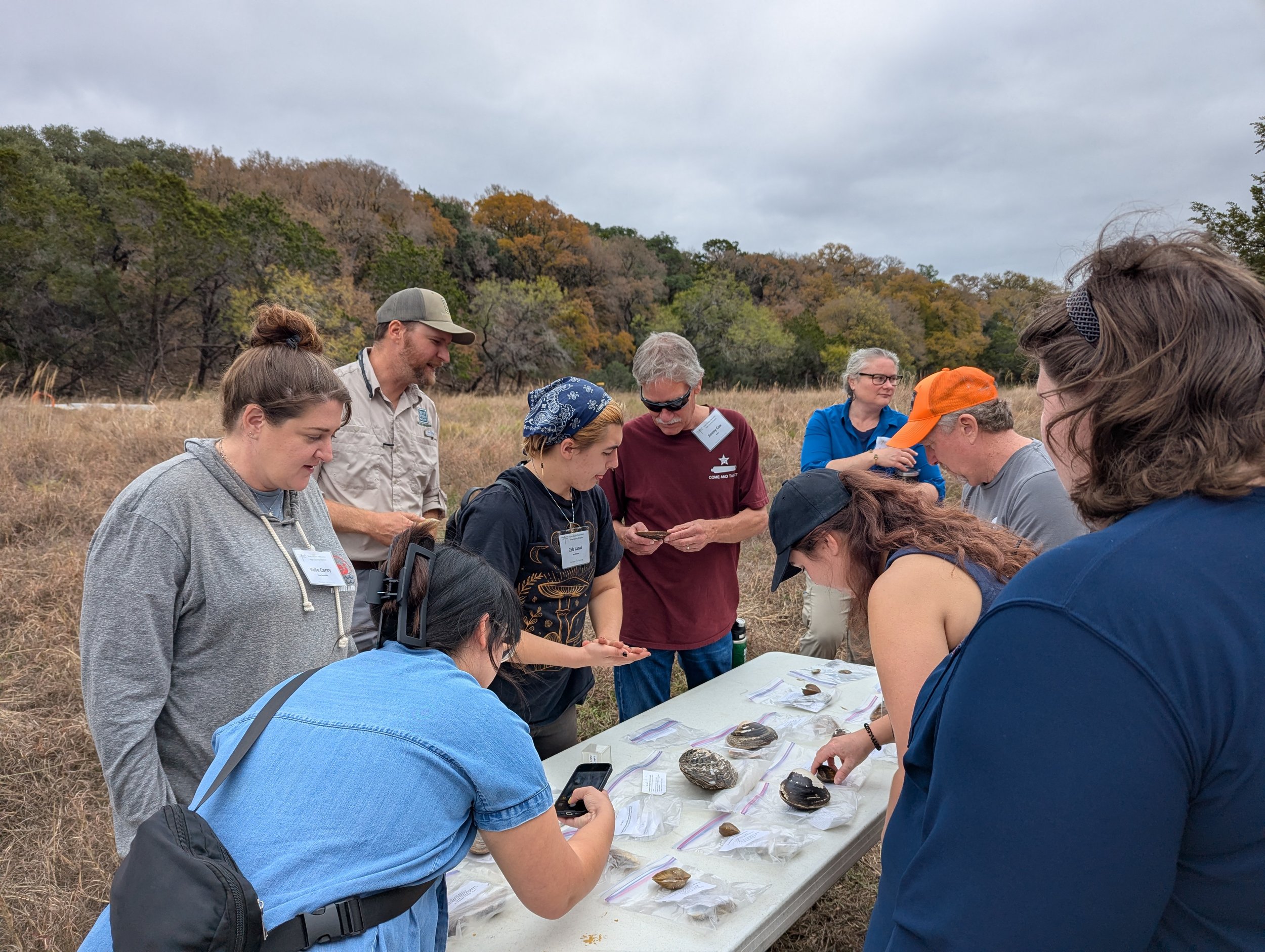
John Knox Ranch Photo courtesy Katie Simoneaux
As of the writing of this article, class #12 has yet to happen, but we anticipate that it will be another great one. Our training program will culminate with a final talk from David Womer on Texas herps (he usually brings his live snakes, which is a fan favorite for most!) and a wonderful lesson on urban wildlife from retired TPWD biologist and current Kyle Parks and Rec Department Conservation Division Manager John Davis.
But that’s not all! Our program also included four site visits: a trip to Jacob’s Well to learn about trees from Hays County Parks’ Karl Flocke and anthropology and geology from Katherine Sturdivant and Clover Clamons of Hays County Parks and TxDOT, respectively; a visit to trainee Marian Brackney’s property to learn about watershed restoration with TPWD biologist Gaby Tamez, grasslands with UT Austin research scientist Kat Tisshaw, and the LBJ Wildflower Center project with volunteer manager Carrie McDonald; a trip to Patsy Glenn Refuge to learn about birding and optics with David Womer; and a fossil hike around trainees Peter Fisher and Sharon Lundgren’s property with retired geologist Dr. Bill Dupre.

Jacob’s Well Natural Area Photo courtesy Katie Simoneaux
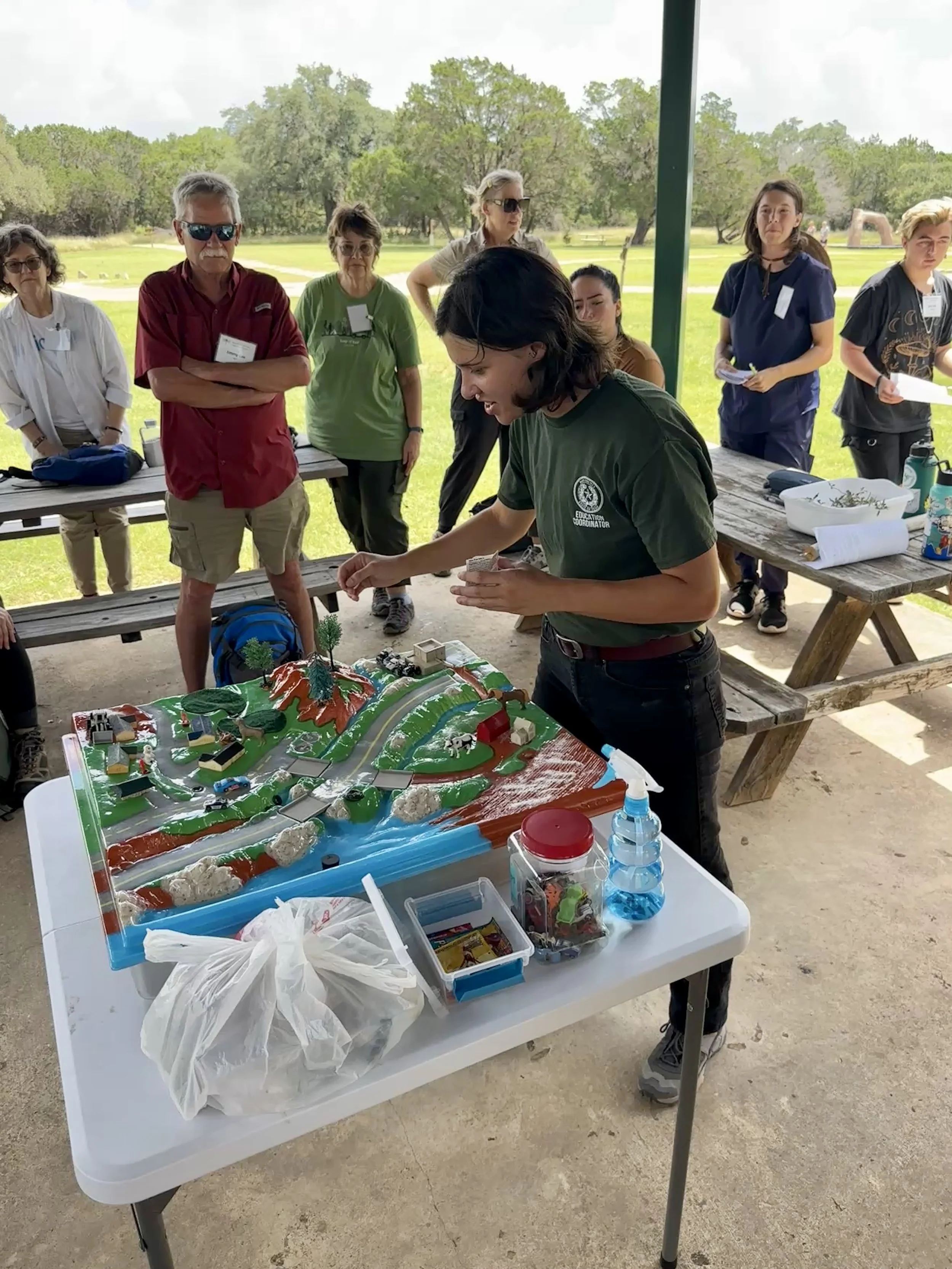
Jacob’s Well Natural Area Photo courtesy Jill Zipperer

Marian Brackney Site Visit Photo courtesy Katie Simoneaux

Patsy Glenn Refuge Photo courtesy Jill Zipperer

Patsy Glenn Refuge Photo courtesy Jill Zipperer

Peter Fisher and Sharon Lundgren Site Visit Photo courtesy Katie Simoneaux

Peter Fisher and Sharon Lundgren Site Visit Photo courtesy Katie Simoneaux

Peter Fisher and Sharon Lundgren Site Visit Photo courtesy Sharon Lundgren
And perhaps one of my favorite parts of the training program: we hosted four optional field trips to marvels around Hays and neighboring counties. We watched in awe as the bats emerged from Bracken Cave, explored the hidden paradise that is Westcave Preserve, learned about the power of ecological restoration at Austin Wildland’s Onion Creek tract, and took in the beauty of fall as we meandered along Honey Creek.

Bracken Cave Photo courtesy Jill Zipperer
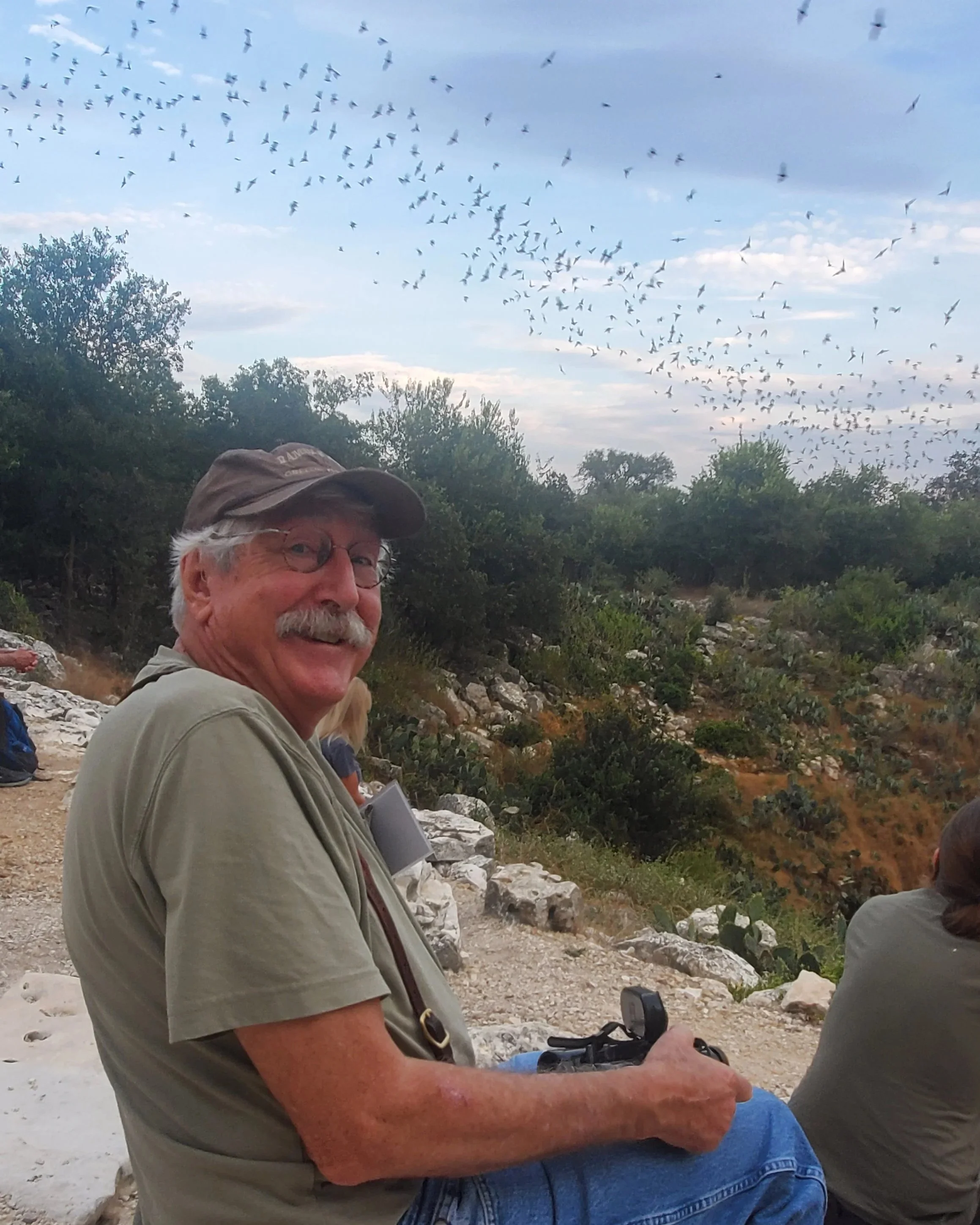
Bracken Cave Photo courtesy Jill Zipperer
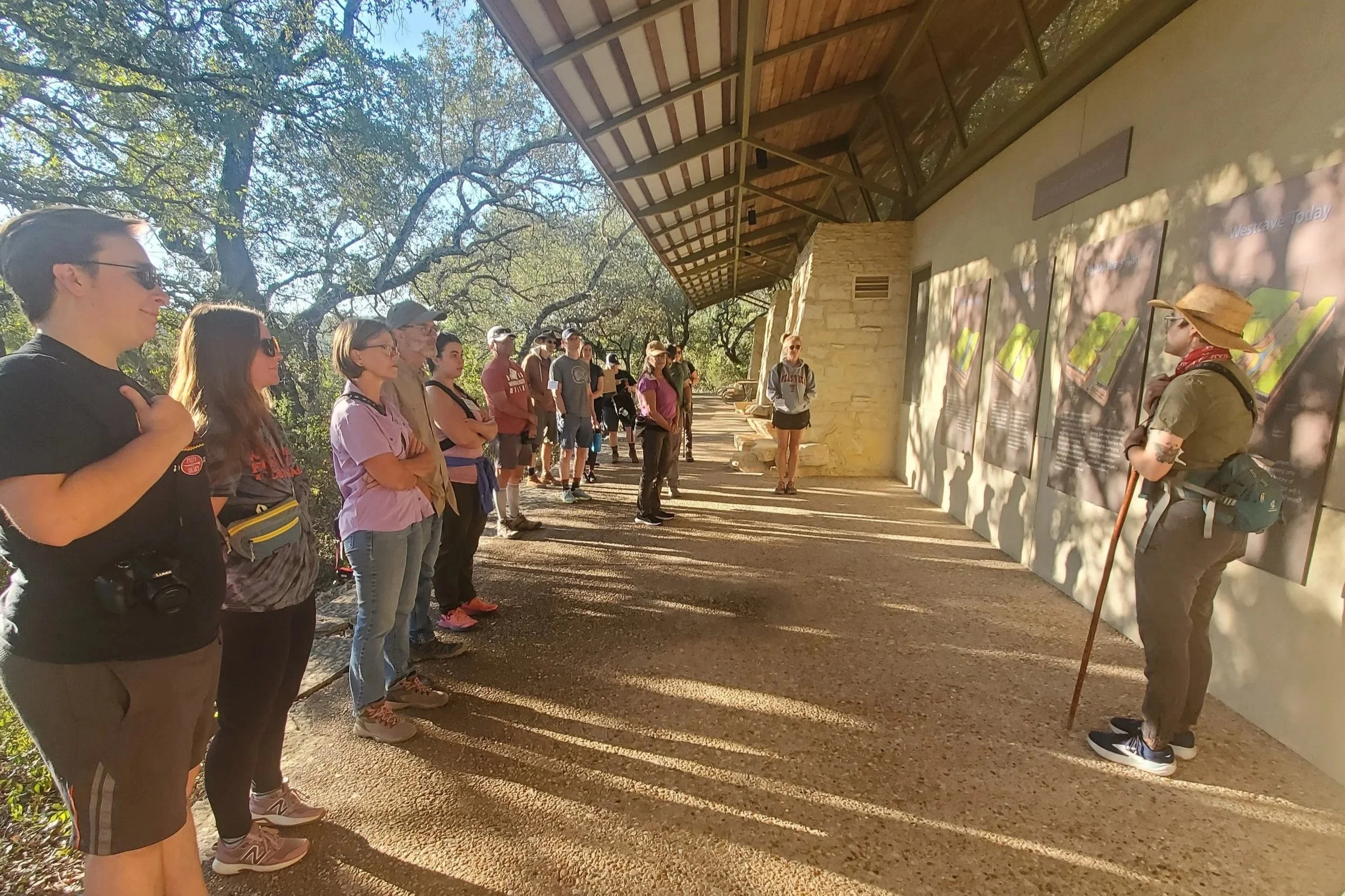
Westcave Preserve Photo courtesy Jill Zipperer

Westcave Preserve Photo courtesy Jill Zipperer
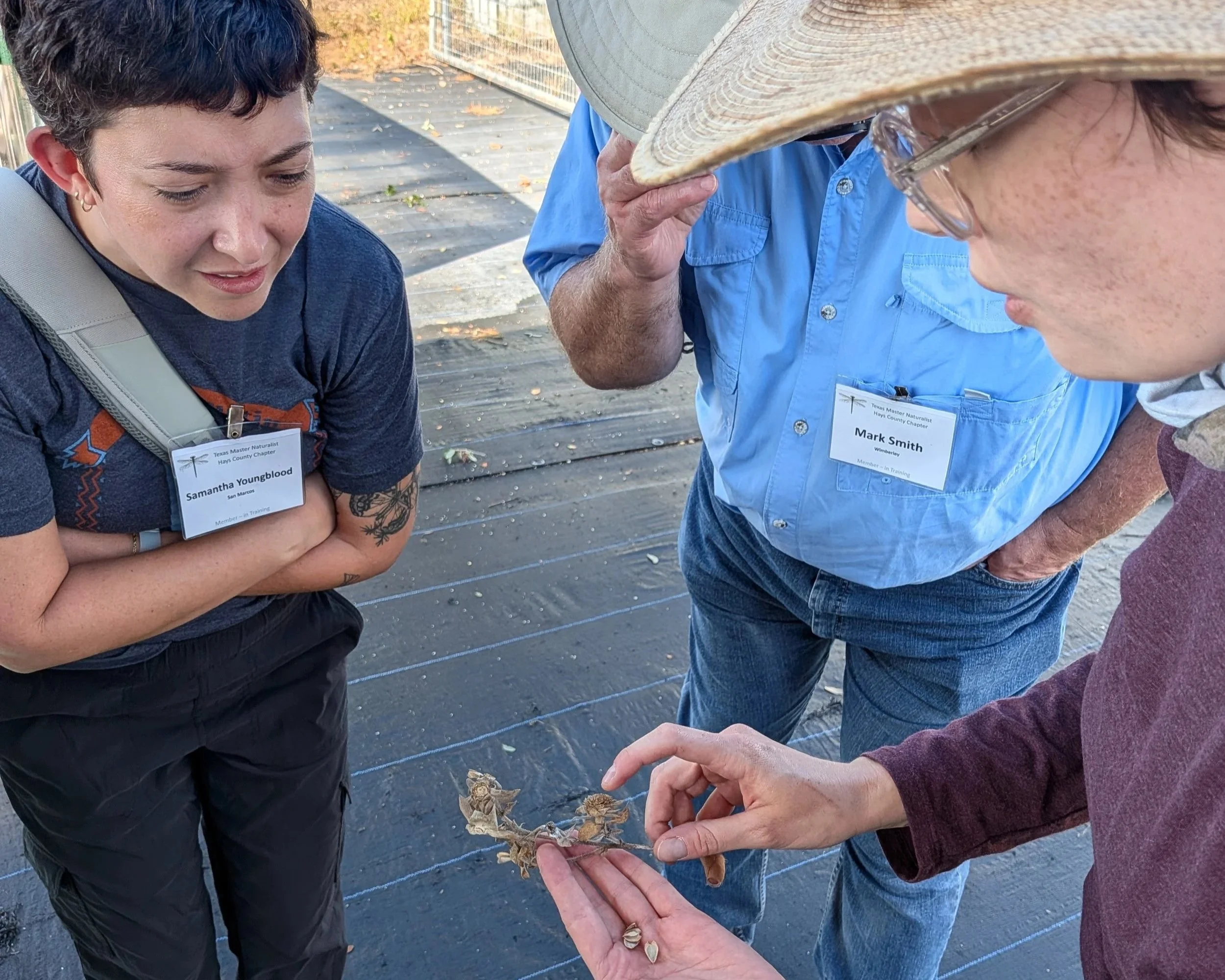
Austin Wildland’s Onion Creek Tract Photo courtesy Jill Zipperer

Austin Wildland’s Onion Creek Tract Photo courtesy Jill Zipperer
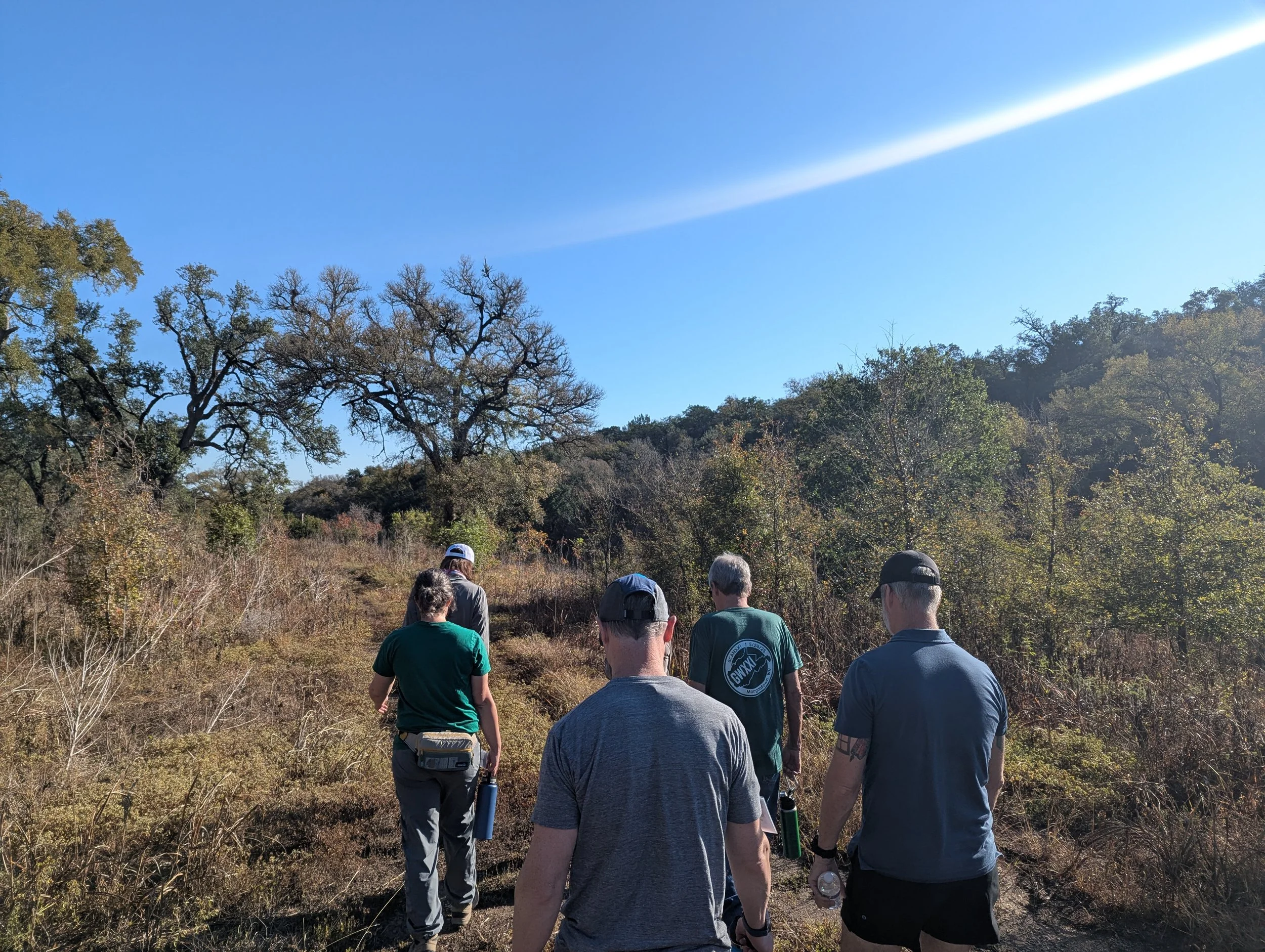
Austin Wildland’s Onion Creek Tract Photo courtesy Katie Simoneaux

Honey Creek Photo courtesy Katie Simoneaux
As this program—my first to lead—comes to an end, I am filled with awe and gratitude for the members of this program. From trainees to speakers, mentors to community partners, this chapter is full of world-changers who are making a difference in our community, one volunteer hour at a time. It is an honor and a privilege to get to serve alongside each of you.
“And to my Free-tailed Bats, my only words of advice: fly together, catch all the bugs, and avoid the skunks!”
—Jill Zipperer
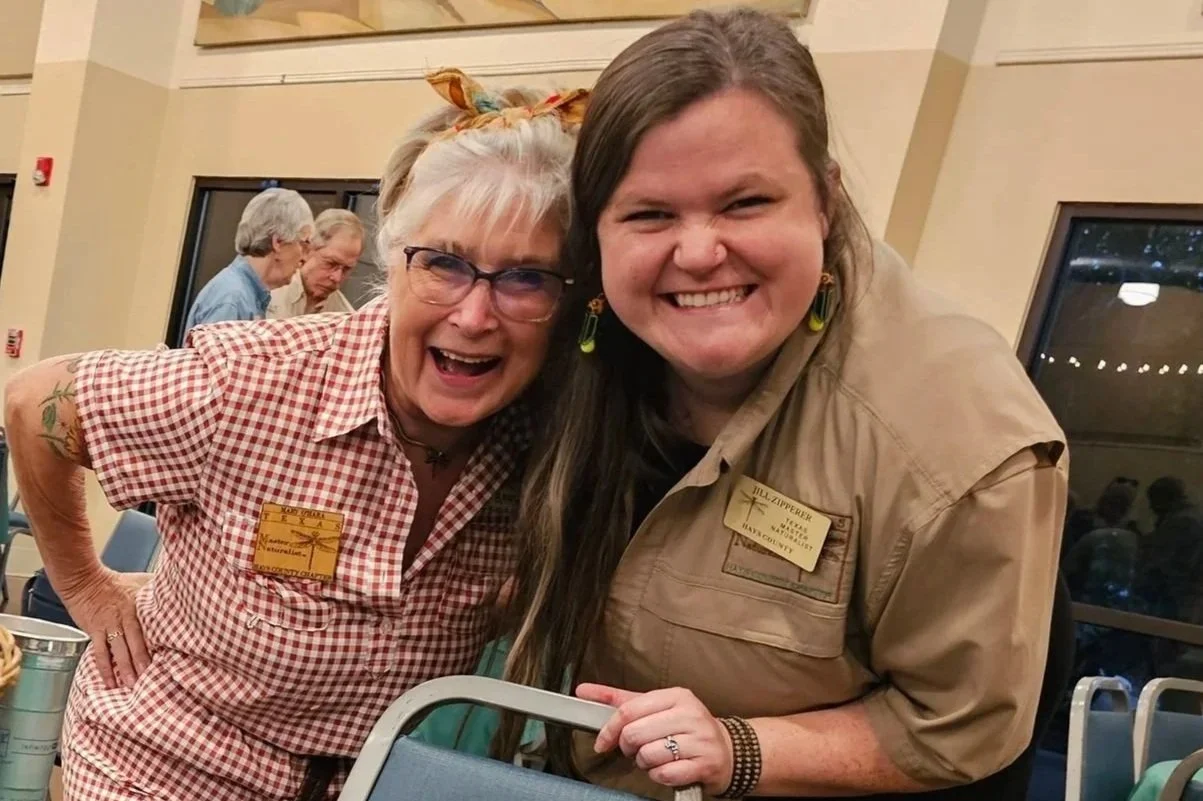
Training Class Co-Directors Mary O’Hara and Jill Zipperer Photo courtesy Mimi Cavender