
About the Cover…
Egrets of Plum Creek
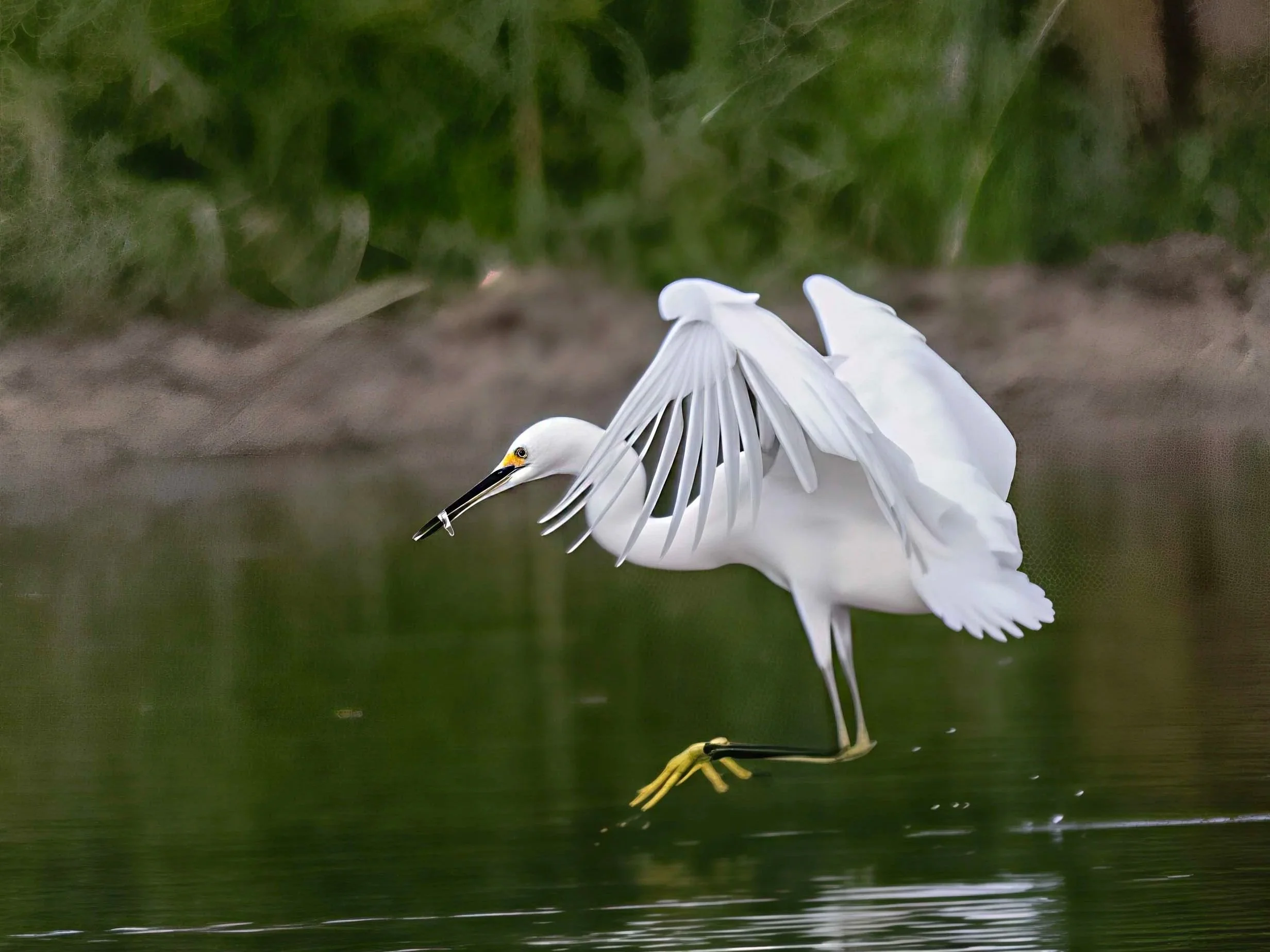
Snowy Egret Photo courtesy Mike Davis
Betsy Cross with Mike Davis
In this beautifully timed image by photographer Mike Davis, a Snowy Egret has just captured a tiny fish. As it lifts from the water, the egret’s bright yellow feet skim the surface. This month’s cover photo captures one of those fleeting moments that remind us why places like ours matter: a wild life reflected in the still water of Plum Creek.
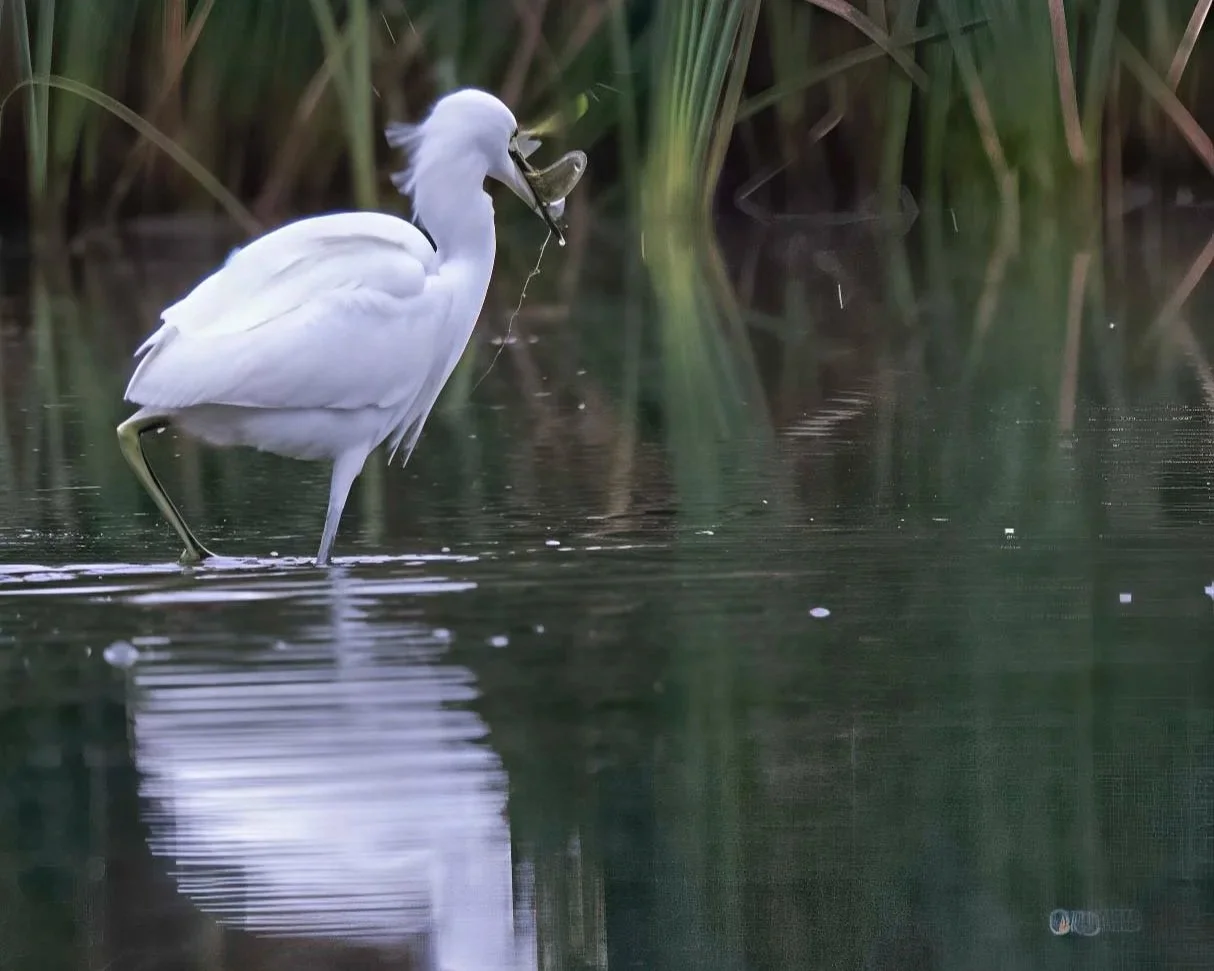
Snowy Egrets are lively hunters, stirring the shallows with their colorful feet to startle prey into motion.
Those greenish-yellow feet are a hallmark of the species for most of the year, turning a deeper orange-yellow only at the height of breeding season, when even the bare skin on their face shifts from yellow to red.
Once a fish is subdued by the Snowy Egret, it is maneuvered to be swallowed head first.
Photo courtesy Mike Davis
Snowy Egrets are also surprisingly adaptable. Cornell Lab of Ornithology notes that Snowy Egrets sometimes hybridize with other heron species, including Tricolored Herons, Little Blue Herons, and Cattle Egrets. Their longevity is remarkable as well. The oldest known Snowy Egret lived at least 17 years, traveling from Colorado to Mexico.

“Looks like the Snowy is dancing a ballet on the water's surface.” —Hays County Master Naturalist Doray Lendacky Photo courtesy Mike Davis
For detailed migration and breeding range maps for the Snowy Egret, see The Texas Breeding Bird Atlas and Audubon.
And for additional photos of the Snowy Egret with comparisons to similar species, including the Great Egret, the Reddish Egret, the Little Blue Heron, and the Western Cattle-Egret, access this link: Cornell Lab All About Birds.
A Tale of Two Egrets
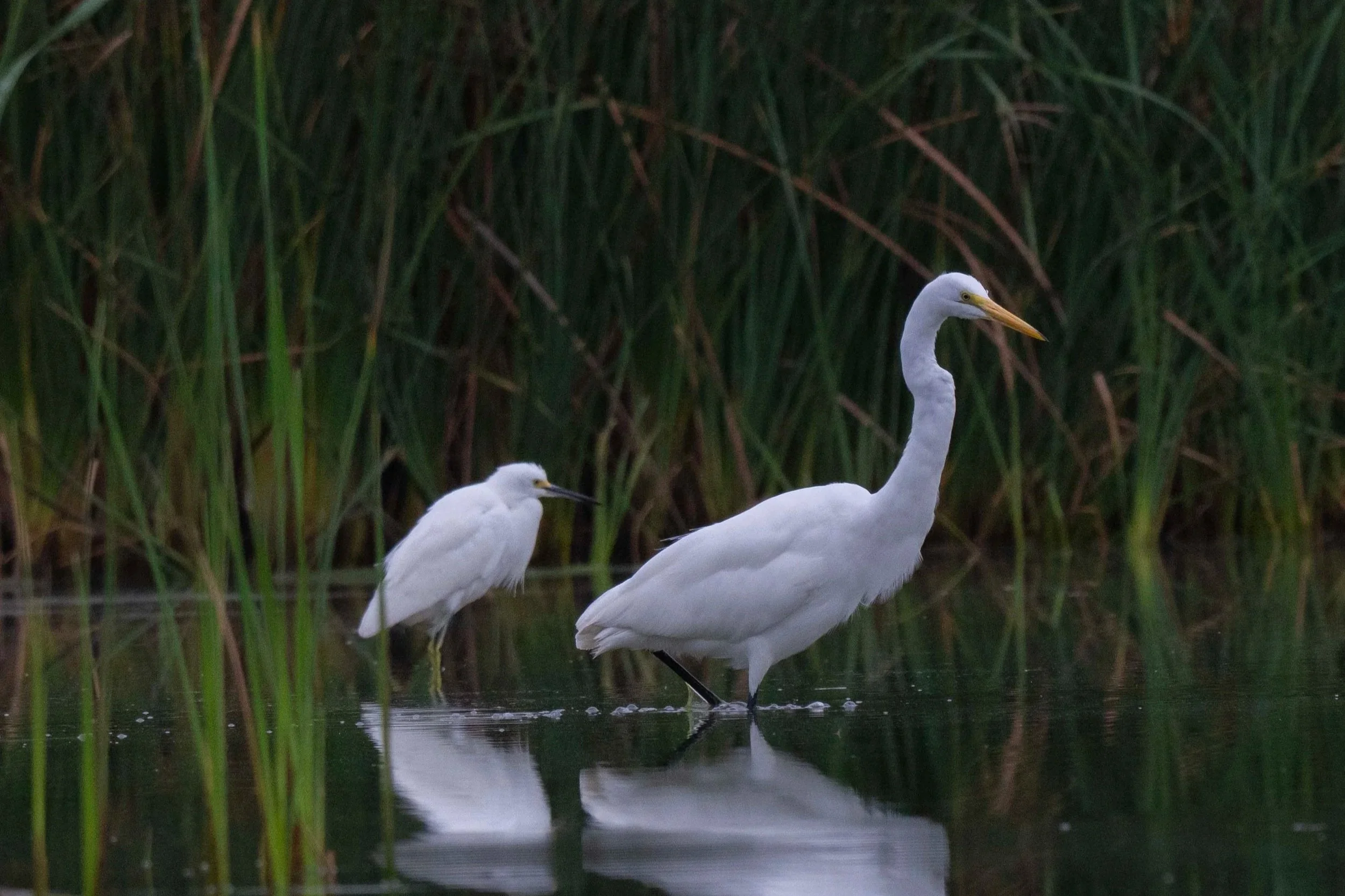
Snowy Egret and Great Egret - November 29, 2025 Photo courtesy Mike Davis
Mike Davis and Betsy Cross
On a stretch of Plum Creek in Kyle, Texas, two brilliant white figures stand side by side—a rare moment when the elegant Great Egret and the lively Snowy Egret share the same shoreline.
At first glance they look similar, but in the stillness of this November morning, their differences are more obvious. One stands tall and statuesque; the other shifts lightly on bright yellow feet, alert and ready to strike. Both are efficient hunters, wading in the shallows and catching small fish, minnows, frogs, snakes, and small mammals, such as mice. Together, they are a study in contrast, beauty, and resilience.
The Great Egret is the taller of the two, standing more than three feet high with a long, powerful neck and a heavy yellow bill. Its feet are solid black. Great Egrets hunt with deliberate patience—motionless for long stretches, waiting for the perfect moment to spear a fish with one swift thrust. There is a calm confidence to their presence, a sense of quiet authority earned from a position atop the wetland food chain.
By contrast, the Snowy brings energy to the scene. Smaller and more delicate, it is instantly recognizable by its black bill and bright yellow feet—perfect for stirring the shallows and flushing prey into view. Snowy Egrets are animated hunters, moving with quick, erratic steps, and sudden bursts of activity. During the height of breeding season, their greenish-yellow feet intensify to a richer orange-yellow, and the bare skin on their face turns a striking reddish hue. These colorful changes, along with their lively behavior, give the Snowy an unmistakable personality.
A Shared Story of Survival
Though they differ in size and style, these two birds share a dramatic history. In the late nineteenth and early twentieth centuries, both were hunted extensively for their ornate breeding plumes, which were prized as decorations for fashionable hats of the time. Snowy Egrets suffered particularly steep declines. In the late 19th century, huge numbers of Snowy Egrets around Avery Island in Louisiana were killed for their plumes, and by 1910, their populations had plummeted. With the passing of conservation laws and the establishment of wildlife protections, both species slowly rebounded.
In Mike’s photograph, A Tale of Two Egrets, the pair becomes more than a field guide comparison—they become a study in balance. The Great Egret’s patient stillness alongside the Snowy Egret’s restless energy paints a portrait of wildness shared—a reminder that even familiar places still hold surprises, and our local waterways remain vital threads in the larger tapestry of Texas’ birdlife.
Today, these elegant birds are thriving in restored wetlands across the continent and stand as a conservation success story and a small triumph of environmental perseverance.
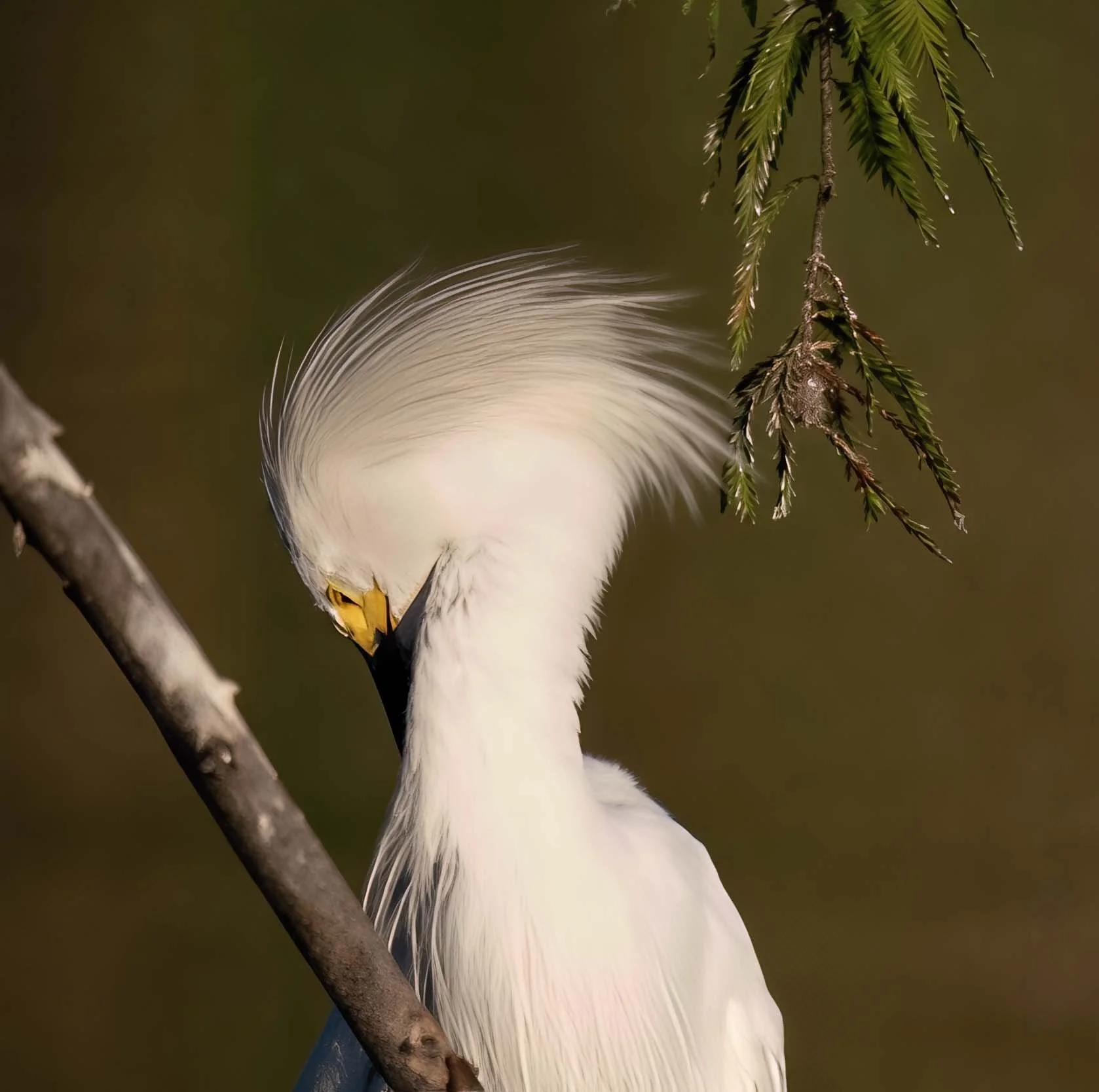
Portrait of the Snowy Egret Photo courtesy Mike Davis