About the Cover…
August 18, 2026
7:54 - 8:02 p.m.
Betsy Cross
Just before sunset on August 18, I noticed a surprising number of dark birds dropping into the grass in my yard. From 40 to 60 feet away in the fading light, I couldn't make out any distinguishing features. They all looked dark, almost black. Starlings, maybe? I watched for a while, but there were so many of them that my curiosity finally got the best of me. I went inside, grabbed my camera and headed back out to see if my zoom lens could help me figure out just who this mysterious evening flock was.
As I scanned the yard, I began noticing birds in places I hadn't seen them earlier—a couple on a distant tree limb, one clinging to a tree trunk, a couple perched on a wire. All told, there were at least 10 birds, with most of them dropping from their perches into the grass below.
The low light made identification impossible. I shot over 50 photos in about eight minutes. I didn't want to waste precious time stopping to review my photos. A time or two, I thought I caught a flash of blue, but I shrugged it off and kept going—watch, focus, click. The light was fading fast.
My photography partner and I have a saying: “if we don’t get the picture, even if it’s just an identifier, we can’t count the bird.” And naturally, I always hope for a photo that is better than an identifier, but given the fading light, my expectations were pretty low that I had captured even that.
So I was absolutely shocked when I began zooming in on the photos on my camera’s LCD screen. Those mysterious dark birds were Eastern Bluebirds! And not just any bluebirds. The birds I had photographed were all juveniles. I looked through every one of the 55 photos. Not a single adult appeared in any of them. I was stunned.
And Then the Bluebirds Came
What makes the evening of August 18 so special to me is that for the past 11 years, I have watched and waited for Eastern Bluebirds to arrive in my neighborhood. I've been monitoring nest boxes on other properties for more than 15 years, but no bluebirds were nesting in mine at home. Don't get me wrong, I love the Bewick's Wrens and Black-crested Titmice that almost always find a home in my nest boxes. But not the bluebirds.
I chalked it up to the small amount of open grassland we have here, and that could definitely be a factor. I had seen bluebirds on occasion. Once, a pair stopped by and inspected one of my boxes but didn't occupy it. A few times, small flocks of adult Eastern Bluebirds visited my birdbath. But they were visitors. They never stayed.
Then, early in the winter of 2026, I began hearing a bluebird calling. Was I actually hearing it correctly? I started running Merlin Sound ID just to confirm, and over and over it showed me an Eastern Bluebird. Every now and then, I would catch that flash of blue as a bird lifted off the driveway and flew into the oaks.
As spring settled in, the bluebirds became more present. I heard the male calling and saw him perched on the wire in my front yard. He sat there unfazed while I walked beneath him and took pictures. I saw a bluebird couple together on a branch in the front yard. They were becoming a regular presence, even though they never used my nest boxes. I watched them flutter down across the street to forage for insects in the grass.
March 5, 2026 - Adult Female Eastern Bluebird
July 8, 2026 - Adult Male Eastern Bluebird
I never discovered where they were nesting, but their continued presence made me suspect they had found a suitable cavity somewhere nearby. I don't know how many broods they may have raised. I don't know whether the young birds I photographed on August 18 belonged to this pair, or even whether they all came from the same family.
But I do know this: even now, I can still hear the bluebirds calling.
So why were all these young bluebirds together? As I began looking into this behavior, I learned that young Eastern Bluebirds often remain together after fledging. They are dependent on their parents for several weeks and may stay together during this period. Young from earlier broods may later join other juveniles, while some family groups stay together through summer and into fall. By late summer, Eastern Bluebirds may form small flocks of adults and immature birds.
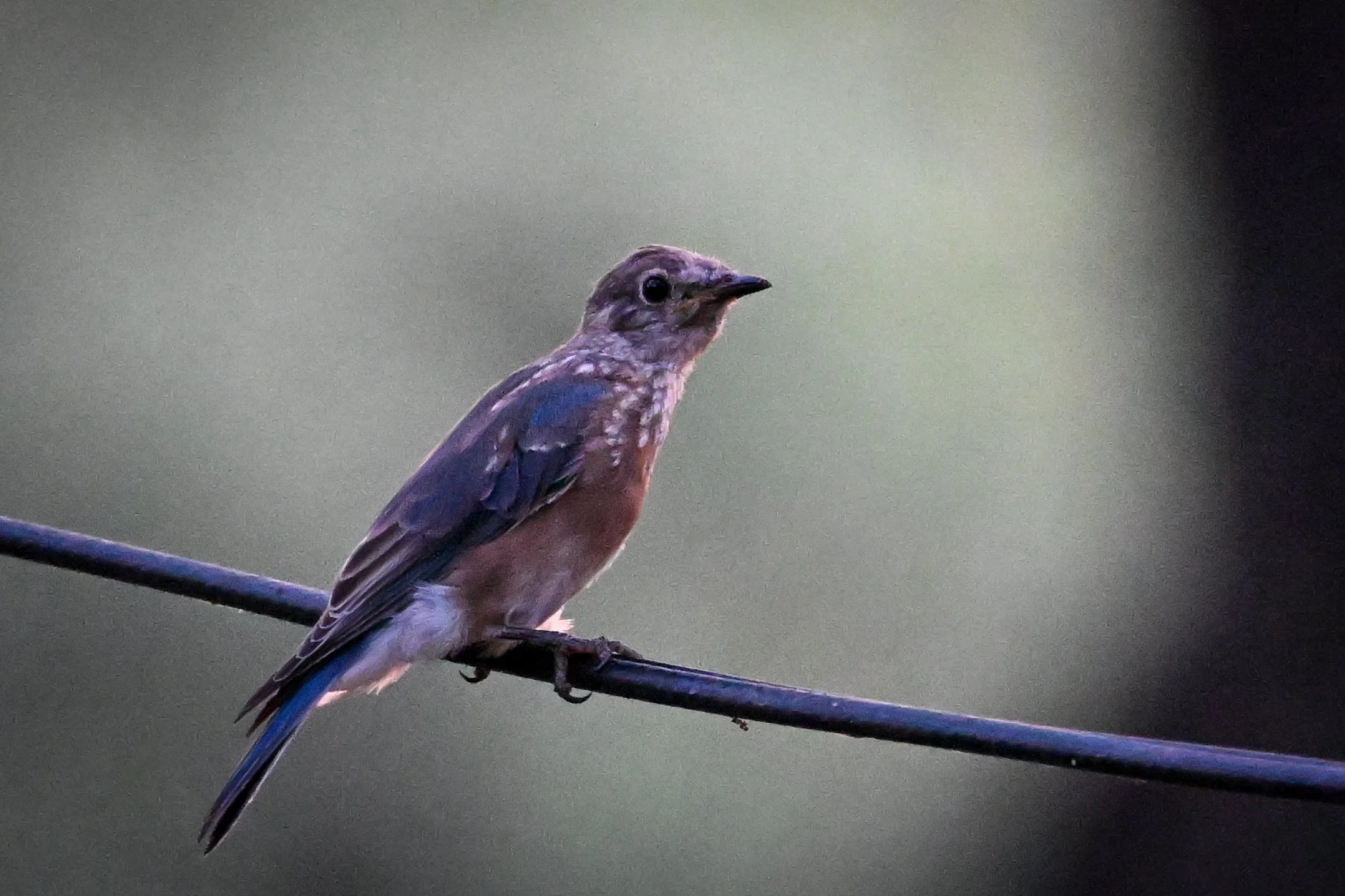
The hunting behavior I witnessed was also classic bluebird behavior. Bluebirds often perch on wires, branches or other elevated spots, scanning the ground before dropping down to capture insects—the very behavior that first caught my attention that evening.
I will never know where these young bluebirds fledged, whether they were related, or how many families or broods they represented. But I do know that if my curiosity hadn't gotten the best of me that evening, I would have missed the whole thing. They would have remained nothing more than a flock of dark birds moving through the grass.
It makes me wonder: How much of the natural world passes right before our eyes without our ever knowing what we've seen?
Maybe we don't always need to know what we're looking at. Sometimes we just need to notice that something is happening, and be curious enough to look a little closer.
May your curiosity get the best of you too!
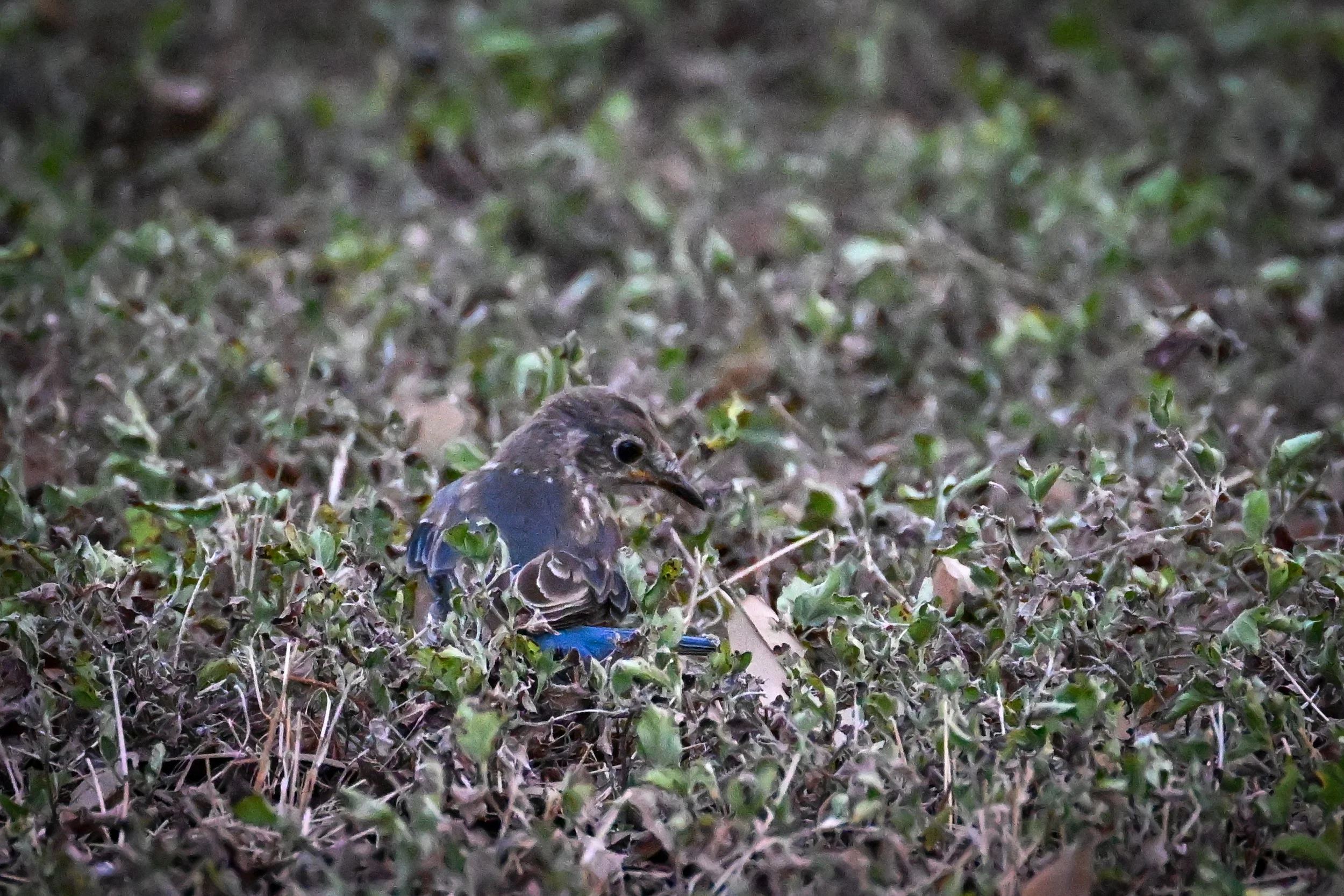
Young bluebirds may hang with each other after fledging for a period of weeks or months. Being grouped together makes it easier for their parents to find and feed them. (Juvenile bluebirds are fed by their parents for about 30 days after fledging). Sialis.org/flocks/
Bluebirds have strong family ties. Juveniles may remain with their parents through the summer and early fall. They may assist their parents with feeding a subsequent brood. https://www.sialis.org/fledgingandfledglings/