A Workshop for HCMN Members
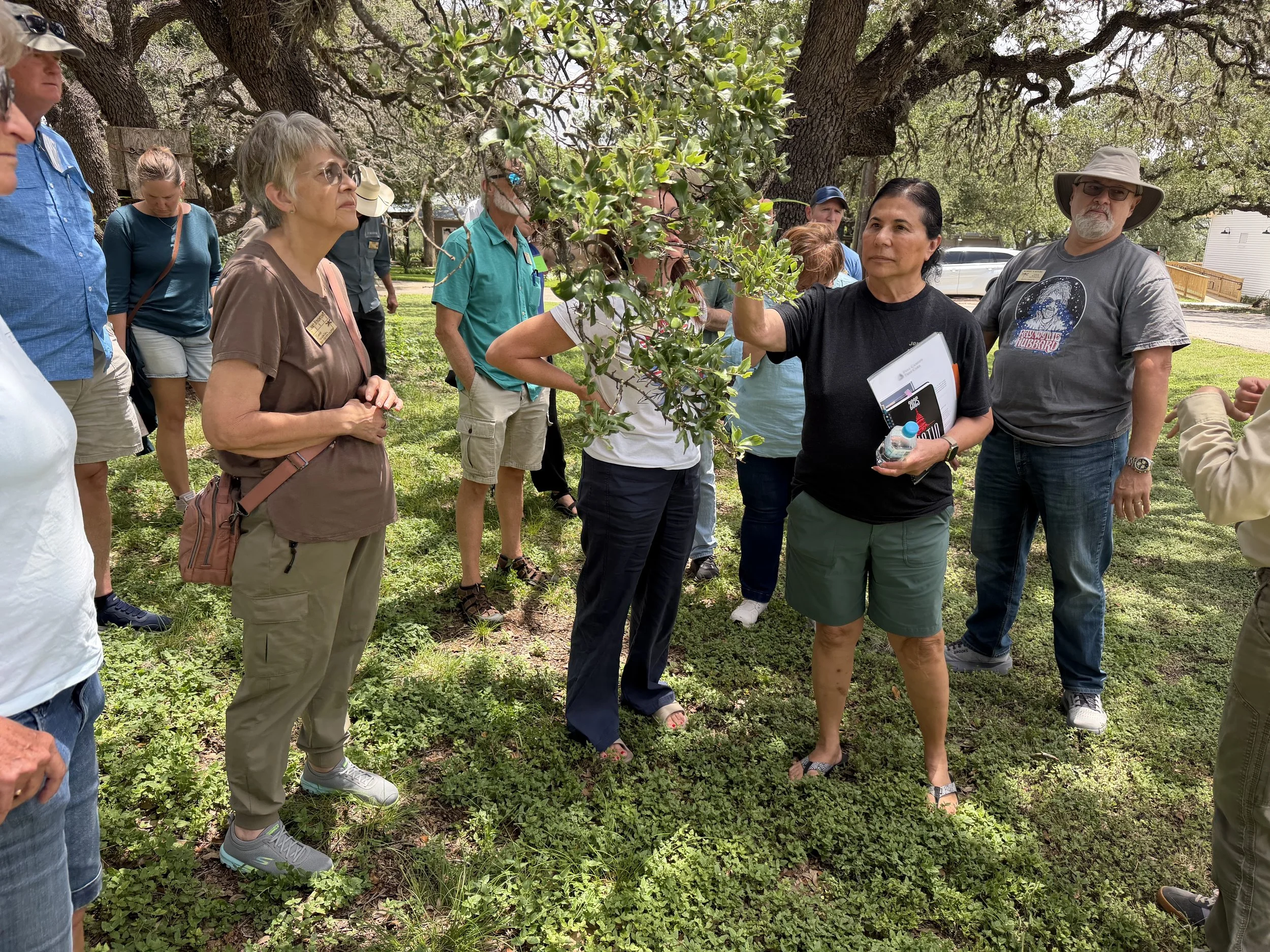
Right outside the Driftwood Community Center was a mott of live oaks showing both oak wilt symptoms and signs of recovery. Tags marked the dates of past fungicide injections. Here, we’re looking for veinal necrosis, a pattern where leaves yellow and the veins turn brown. This foliar symptom is one of the clearest indicators of oak wilt. All photos courtesy Samantha Youngblood
Samantha Youngblood
Across Austin and the Hill Country, every place I’ve lived has had a live oak in the backyard. Those trees have been part of my life since childhood, through the house we rented after we got married, and the home we live in now. So when I saw a chance to learn about tree care and forest health from two Texas A&M Forest Service woodland ecologists, I signed up without hesitation. I owe a lot to the oaks.
The first workshop session, held on July 18 at the Driftwood Community Center, featured Alison Fulton, who covered tree biology and general care, including pruning. Camille Wiseman followed with a talk on diseases, pests, and stressors such as oak wilt, Hypoxylon, drought, and the diagnostic process.
A second session on August 29 focused entirely on oak wilt and included a site visit to Charro Ranch Park in Dripping Springs. I joined these seminars to understand how to better care for native trees, but there’s also a growing need to train more people to diagnose, manage, and prevent the spread of oak wilt in Hays County. This photo essay shares a few scenes from the workshop and the small details that help us understand oak health.
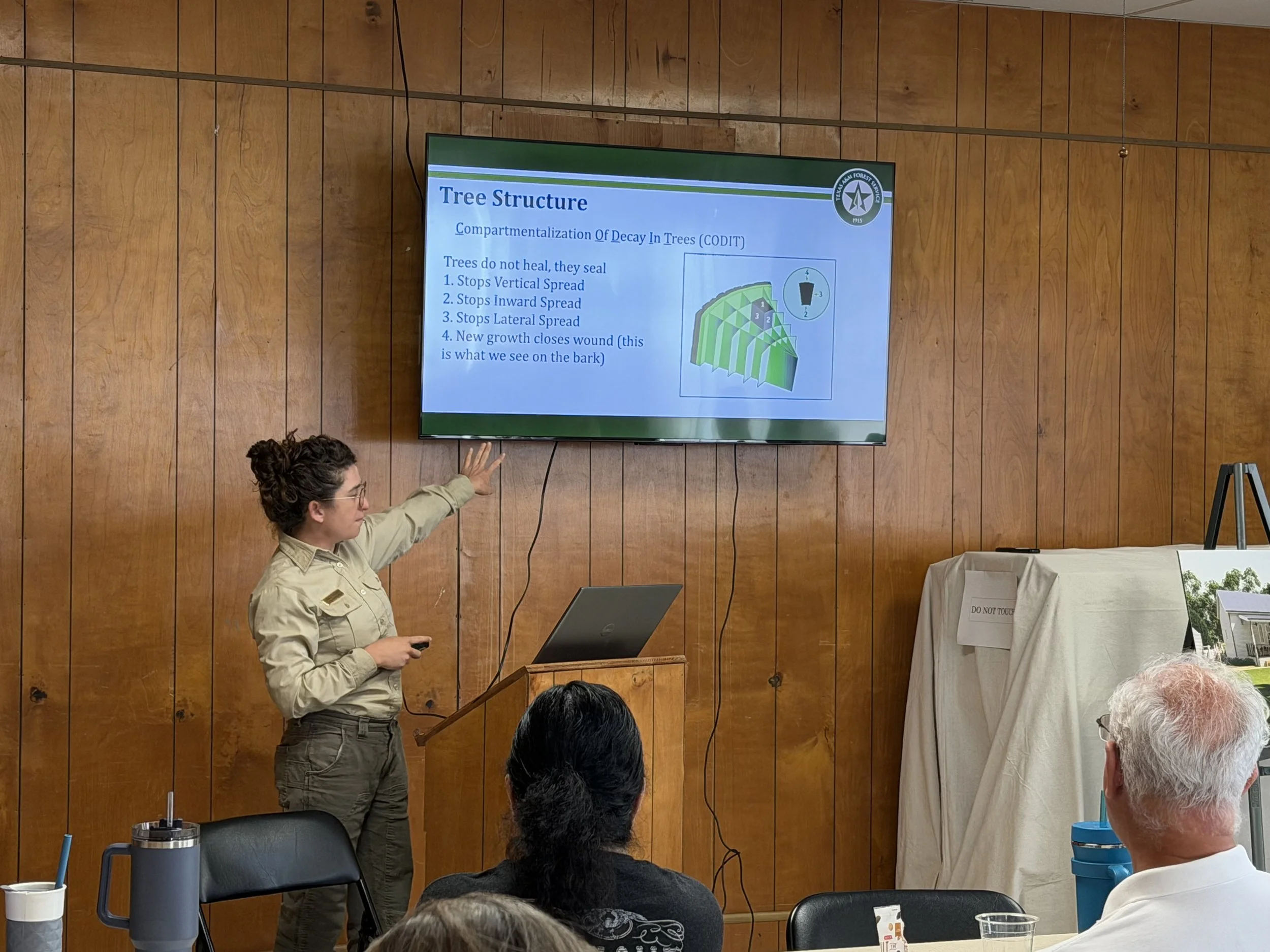
In Hays County, our trees face many stressors, from drought and freeze damage to pollution and soil disturbance. In this photo, Camille Wiseman explains CODIT, the Compartmentalization of Decay in Trees, which describes how trees respond to wounds, decay, and fungal infection.
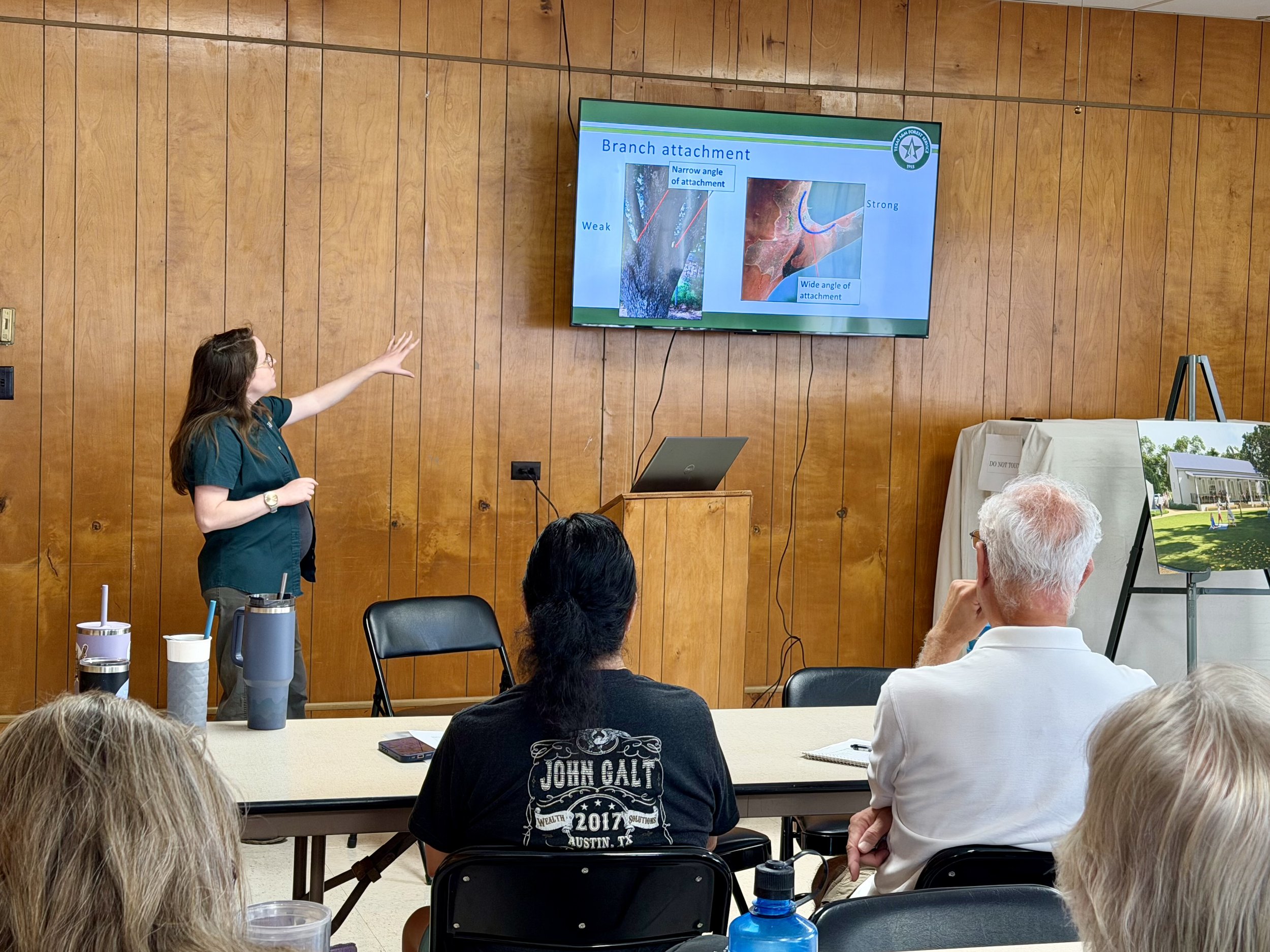
“The goal with pruning is to minimize wounding,” said Alison Fulton, pictured here. When pruning is necessary, especially for safety, angle cuts so the tree forms a circular wound rather than an elongated oval one. To reduce the risk of oak wilt, apply a light coat of paint immediately after making the cut. Never prune oak trees between February and June.
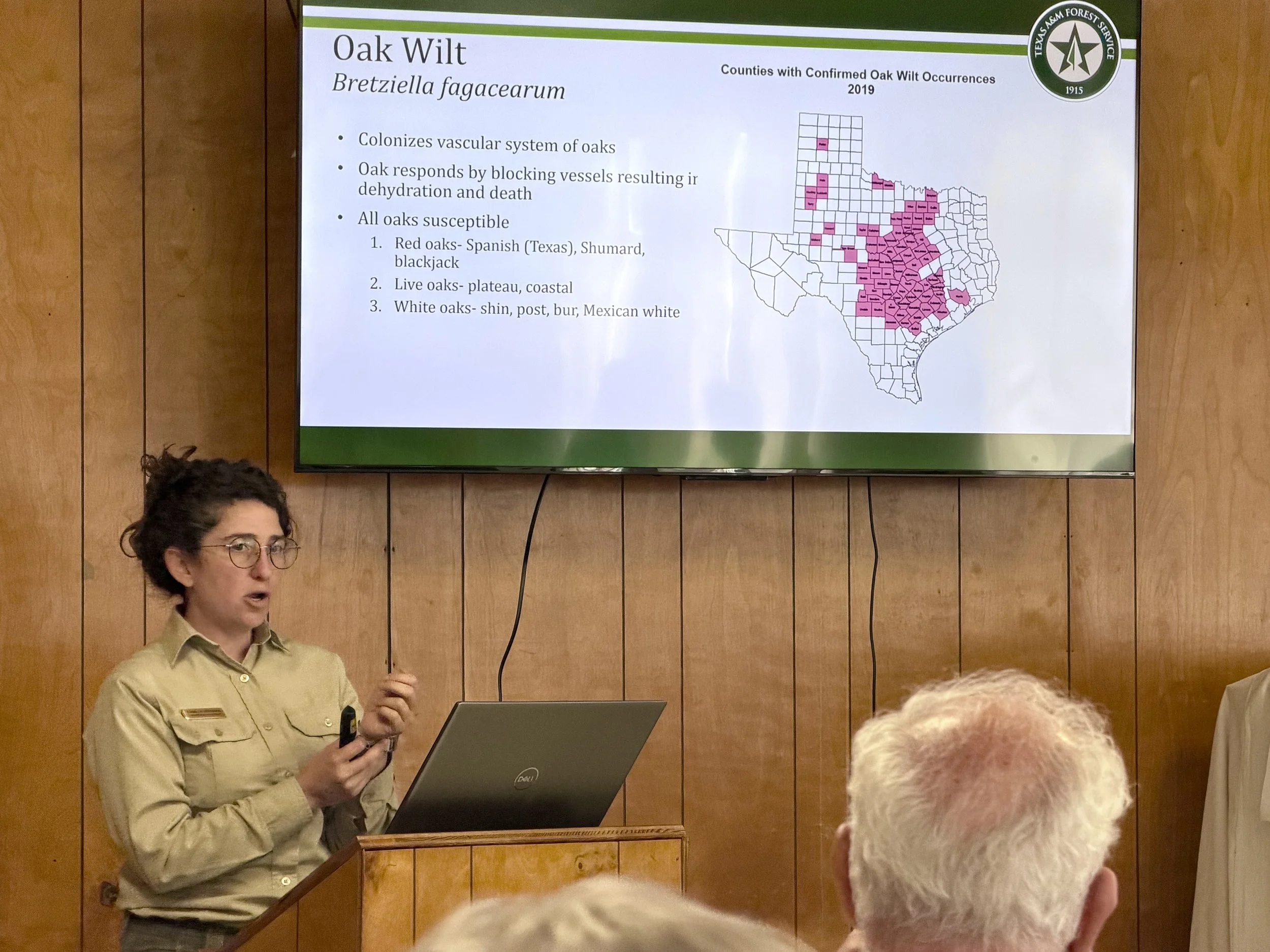
All oaks in Texas are susceptible to oak wilt. The disease is confirmed in 76 counties, including Hays. Red oaks are highly susceptible and can die within a month. White oaks show more resistance but are not immune. Live oaks have intermediate susceptibility but are often more severely affected because of their interconnected root systems.
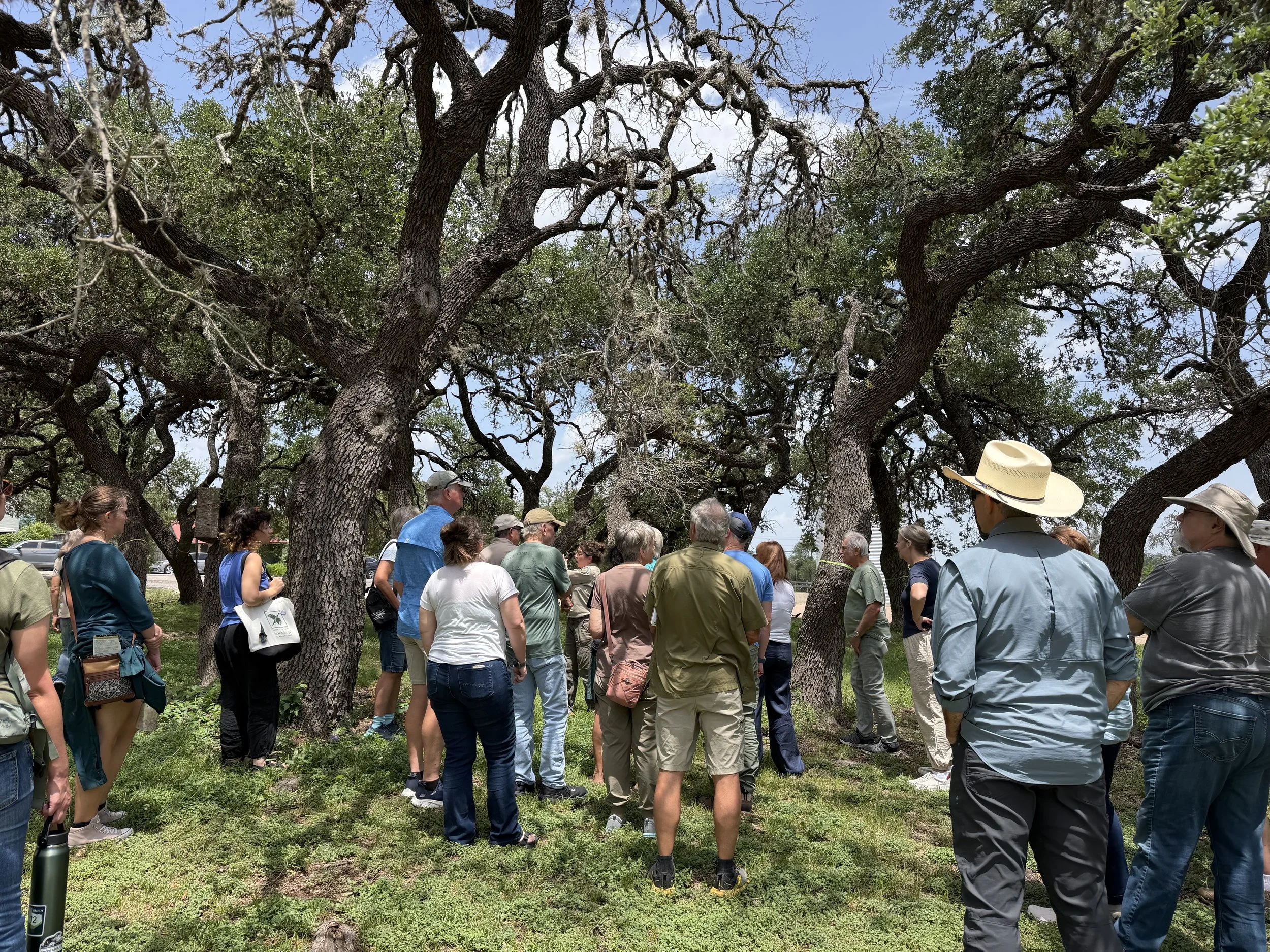
Oak wilt management depends on early detection and quick action. Preventing new infections, stopping root-to-root spread, injecting high-value oaks with fungicide, and diversifying the landscape are all tools available to Texas landowners. Camille advised not waiting until a favorite tree shows symptoms before contacting an expert.
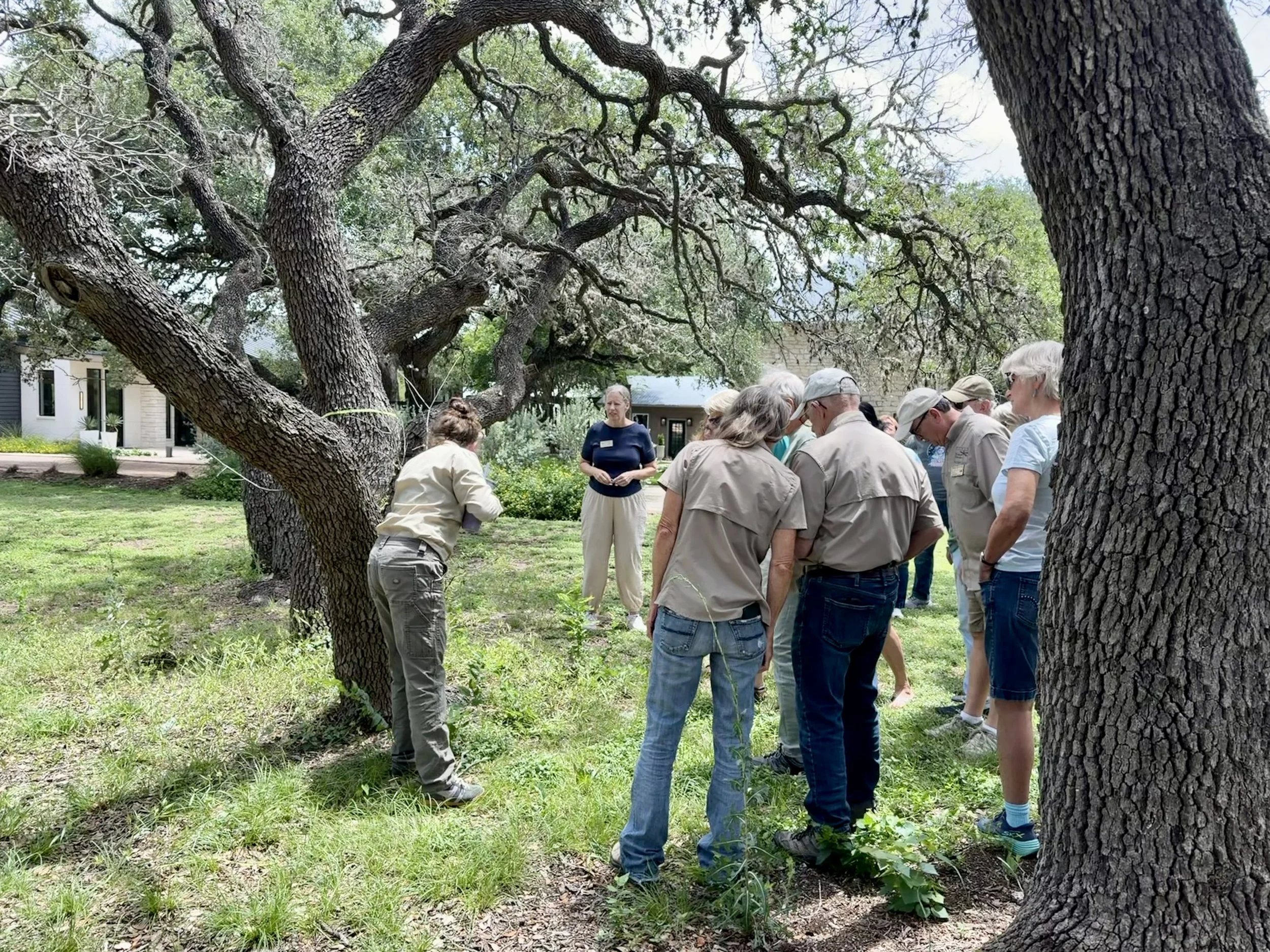
Camille explained that identifying the cause of tree death often starts with simple observations. Look at the foliage still on the tree, the leaves on the ground, and the roots and root collar. Abiotic factors such as soil compaction, and biotic factors such as fungi or parasitic plants, can all contribute to tree decline.
The website texasoakwilt.org offers educational resources on oak wilt and includes a list of vendors who provide services such as trenching, injections, and tree removal. Treesaregood.org is another useful site for finding certified arborists.
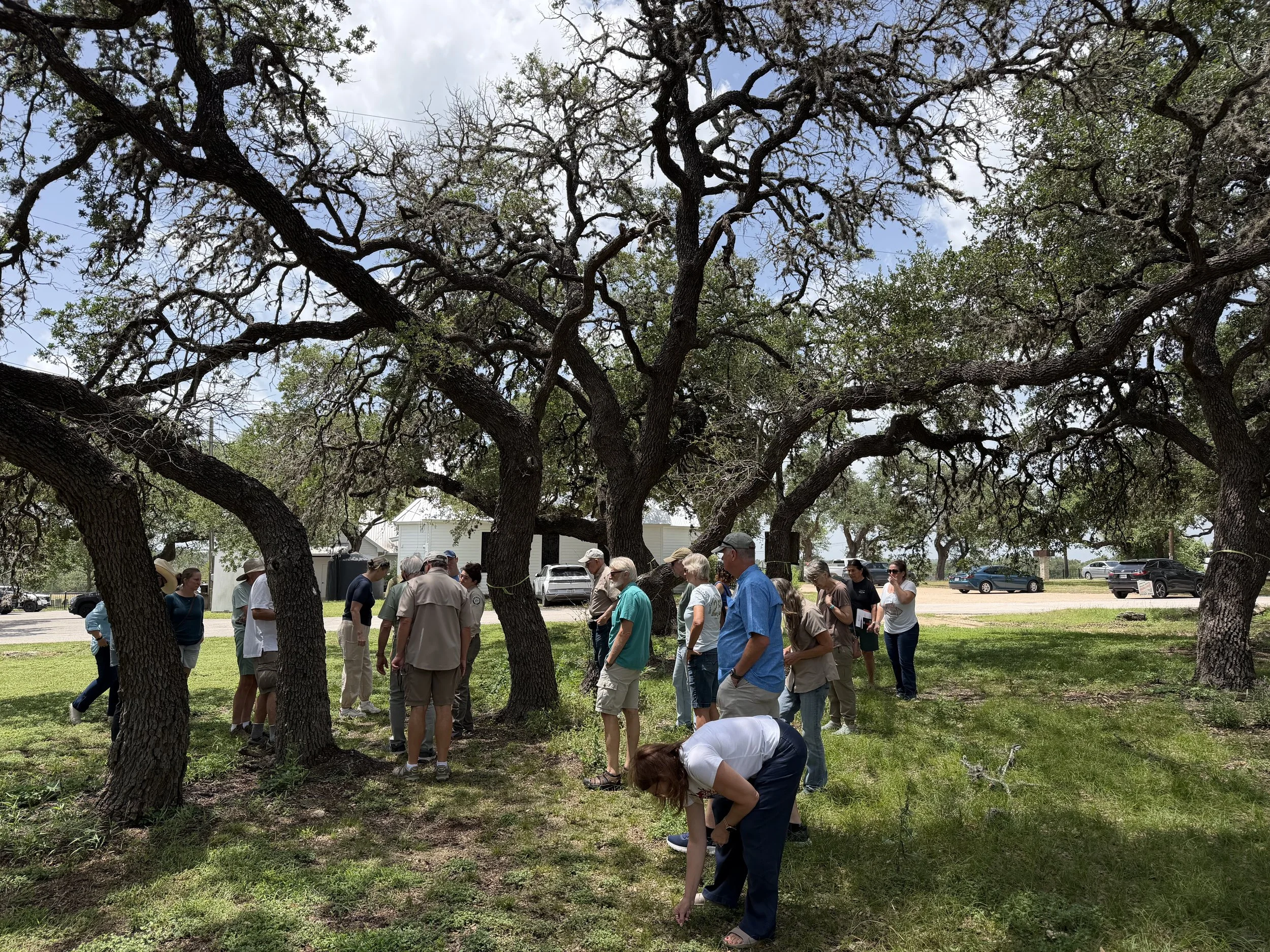
Age and species diversity are key to long-term forest health, said Camille. To diversify beyond oaks in the Hill Country, consider planting cedar elm, sycamore, or Escarpment black cherry.
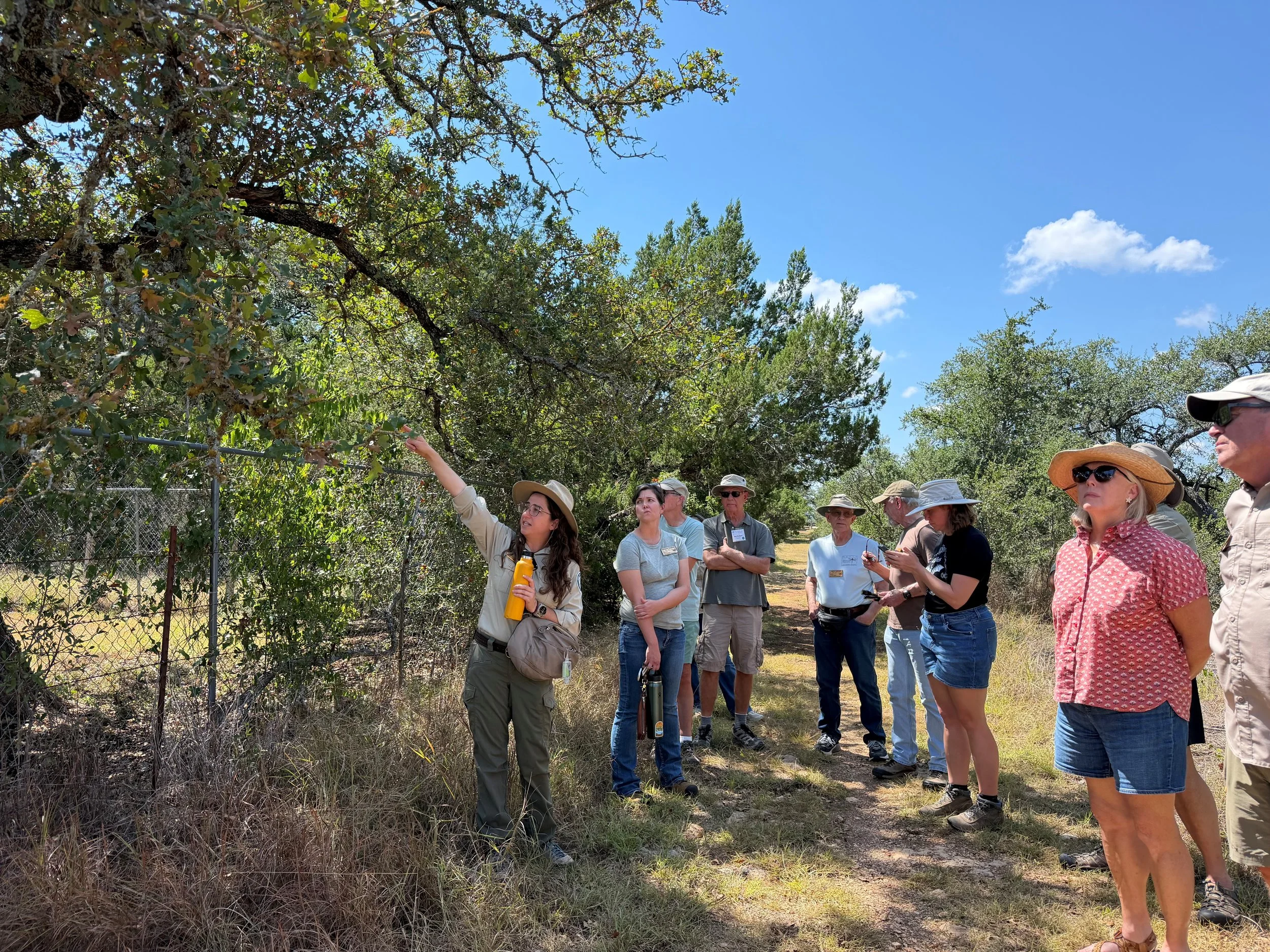
Oak wilt was first identified in Charro Ranch Park in the 1990s, and trenching was later done in the affected area. This site offers a chance to see oak wilt survivors among Ashe juniper, persimmon, grasses, and late-summer flowers.
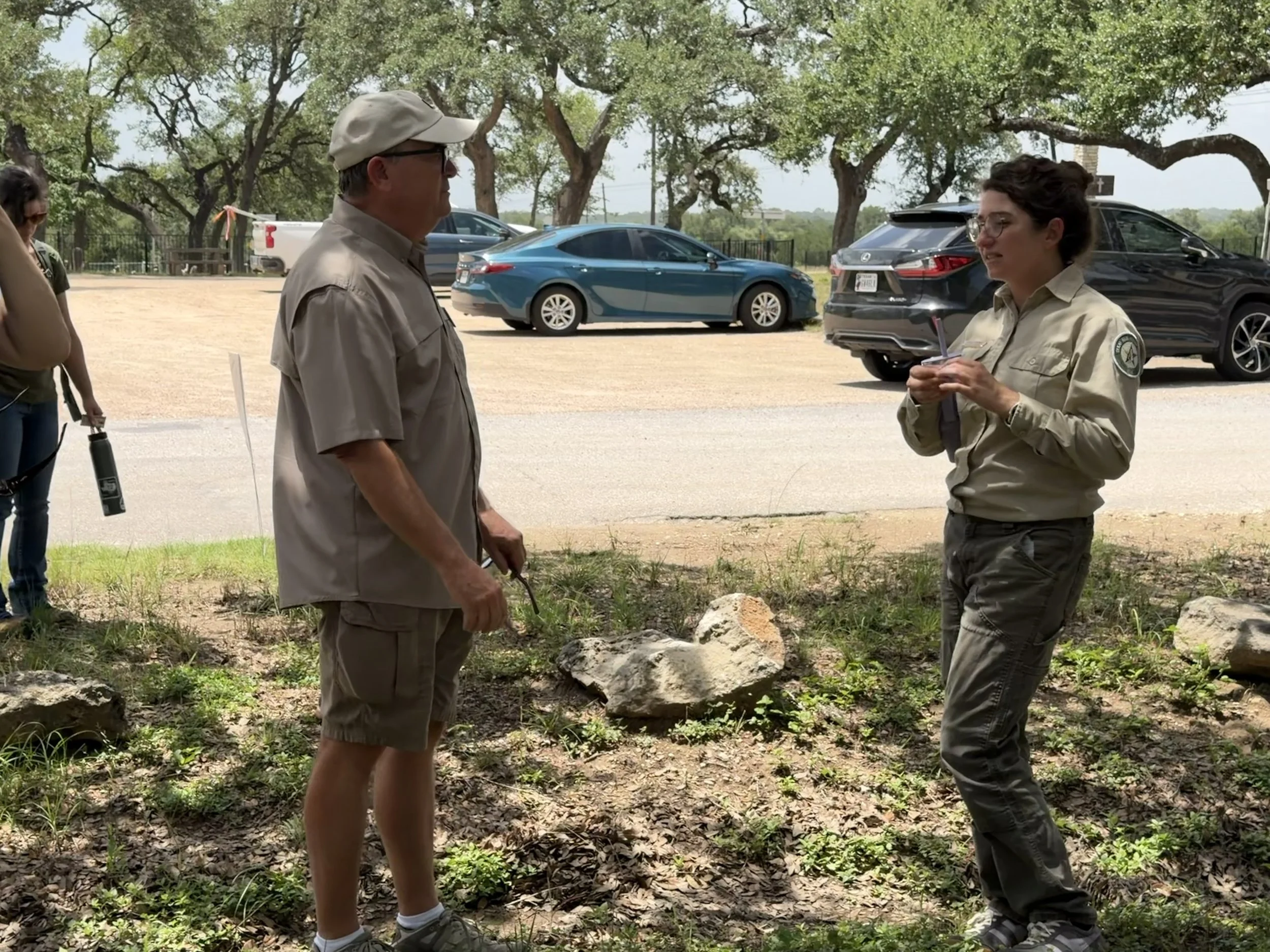
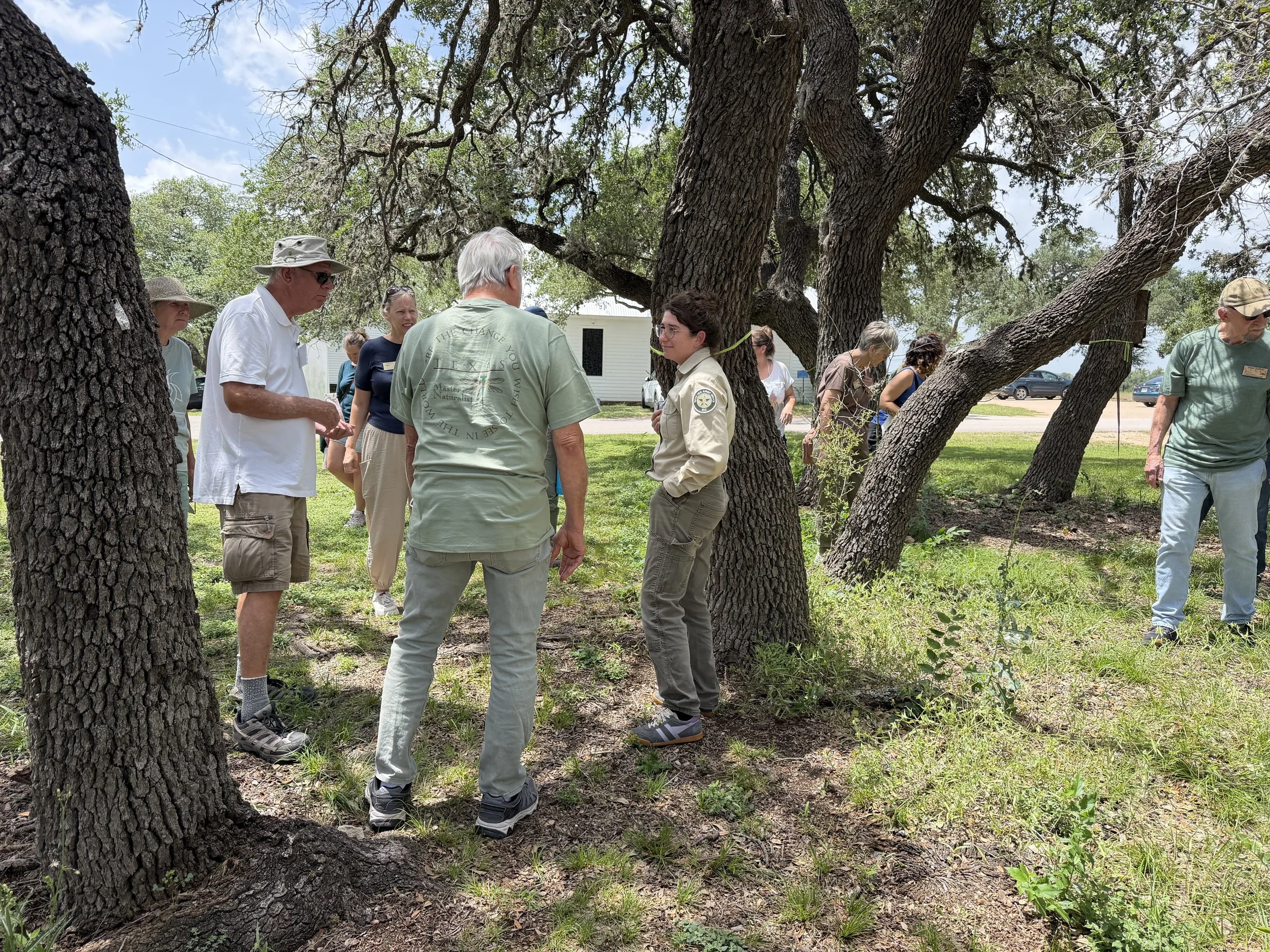
Steve Emmons, a Hays County Master Naturalist, catches up with Camille in this photo. Steve helped coordinate the tree health workshop for chapter members and said another session may be offered in the spring, depending on interest and expert availability. Thank you to all the organizers and the Texas A&M Forest Service staff who made this workshop possible.