Meet the Advisors

“What if the mockingbird came into the house with you and became your advisor?” —poet Mary Oliver, from How Would You Live Then?
Samantha Youngblood
Our volunteers bring the energy, and our advisors bring the guidance that supports the work we do across the county. This year, we welcome a new advisor, Savannah Bushkuhl, who joins returning advisors Archis Grubh and Blake Hendon in supporting our projects, education, and connection to Texas A&M AgriLife Extension and the Texas Parks & Wildlife Department. Their experience with land stewardship, aquatic ecology, and wildlife management reflects the Hill Country landscape we care for. The following Q&A offers a chance to get to know each of them a little better.
Savannah Bushkuhl
Hays County Extension Agent
Texas A&M AgriLife Extension
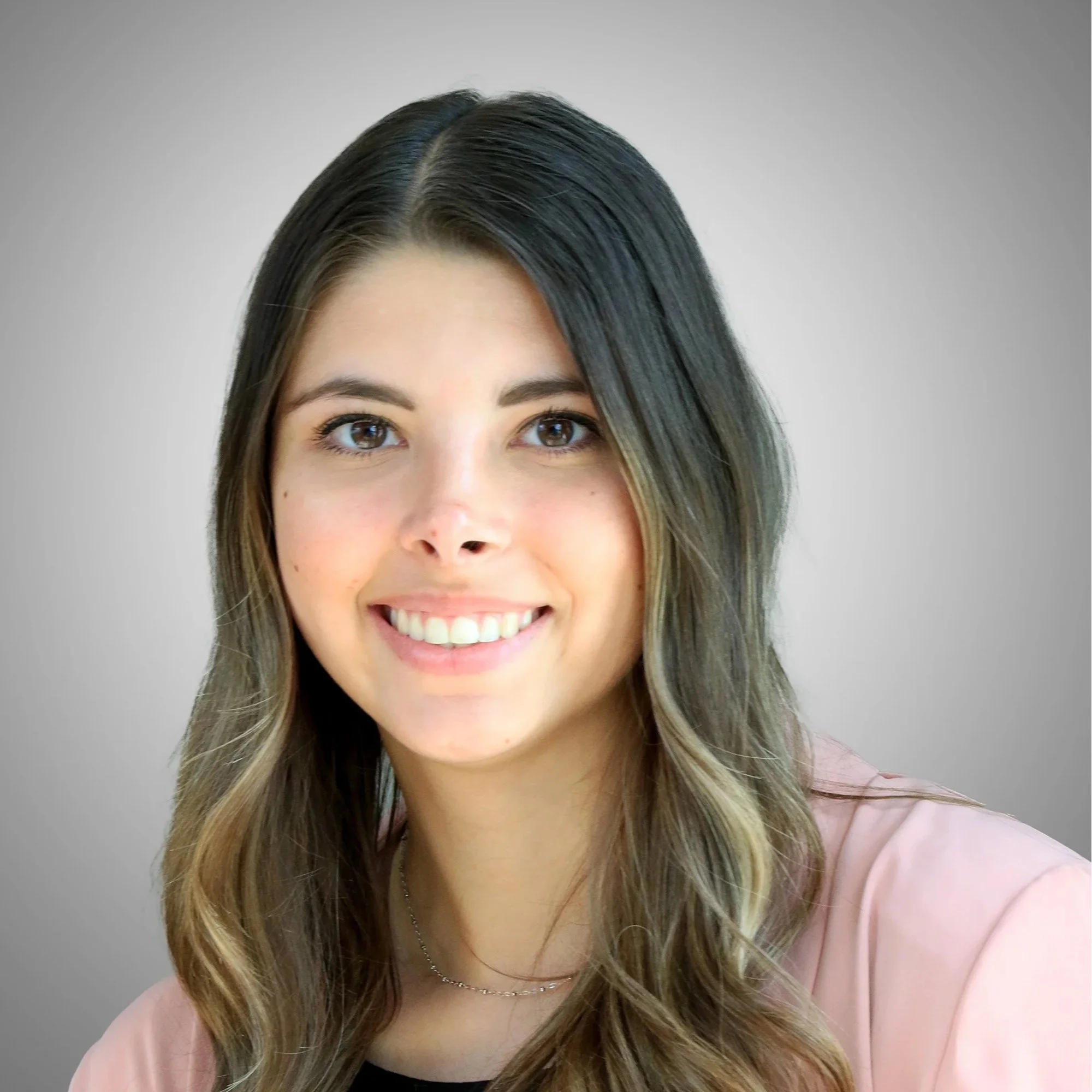
Savannah serves as the Hays County Agriculture and Natural Resources Agent with Texas A&M AgriLife Extension, where she supports landowners, volunteers, and community members on issues ranging from land stewardship to water resources. She brings a background in agricultural services and development from Tarleton State University and a master’s degree from Texas A&M, along with experience gained through Prairie View A&M University’s Cooperative Extension.
What first sparked your connection to nature?
Growing up in Spring Branch and having land on the river is what first sparked my connection to nature. Our property has always been my favorite place to be. It’s where I feel most relaxed—simply enjoying the land, the water, and the quiet beauty around me.
How did you become involved with the Texas Master Naturalist™ program? How has TMN impacted you?
I started with Extension about four years ago, but in my previous role I didn’t work directly with the Texas Master Naturalist™ program. Through my new position, I’ve had the opportunity to get more involved. I’ve only been in this role for about a month, so this is my first time directly working with a Master Naturalist chapter. Even in that short time, I’ve already seen how valuable the program is. It aligns closely with both my personal background and professional goals, and it’s been encouraging to see such strong volunteer involvement in conservation and education.
As an advisor, what do you hope members gain?
As an advisor, I hope members gain the skills and confidence to engage with their communities and care for the land around them. I want them to develop a true connection to nature — like the one I’ve always felt growing up on our river property, where just being outside feels grounding and peaceful. I also hope they come away with a strong sense of stewardship, meaningful relationships with fellow volunteers, and the motivation to make a positive impact in their local environment.
Dr. Archis Grubh
Crayfish Conservation Coordinator
Texas Parks & Wildlife Department
Science and Policy Branch – Inland Fisheries Division
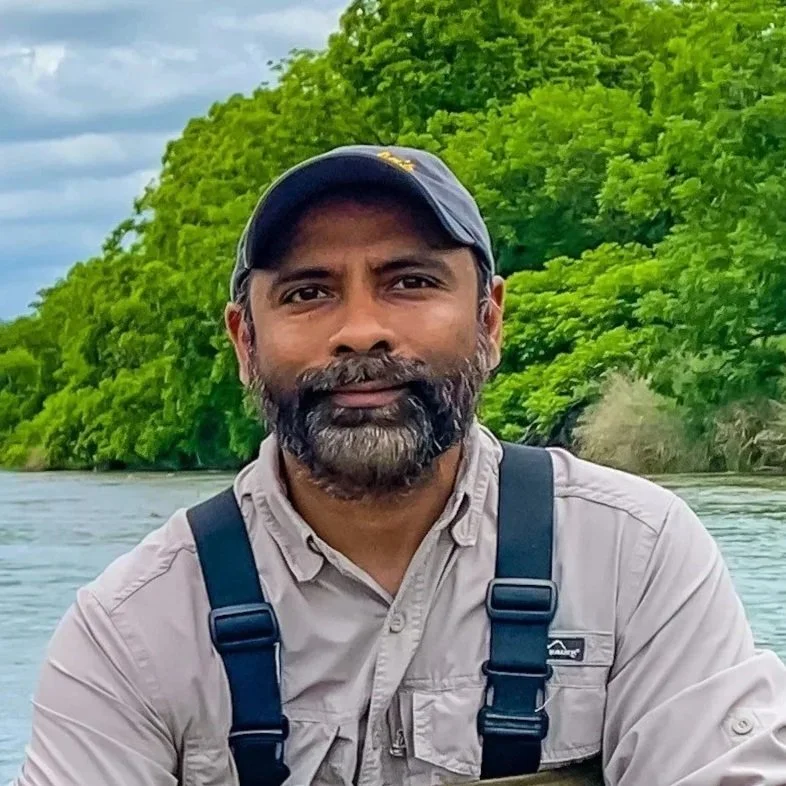
Archis is an aquatic ecologist with Texas Parks and Wildlife, where he studies how fish and macroinvertebrate communities respond to natural and human‑driven disturbances across Texas rivers. His work ranges from environmental flow research to crayfish conservation, and he frequently partners with the Hays County Master Naturalists through workshops, field projects, and volunteer opportunities. Originally from India, where his love of aquatic life began in the wetlands of the Western Ghats, he later earned degrees from Texas A&M University and The Ohio State University.
What first sparked your connection to nature?
I grew up in a household of nature enthusiasts. I remember in my childhood years going on field trips with my dad, Dr. Robert Grubh, an avid ornithologist at Bombay Natural History Society. While he was collecting data on waterfowl and shorebirds, I was knee deep in water collecting bugs and fish. My passion for aquatic world pushed me to get formal education in the field of aquatic ecology where I learned that these systems are dynamic and are shaped by hydrology, disturbance, species interactions, and human influence.
How has TMN impacted your career, community or conservation outlook?
The HCMN is near and dear to my heart, not only because I’ve had the privilege of working alongside many of you, but also because it is a local Hill Country chapter that is deeply committed to studying, stewarding, and celebrating nature. While working on various macroinvertebrate diversity projects, volunteers from the HCMN have helped out with presorting macroinvertebrate samples that has allowed streamlining the samples for further processing. These projects involved collecting macroinvertebrates from several parts of the state, including a key project that recently looked at the impacts of a huge flood event in Central Texas. Engaging with Master Naturalist participants and student volunteers has allowed me to give back to the community, in appreciation of the education and mentorship that shaped my own journey. I have enjoyed my conversations with the HCMN group on various ecological topics and how it could translate to meaningful conservation actions.
As an advisor, what do you hope chapter members can gain from the program?
I hope the chapter members will gain three major things: Ecological literacy and practical skills; confidence to share knowledge, which brings me to my last point; a stewardship mindset. Conservation can feel overwhelming at larger scale, however HCMN demonstrates that local action matters. I hope that participants are able to engage in restoration, invasive species removal, and youth outreach projects, and address new and relevant issues that the current generation is facing on this ever-changing planet. Conservation begins when people feel connected and take ownership.
Blake Hendon
Senior Wildlife Biologist
Texas Parks & Wildlife Department
District Wildlife Division 8
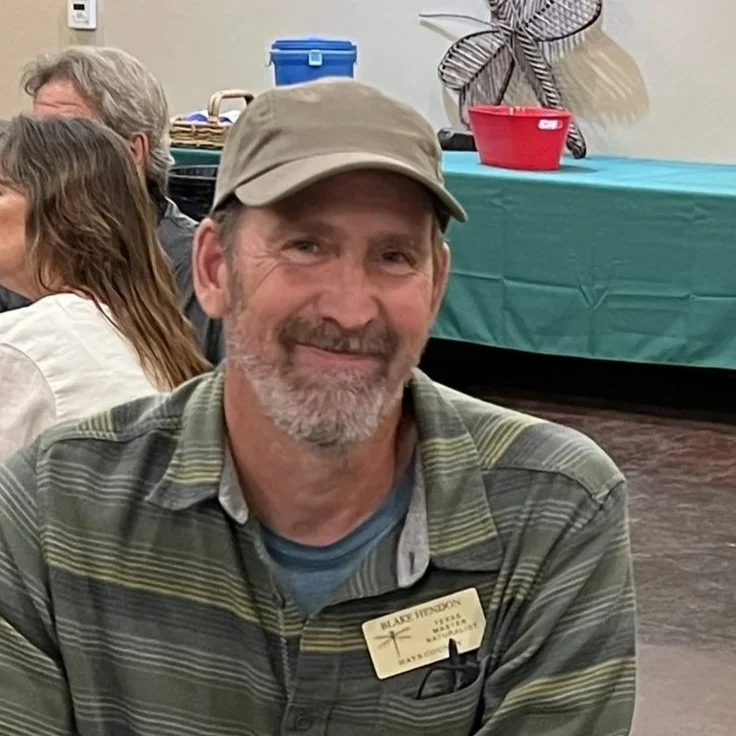
Blake is a Senior Wildlife Biologist with Texas Parks and Wildlife, supporting a 16‑county district that spans blackland prairie, post oak savanna, the lost pines of Bastrop, and the northern reaches of the South Texas brushlands and coastal prairie. With degrees in Wildlife Ecology and Rangeland Ecology and Management from Texas A&M University, he has spent his career consulting with landowners and mentoring biologists on habitat stewardship and native species conservation. Outside of work, Blake photographs moths and dragonflies, collects native seeds, and shares natural history with neighbors through his “Stuff in the Garden” iNaturalist project.
What first sparked your connection to nature?
I think there were multiple sparks, each reinforcing the other. I grew up in a time and place where being out in a relatively natural landscape was just part of life. The backyard just seemed to blend into the undeveloped land behind our house. There were lots of days spent running around in the woods, digging in the red clay, and throwing pinecones and sweetgum balls at my friends. Snakes, fish and tadpoles were part of life. My family camped (mostly state park style) and fished, which I really enjoyed as a moderately overactive kid. Spending time outside being part of the outdoors was my baseline. One of the handful of available television shows was Wild Kingdom (Mutual of Omaha's Wild Kingdom). That was a must-watch show. Nova and National Geographic were other go-to shows. An inherited set of National Geographic magazines lined the bookshelf in my childhood home. We had every edition starting from the 1920's. The large landscapes and wildness portrayed in these television shows and magazines caught my attention.
How did you become involved with the Texas Master Naturalist™ program?
I don't remember which was first, but I was contacted by the Highland Lakes and Hays County TMN chapters for various speaker and field trip opportunities. I enjoyed these experiences and agreed to participate whenever my schedule allowed. The Hays County chapter became my home chapter over the years. The trainees, members and leaders within the TMN program have been an inspiration. I get to draw on those experiences as I work with landowners and the public at large, trying to inspire people to appreciate and to make meaningful connections with the nature around us.
As an advisor, what do you hope chapter members can gain from the program?
At a minimum, I hope the trainees and members gain a basic appreciation for the diversity, complexity, value, and beauty of their local surroundings. Awareness is an important step. Beyond that, I hope that each member creates some space in their life to hit on each (building skills, confidence, stewardship mindset, etc.). Whether those efforts are focused on a small native planting or full-on community-level action, the more engaged and involved the better.
Many of us came to this Chapter through the same pull toward the outdoors, and that shared connection makes our partnerships with our advisors especially meaningful. As we welcome Savannah and continue our work with Archis and Blake, we’re grateful for the time they give, the expertise they share, and the support they offer to our members and to the county we work to conserve.
These interviews were lightly edited for length and style.