Splish, Splash
A Dip Into Spring Lake
Alexis Britton
On March 24, the Spring 2026 class of Hays County Master Naturalist trainees visited the Meadows Center for Water and the Environment in San Marcos, Texas. Operated by Texas State University (TXST), the center serves as a research, education, and conservation facility dedicated to protecting Spring Lake, the headwaters of the San Marcos River. The lake provides an ideal habitat for many species and is home to four notable endangered species: San Marcos Salamander (Eurycea nana), Texas Blind Salamander (Eurycea rathbuni), Fountain Darter (Etheostoma fonticola), and Texas Wild Rice (Zizania texana).
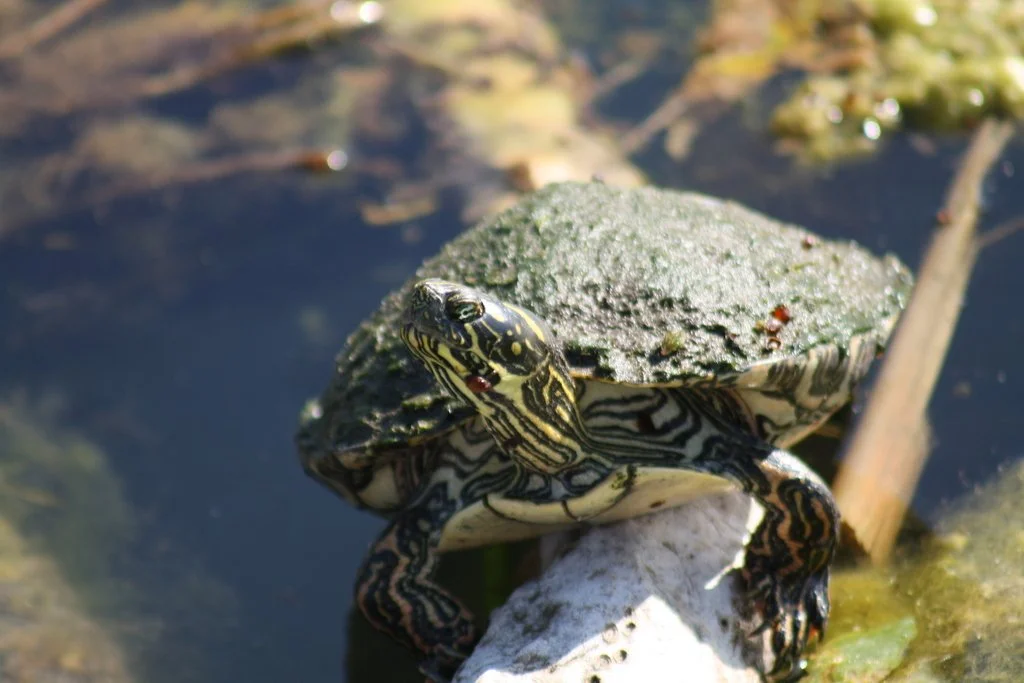
Texas River Cooter Photo courtesy Alexis Britton
There are many more species that live within Spring Lake, including Great Egrets (Ardea alba), North American Beavers (Castor canadensis), and Green Tree Frogs (Hyla cinerea). These species can be seen inhabiting the area year-round despite weather changes.
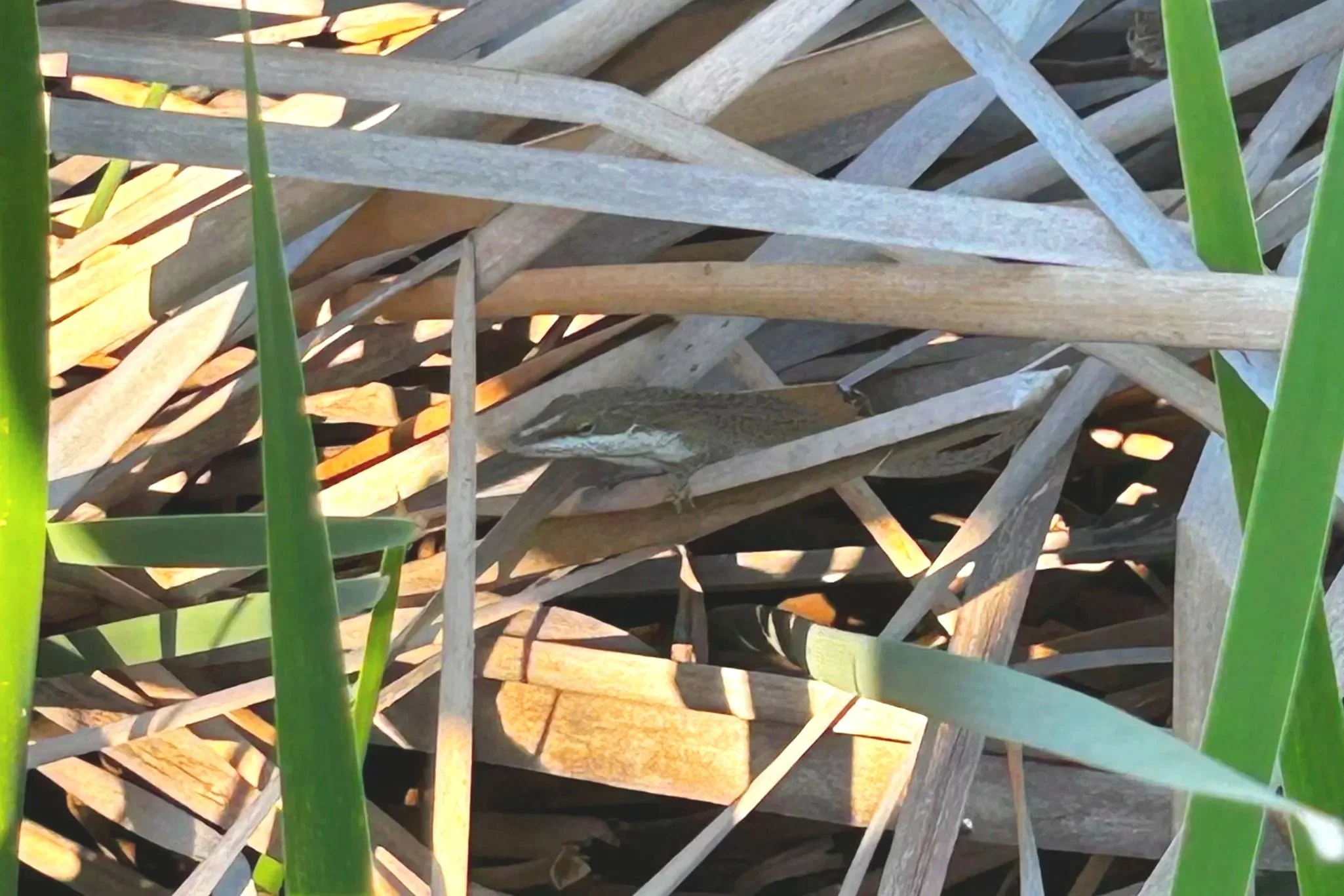
Anole Photo Alexis Britton
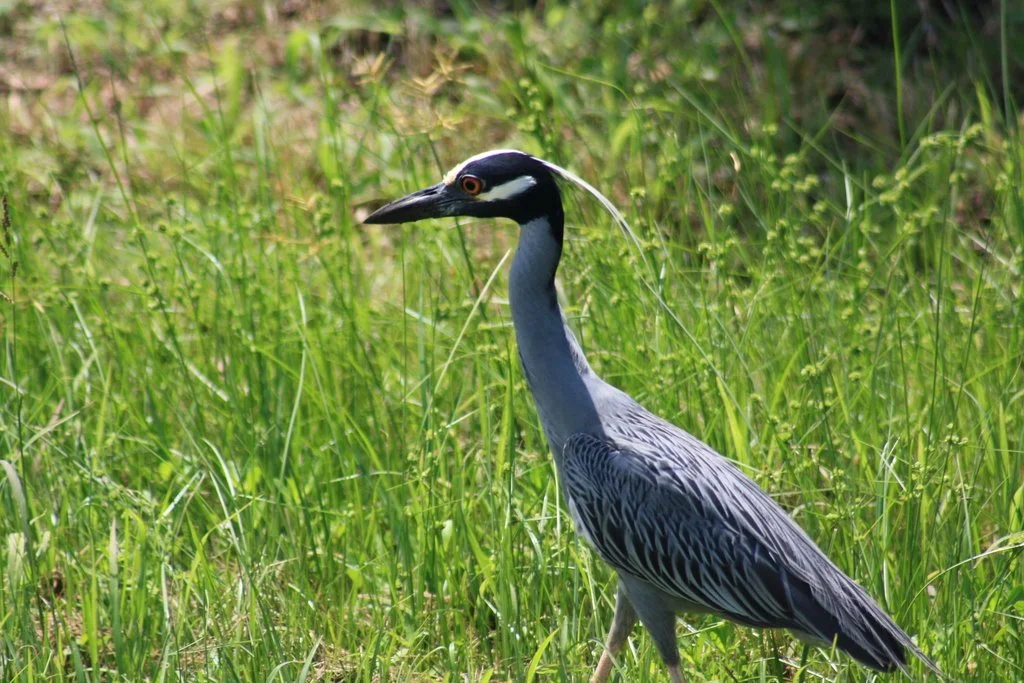
Yellow-crowned Night Heron Photo courtesy Alexis Britto
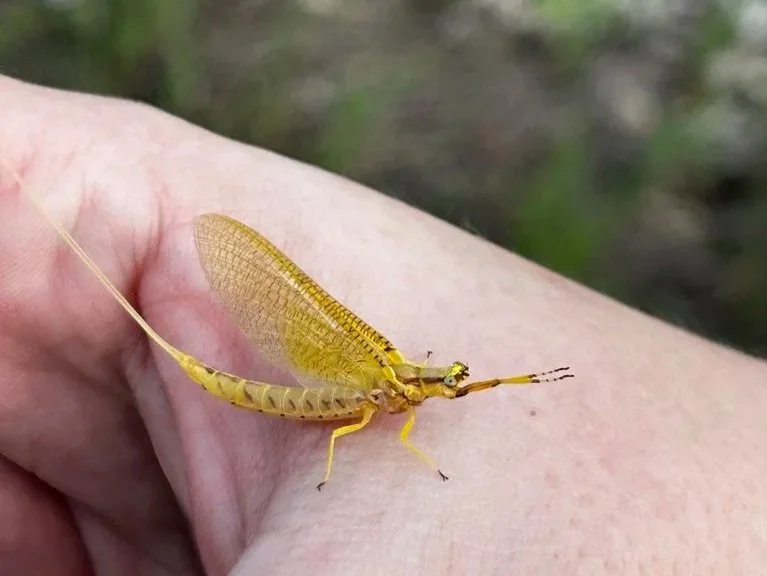
Mayfly Photo courtesy Alexis Britton
The Meadows Center itself has a complicated history prior to TXST purchasing the land in 1991. The spring draws water from the Edwards Aquifer, keeping the lake and river at a nearly constant temperature of 72°F.
To protect this area, the Meadows Center maintains a no swimming, fishing, or littering policy. Additionally, they offer scuba school, snorkeling tours, and other opportunities to explore without causing harm to the delicately balanced ecosystem.
Glass-Bottom Boat Tour
Glass-bottom boat tours are offered every 30 minutes during operating hours (9:30 a.m. – 5 p.m.) every day of the week; hours vary by season. Prices can be found on the Meadows Center website, though tickets must be purchased at the kiosk.
On March 24, the Spring 2026 class of the Hays County Master Naturalist had the opportunity to take part in a glass-bottom boat tour, where the tour guide, Hunter, was exceptional. He answered all of our questions while maneuvering the boat with ease.
We observed a number of different species from the boat: Neotropic Cormorants (Nannopterum brasilianum), Largemouth Bass (Micropterus salmoides), and even a Nine-banded Armadillo (Dasypus novemcinctus) foraging along the shore.
During the tour, several springs could be seen, including Wise Miller Spring, Snow-Globe Spring, Deep Hole, and Crater Bottom. Deep Hole is the deepest part of Spring Lake and often showcases “bubbling” in the sand where spring water is actively flowing.
Many aquatic species were seen through the glass bottoms of the boats.
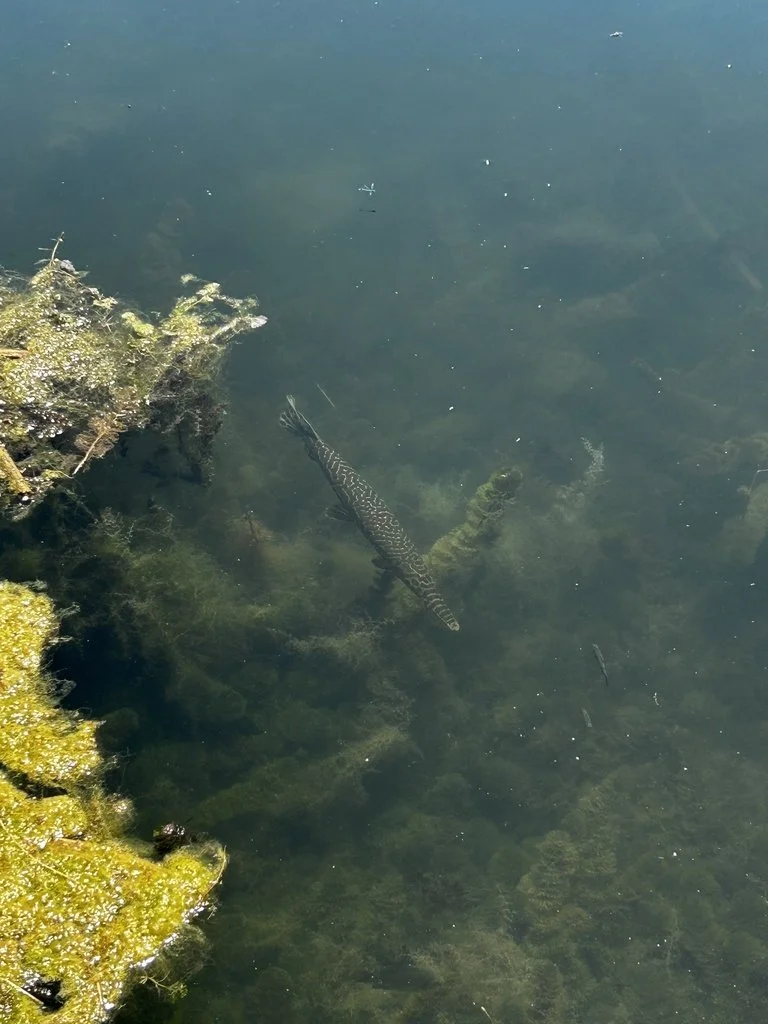
Spotted Gar Photo courtesy Alexis Britton
Visiting in different seasons offers a more complete view of the aquatic life present in Spring Lake throughout the year, as well as the features that shape its underwater landscape.
Fallen trees can be seen across the lakebed; these have been intentionally left in place, contributing to a process known as permineralization. This occurs when mineral-rich water moves through the pores and cavities of once-living materials such as bones, teeth, shells, and wood. Over time, minerals like silica or calcite are deposited in these spaces, causing the wood to become rock-hard while preserving its original structure and detail.
Once fossilized, these trees become bioactive hotspots for fish, microorganisms, and plants. This activity is visible during boat tours, thanks to Spring Lake’s crystal-clear water.
Wetlands Tour
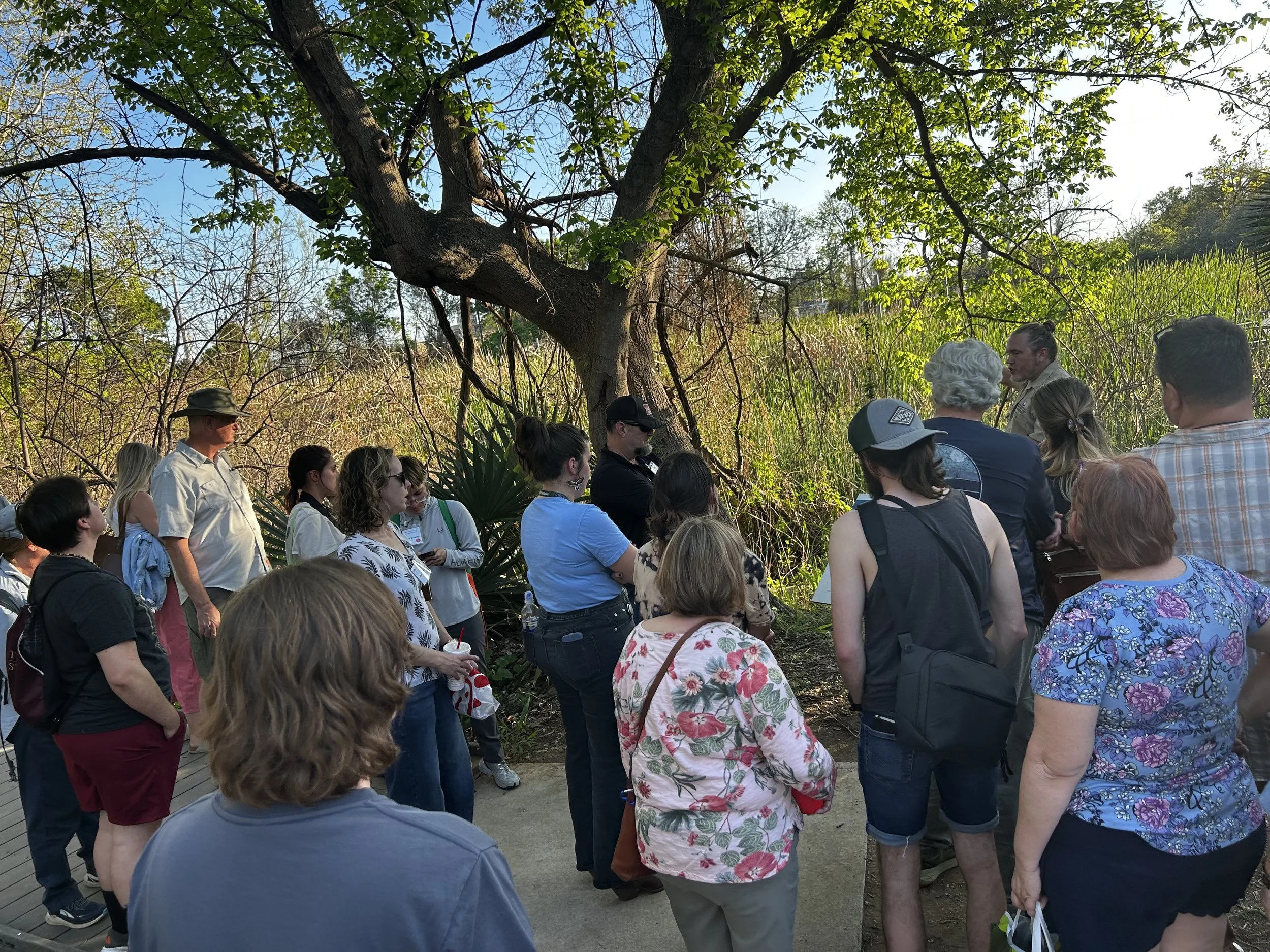
Wetlands are areas between a body of water and land, often submerged either seasonally or year-round. The Meadows Center created a boardwalk to allow visitors to “walk through” the wetlands without additional environmental disturbance.
Guided wetlands tours are offered on weekends and typically last between 25–30 minutes. Topics covered include native species, invasive species, water conservation, and how the wetlands came to exist.
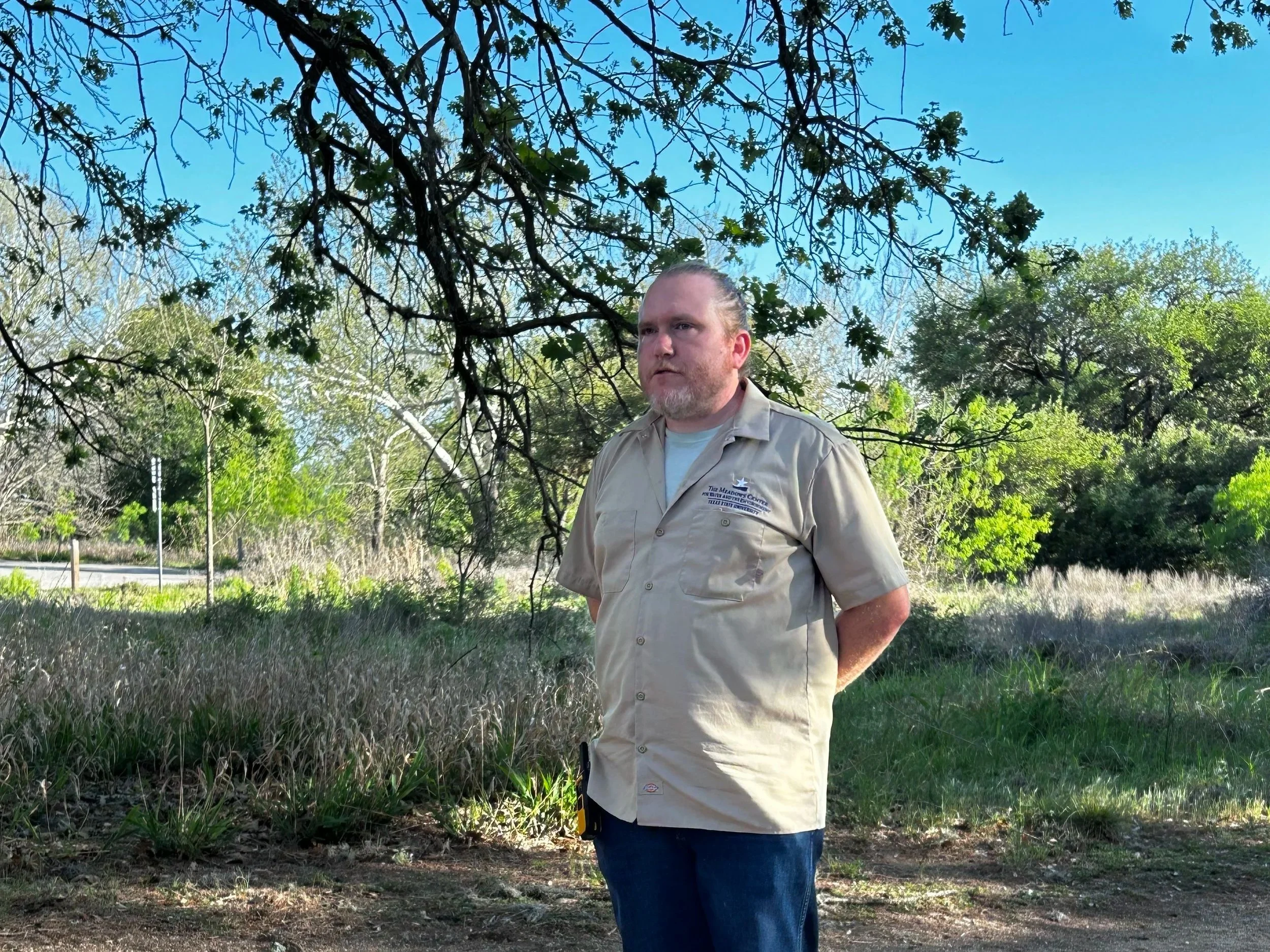
Sam Massey Photo courtesy Alexis Britton
Sam Massey, glass-bottom boat manager, led our HCMN class from the boat docks to the wetlands. As we walked along, he shared the history of how the Meadows Center transformed from a tourist-centered theme park into the nature preserve it is today.
Massey explained that items left in Spring Lake after the renovation were intentionally retained to minimize habitat destruction. Many of these structures have since become central to certain aquatic species (namely fish), serving as shelter and breeding grounds.
As the tour continued and the day came to a close, Green Tree Frogs (Hyla cinerea) began calling, as they do around sunset each day. A Great Egret (called Ed) was seen stalking through the cattails, most likely searching for dinner before roosting.
Blue Tilapia could be seen fighting, causing large splashes on the surface of the lake as they defended their nests and breeding grounds. Texas River Cooters and Red-eared Sliders were readily seen sunning on tree branches extending from the water.
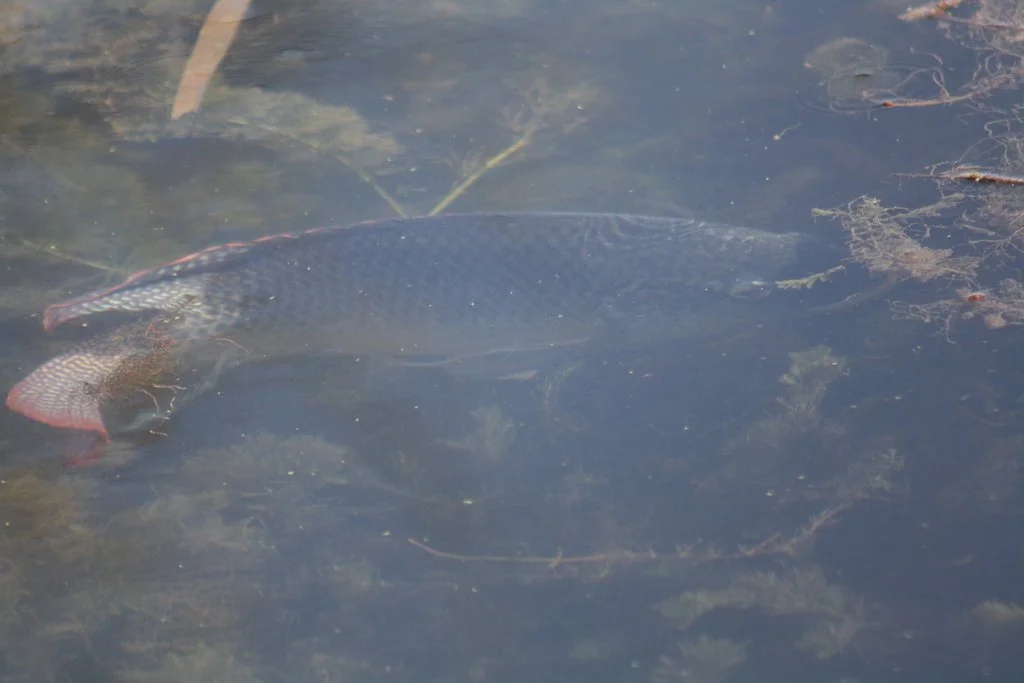
Blue Tilapia Photo courtesy Alexis Britton
The Hays County Master Naturalist Program
Hays County is home to a wide variety of ways to get involved in nature, environmentalism, and sustainability. One such opportunity is participating in the Hays County Master Naturalist Training Course. It is offered twice a year, with fall and spring sessions.
There are many requirements to graduate from this course, including biweekly classes, site visits, Advanced Training, and volunteer hours. Texas boasts an astonishing 49 chapters of the Master Naturalist organization, with programs in 30 states throughout the United States.
The classes are not exclusive to those with science backgrounds. Rather, they foster an inclusive atmosphere, with trainees from backgrounds and professions ranging from finance and education to science and many other diverse fields.
Each meeting offers the opportunity to learn, network, and embrace the diversity present not only in our local community, but also across the surrounding communities of Hays County.