An October Gathering
October 6, 2026 - Photos courtesy Betsy Cross
Betsy Cross
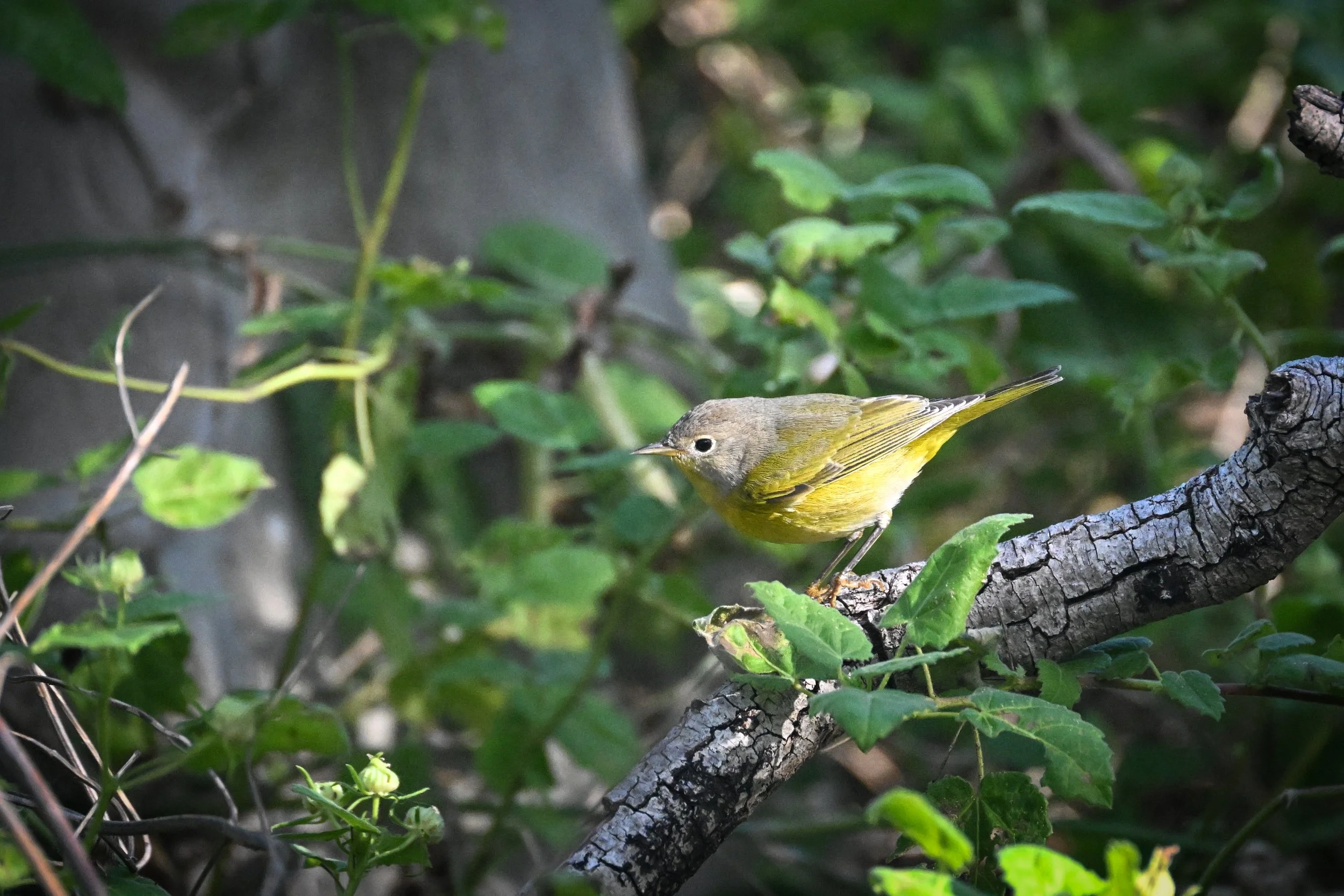
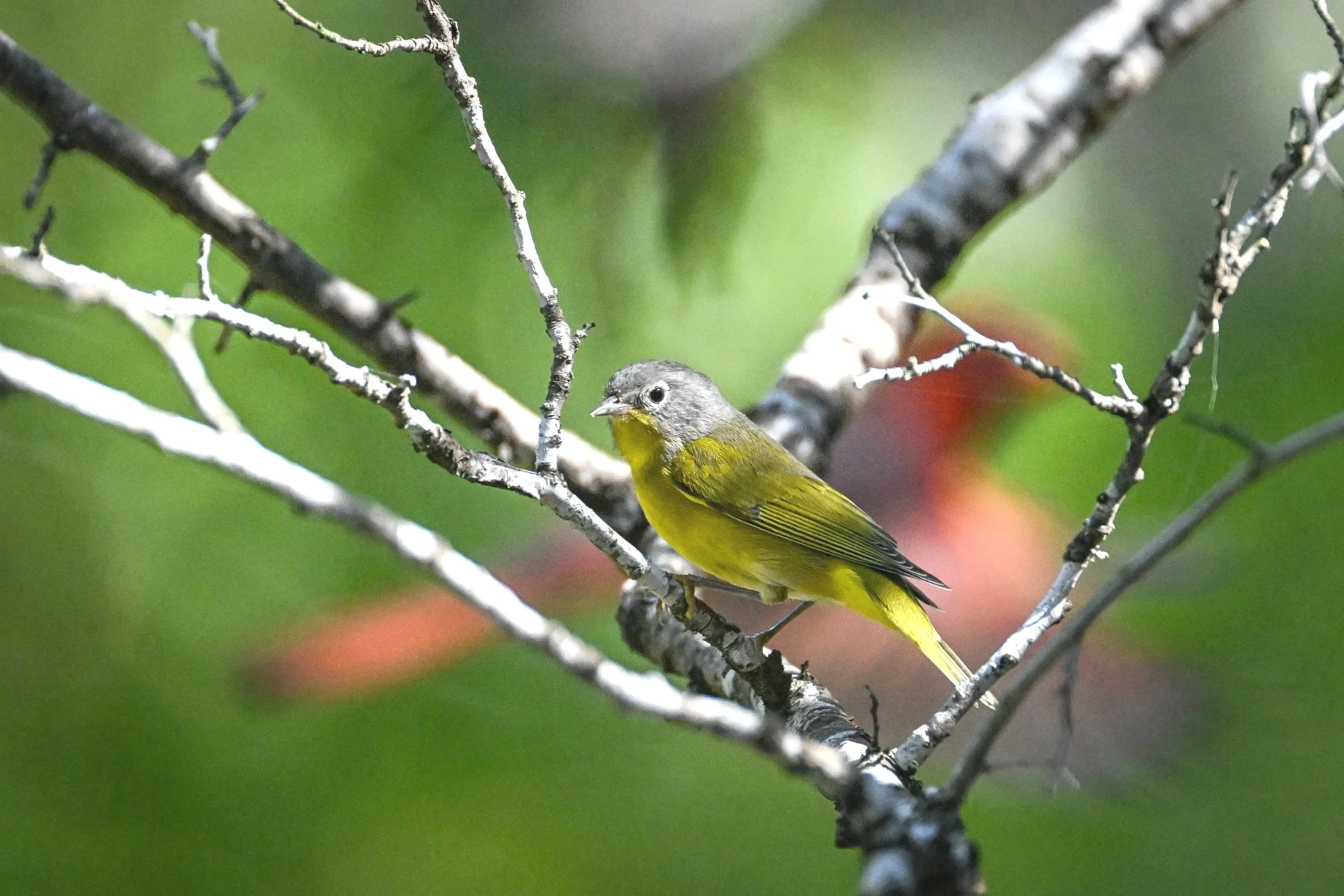
Nashville Warblers are common visitors to my yard during spring and fall migration. This fall, I documented my first Nashville Warbler on September 22 and my most recent one on October 26. But October 6 was an especially active day. I had never seen so many Nashville Warblers at one time, arriving as part of a mixed flock that included titmice, chickadees, and cardinals.
The birds spent much of the day foraging throughout my yard—in my overgrown pollinator garden, among the lower branches of the possumhaw holly and the live oaks, and on the freshly blooming goldenrod.
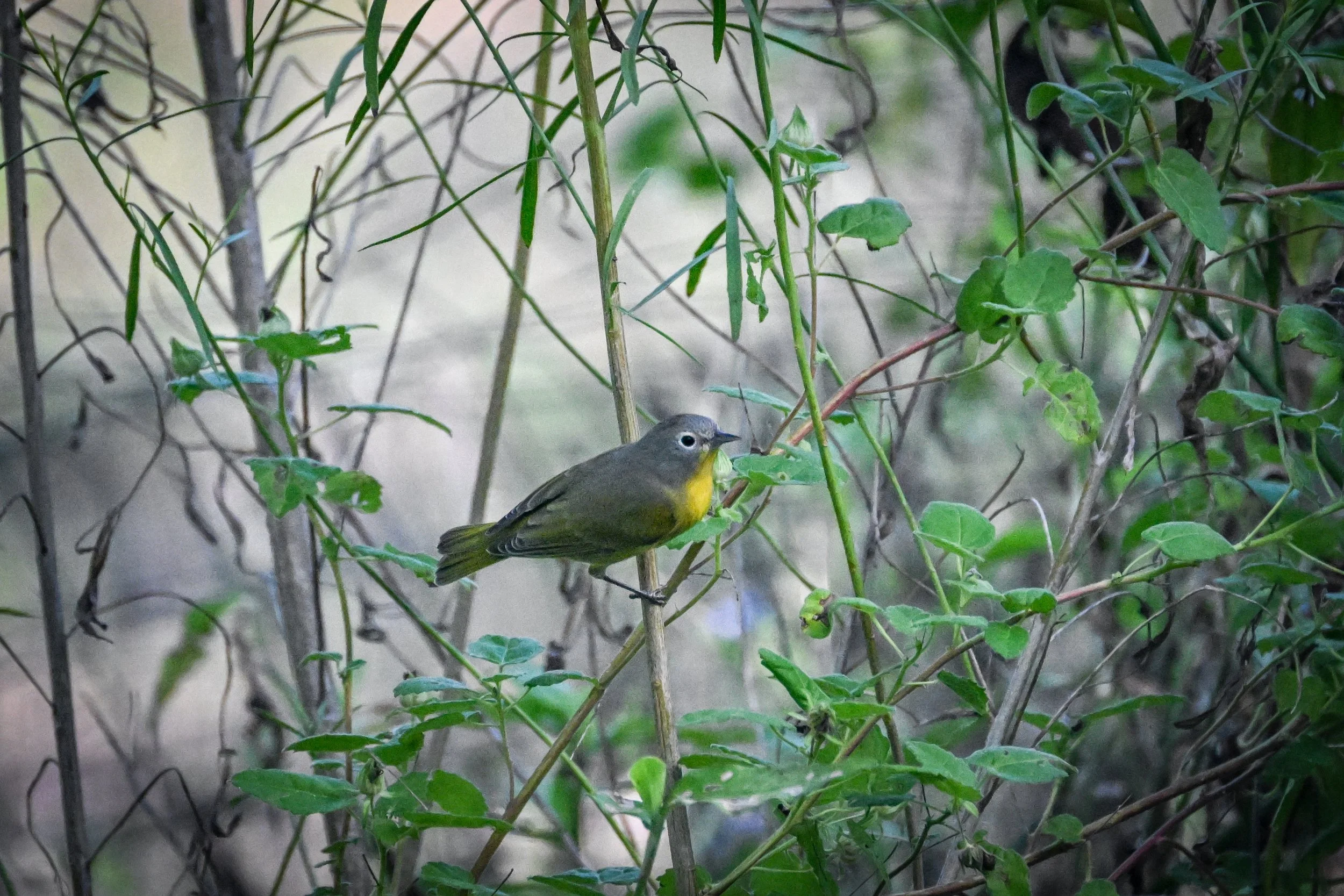
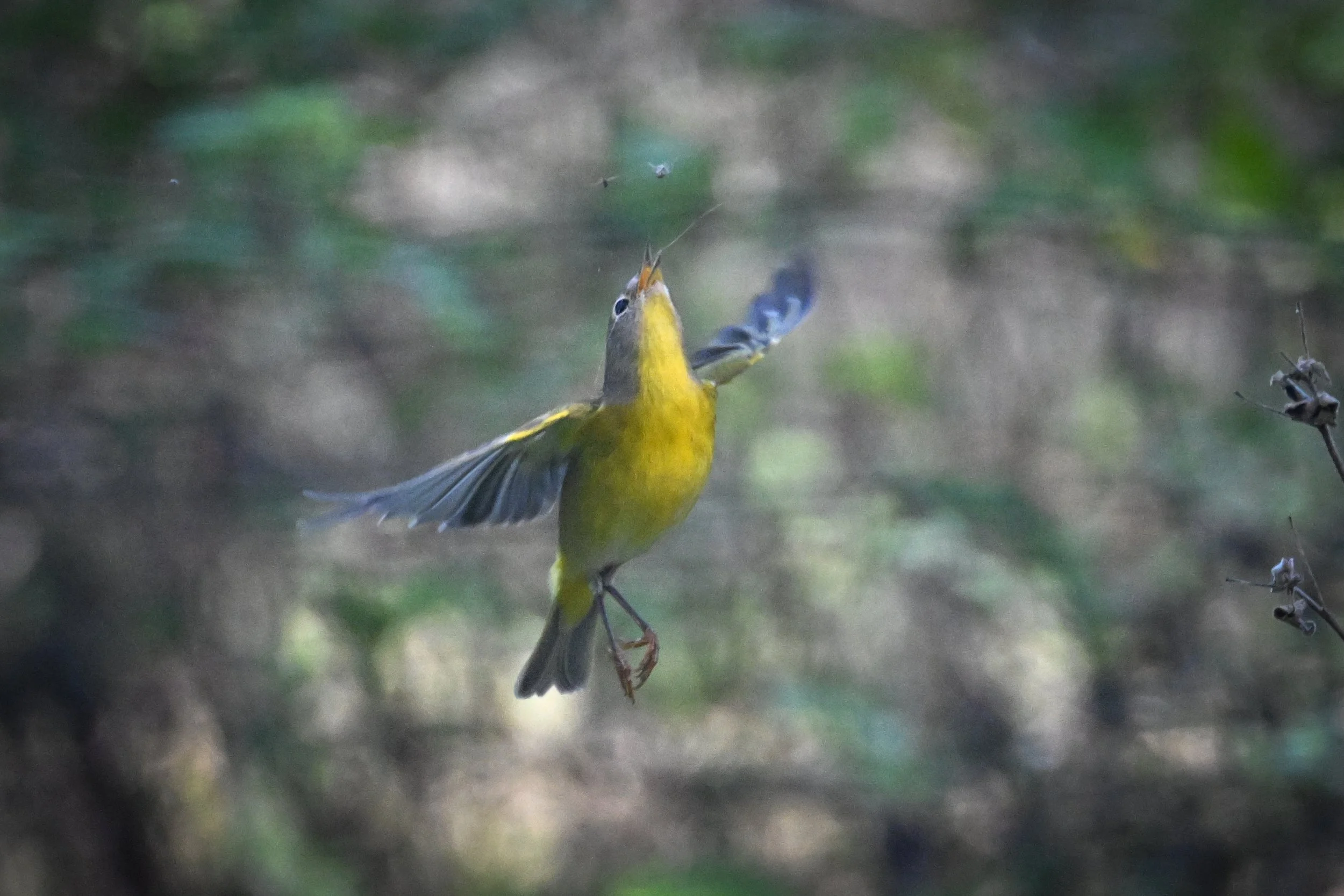
This Nashville Warbler leaves its perch in the pollinator garden in pursuit of two flying insects.
Despite their name, Nashville Warblers are not year-round residents of Nashville, Tennessee. The species was first documented there, but the bird was simply passing through during migration.
According to Cornell Lab's All About Birds, Nashville Warblers feed almost exclusively on insects and other arthropods, including flies, grasshoppers, leafhoppers, caterpillars, and beetles. They often forage along the tips of branches, picking insects from the undersides of leaves. They also frequently join mixed flocks with other birds during migration, including chickadees, titmice, and kinglets.
That certainly seemed to be the case on October 6. The Nashville Warblers, titmice, and cardinals were all actively moving through the yard together.
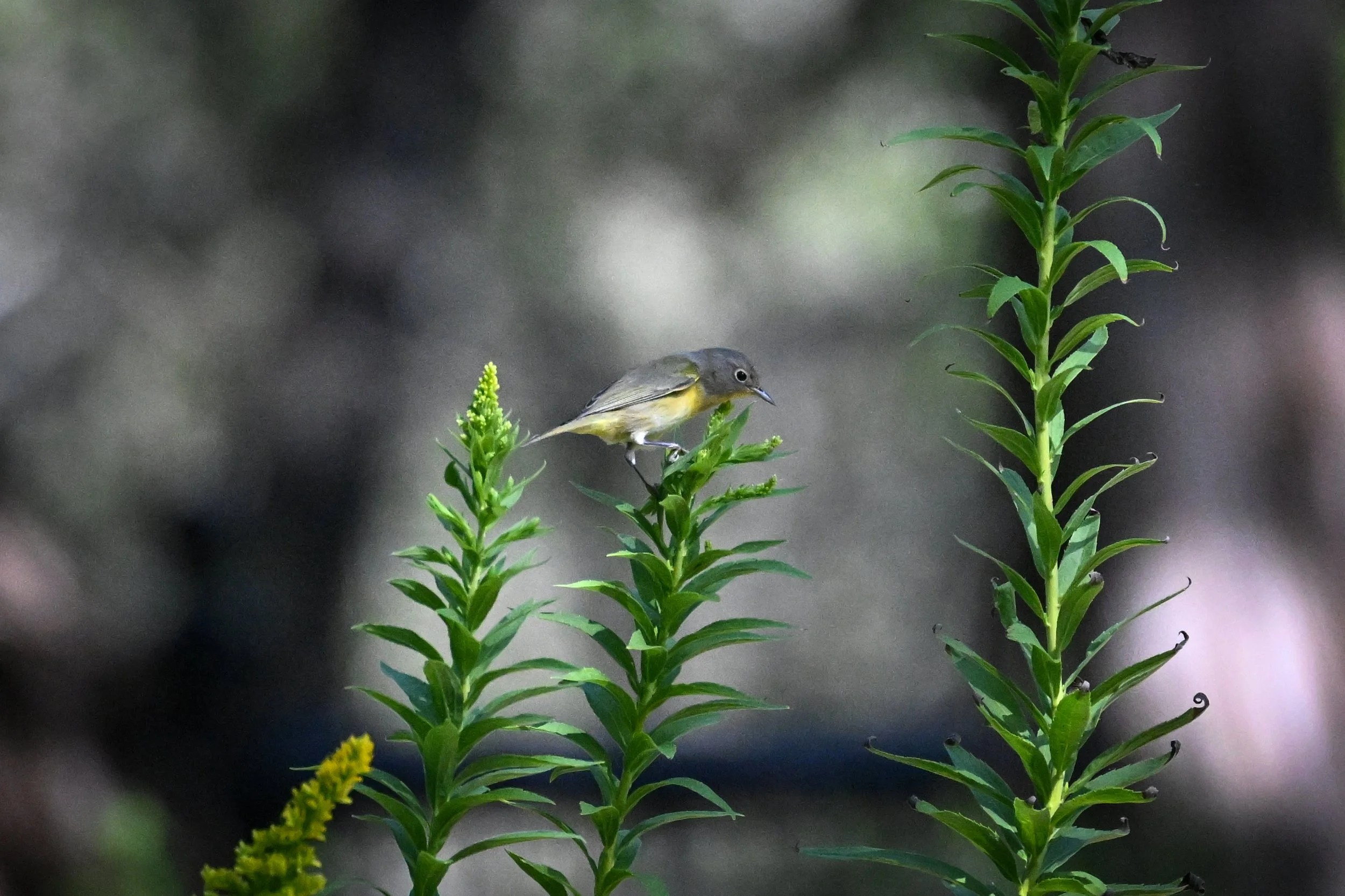
Most of my observations were of these busy little warblers searching for food, although a few took occasional breaks for water. This one and several others were attracted to insects on the goldenrod.
At one point, I photographed three Nashville Warblers gathered around a shallow dish of rainwater on my garden cart.
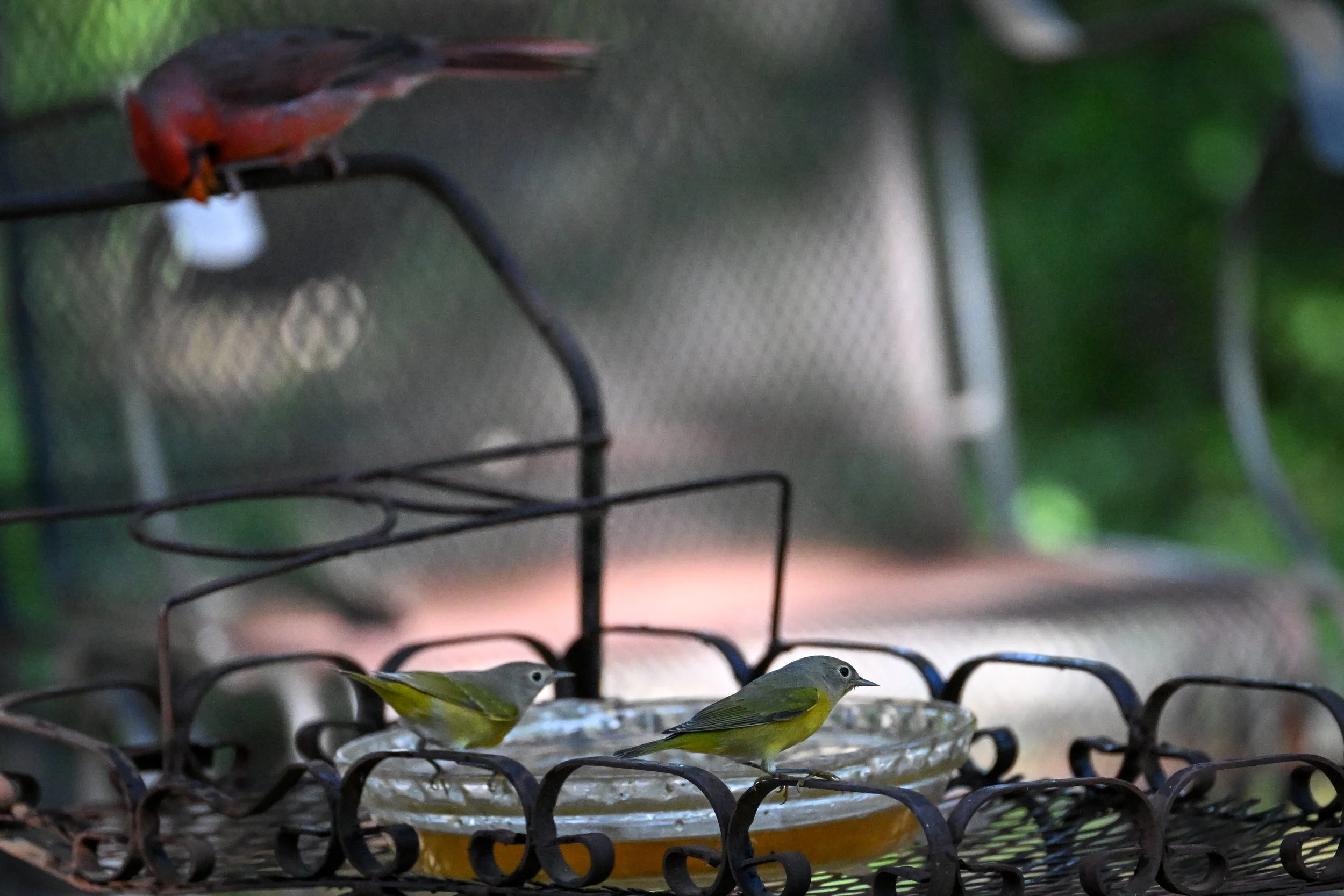
Nashville Warblers gather for a drink of rainwater, with a Northern Cardinal perched above them on the cart.
Cornell Lab’s All About Birds describes the adult male Nashville Warbler as a “Small, round-headed warbler with a short tail. Yellow below with an olive-green back and no wingbars. Its white eyering stands out on the gray head. Chestnut crown patch usually not visible. Birds in the western U.S. have a brighter yellow rump and grayer back than those in the eastern U.S.” Female and immature Nashville Warblers are described as “Compact warbler[s] with a round head…paler than males…[white] eyering, yellow underparts, and lack of wingbars.”
These spunky little birds spend their winters in Mexico. In the spring, they will pass through Texas again, this time heading north to their breeding grounds in the northern Great Lakes region of the U.S. and southern Canada, where they will nest and raise their young. In early fall, they will begin their journey south again, returning to Mexico for the winter. It's all part of the fascinating story of bird migration.