A Queenly Surprise
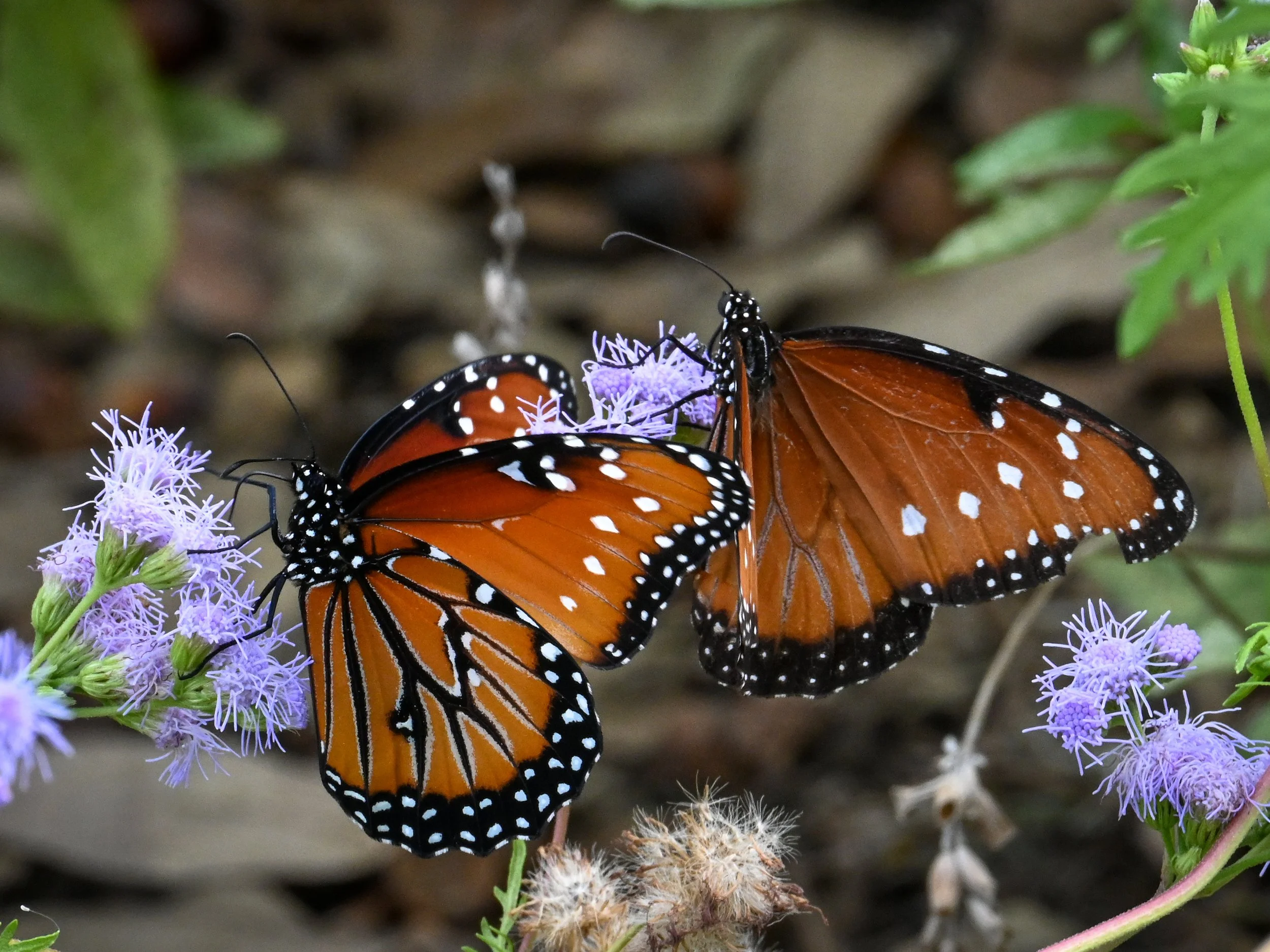
Photos courtesy Betsy Cross, Video courtesy Martha Sanders
“Had some delightful visitors in my garden one early morning in August this summer; a kaleidoscope of Queen butterflies totally enjoying our Gregg’s mistflower”
Martha Sanders
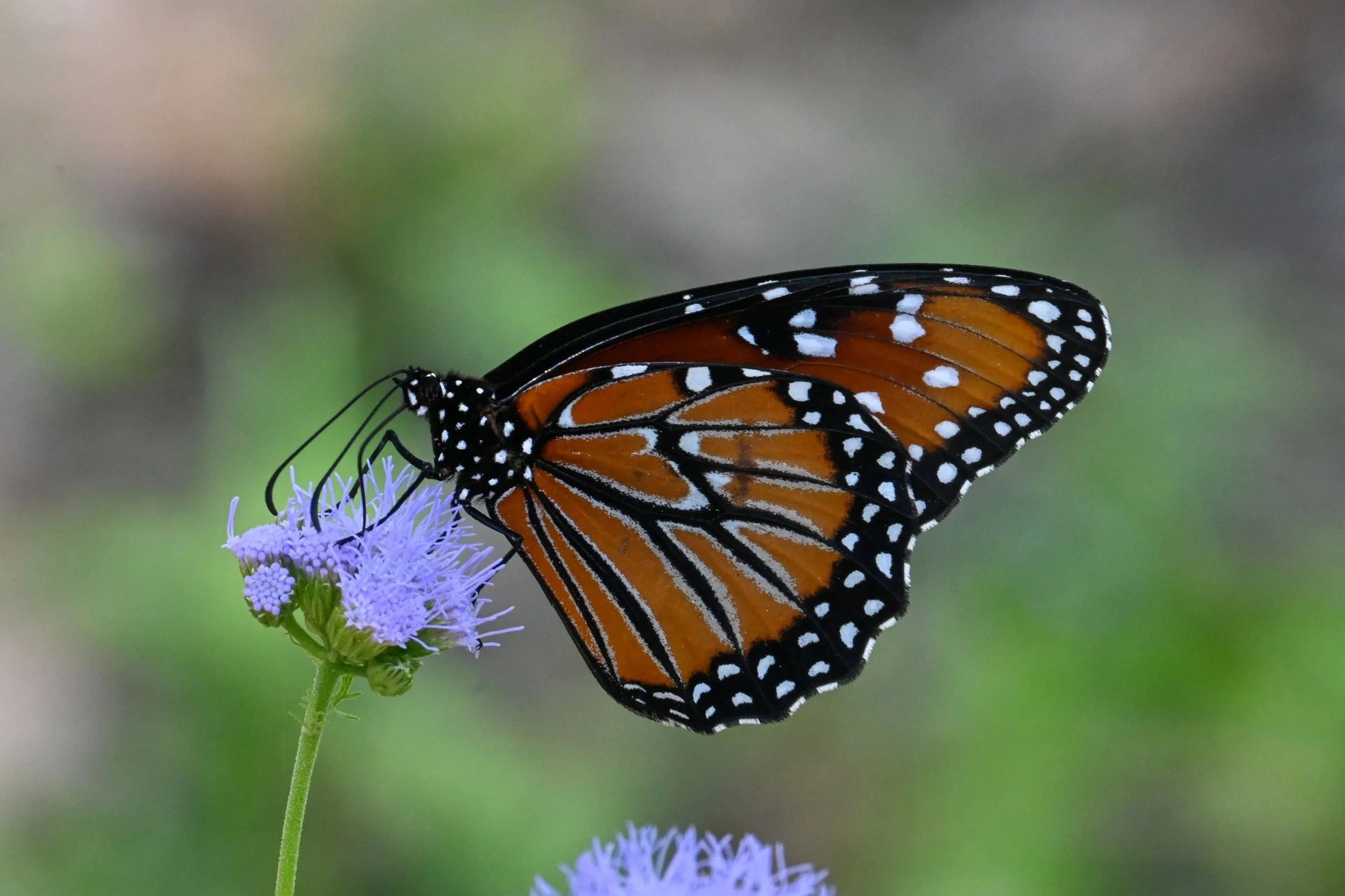
What a surprising and beautiful sight to see loads of beautiful Queens nectaring on the misty, purplish-colored blooms. After I got over my pure joy at the sight, I wondered why so many Queens were enjoying just the blooms of the mistflower and not the surrounding flowers. The answer was pretty amazing.
Queen or Monarch?
But first, do you know how to tell the difference between a Queen butterfly (Danaus gilippus) and a Monarch butterfly (Danaus plexippus)? They have similar coloring, warning would-be predators to stay away, but it’s really quite easy to tell the difference.
Where Monarchs have white dots only in the black borders surrounding their wings, Queens have white dots in the borders and additional white spots scattered near the tips of their orange forewings. Queens are also smaller, and once they open their wings, you’ll see they don’t have the bold black veins that Monarchs possess.
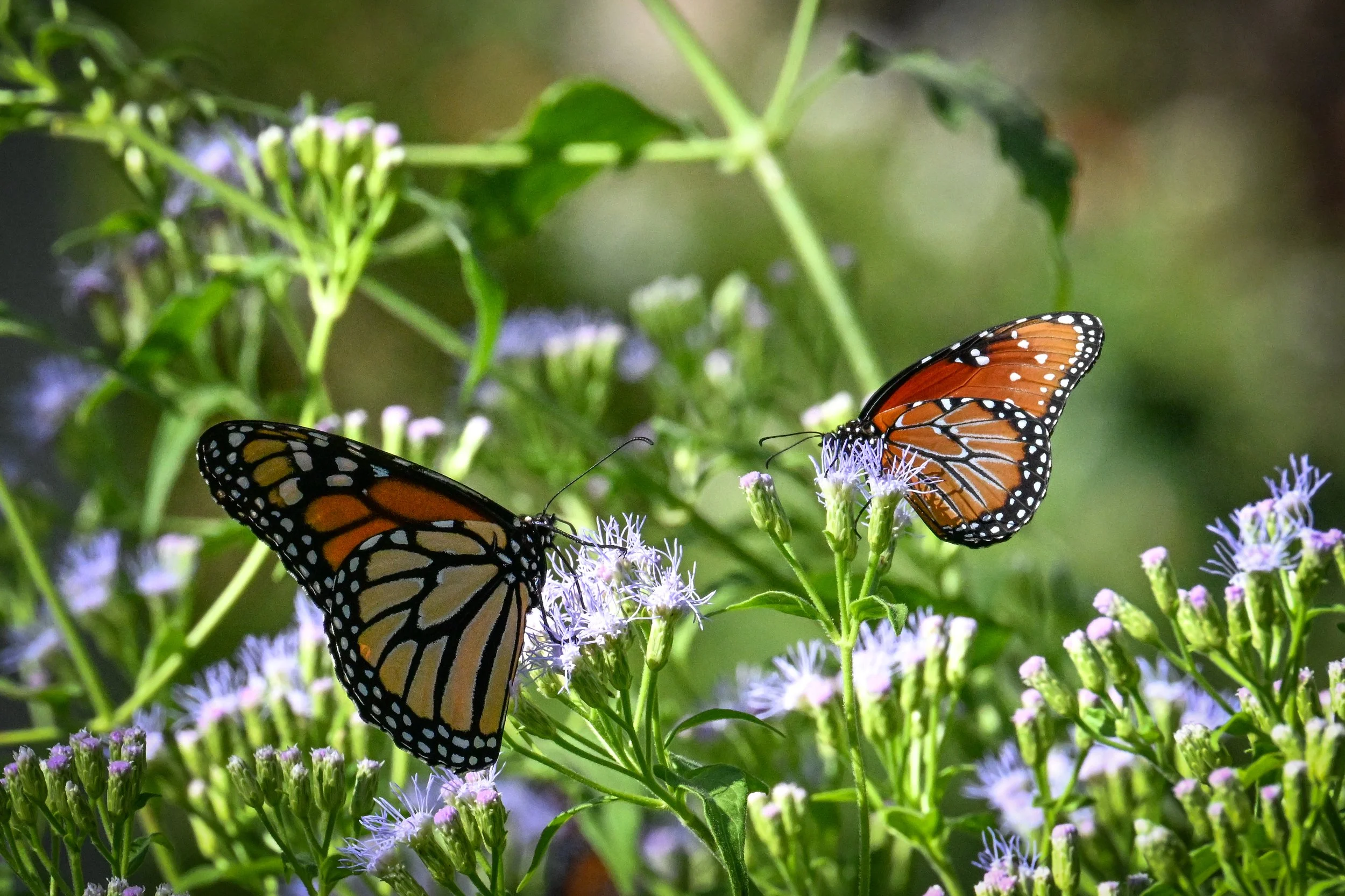
Monarch (left) and Queen (right) nectaring on mistflower.
Both Queens and Monarchs lay eggs on milkweeds (Asclepias genus) and related plants in the milkweed family, and their caterpillars are similarly colored. The Queen, though, has three pairs of tentacles (front, middle and rear), while the Monarch has only two pairs (front and rear).
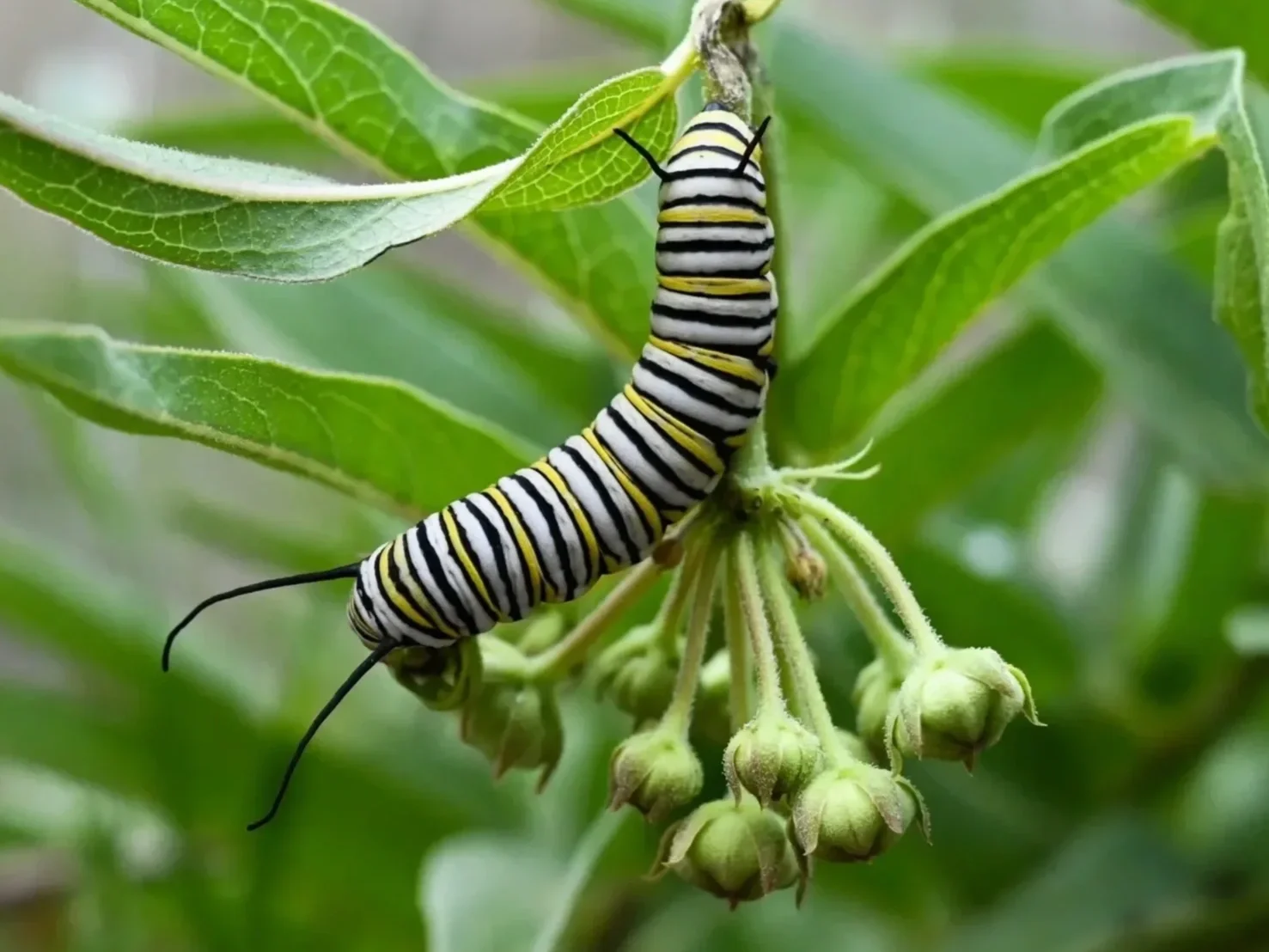
Monarch Caterpillar feeding on Antelope-horns Milkweed
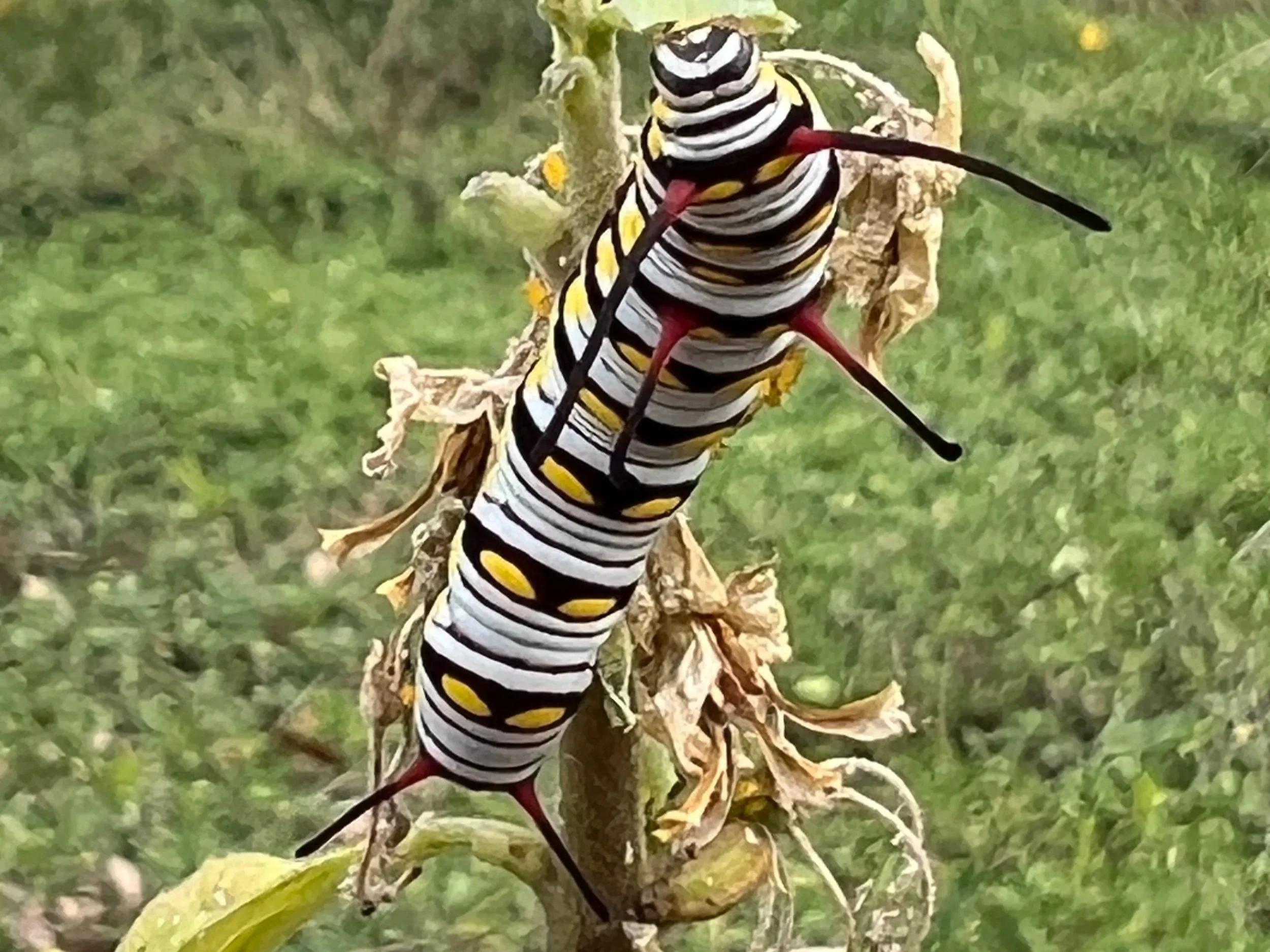
Queen Caterpillar feeding on Zizotes Milkweed
So, I knew the beautiful butterflies on my mistflowers were Queens, but why were they enjoying only the mistflowers and not the zinnias or cowpen daisies that were everywhere?
The Secret in the Mistflower
Well, come to find out, according to native plant groups, probably about 90% of the Queen butterflies were males sipping on nectar to get intermedine, a natural compound made by the mistflower that is poisonous to livestock but essential to Queen butterfly reproduction. The males convert the intermedine into a compound called danaidone, which is a pheromone that attracts the female. During mating, males transfer the leftover intermedine to the female as a “nuptial gift,” which she in turn passes to her eggs, helping make them unpalatable to predators. Wow! Isn’t nature great!
Add Gregg’s Mistflower to Your Pollinator Garden
So now, you may be considering planting some mistflowers in your pollinator/butterfly garden, too. It’s a Texas Superstar, native to Central Texas, growing 1.5–2 feet high and wide and blooming from March to November. It can be a bit aggressive when grown in ideal soil, spreading by rhizomes (horizontal plant stems that grow just below the surface, sending roots downward and new shoots upward). Mistflower grows in full sun to part shade and is drought-tolerant once established. Beware, though, deer do like to browse it.
For me, though, the spreading was worth it. One August morning, my Gregg’s mistflower became the center of a spectacular gathering of Queen butterflies, which led me to discover one more remarkable example of the amazing relationships between native plants and the wildlife that depends on them.