About the Cover…
Pollinator Week: June 22 - 28, 2026
All photos courtesy Betsy Cross
Betsy Cross
June is widely celebrated as National Pollinator Month, culminating in National Pollinator Week, an annual observance established by the U.S. Senate in 2007 to raise awareness about the importance of pollinators and the need to protect them.
When I think of pollinators, the first images that come to mind are the beautiful butterflies, bees, and other insects that visit my pollinator garden.
According to some sources, native bees are the heavy lifters, doing the vast majority of pollination work. They are followed by honey bees, butterflies and moths, hoverflies, wasps, and beetles. Near the bottom of the list are hummingbirds and bats.
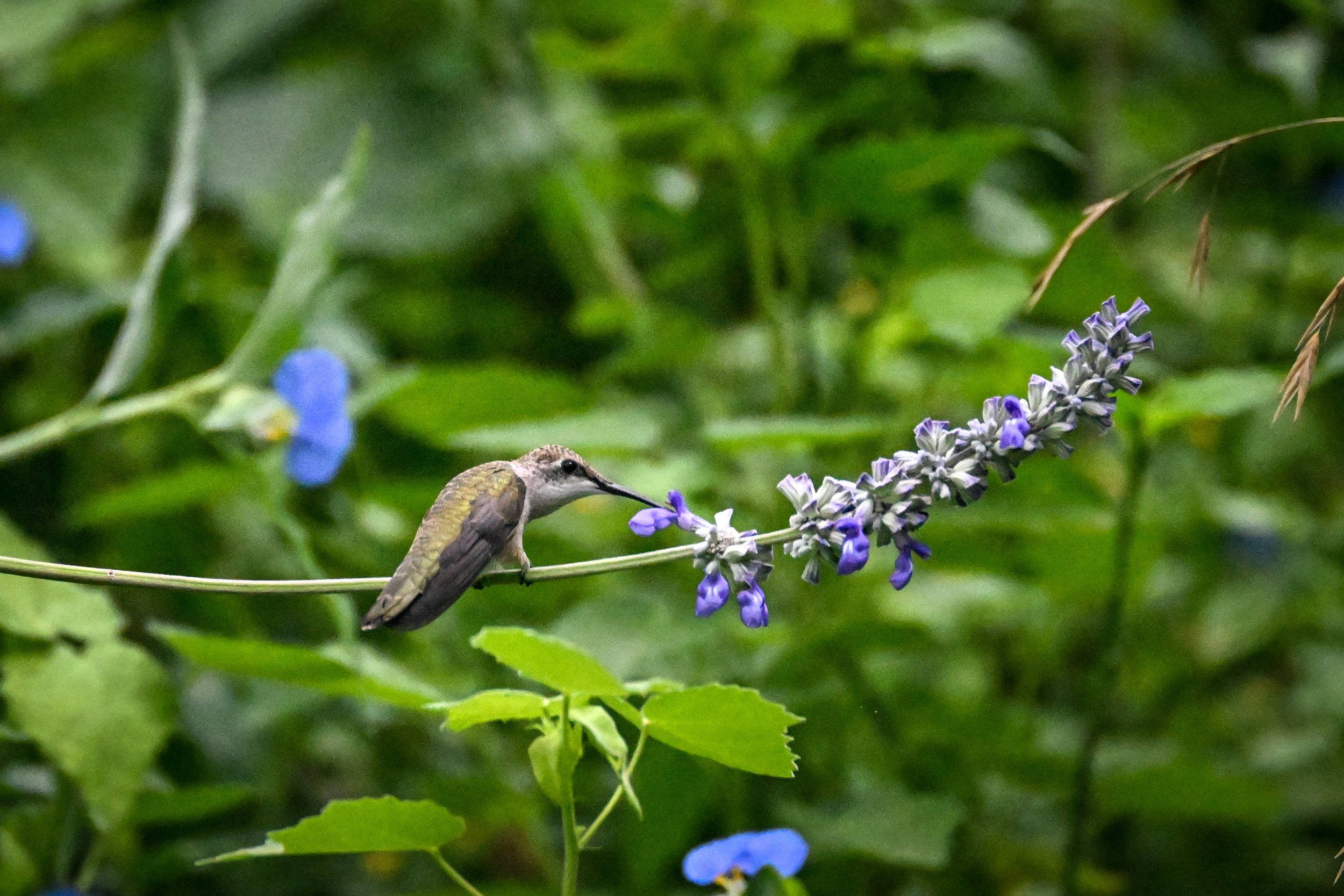
Rather than focus on the most common pollinators this month, I decided to share the activities of one little hummer that I watched from my home office window. She nectared on all of my flowering plants: mealy blue sage (both blue and white varieties), rock rose, autumn sage (white variety), and lemon mint (purple horsemint).
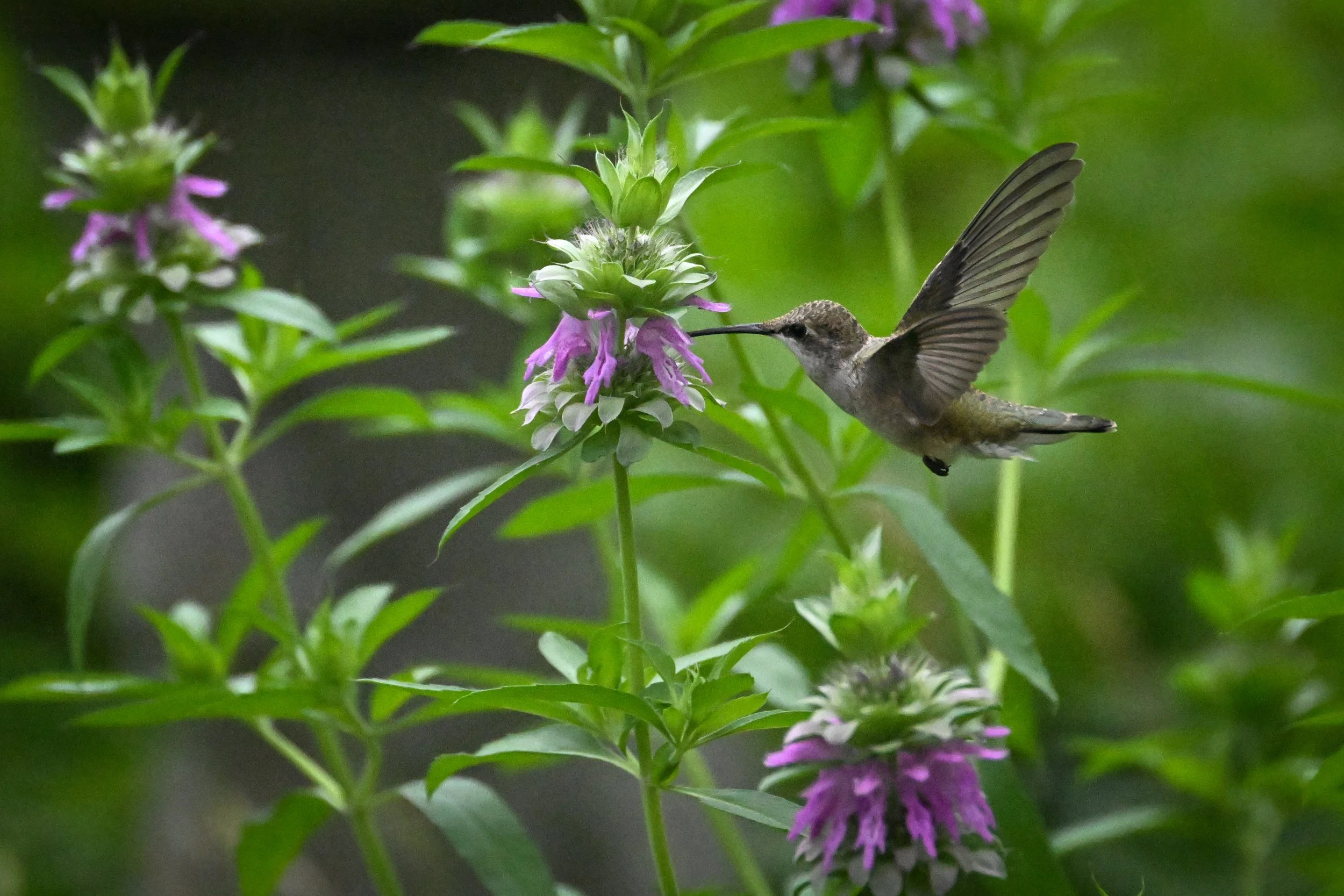
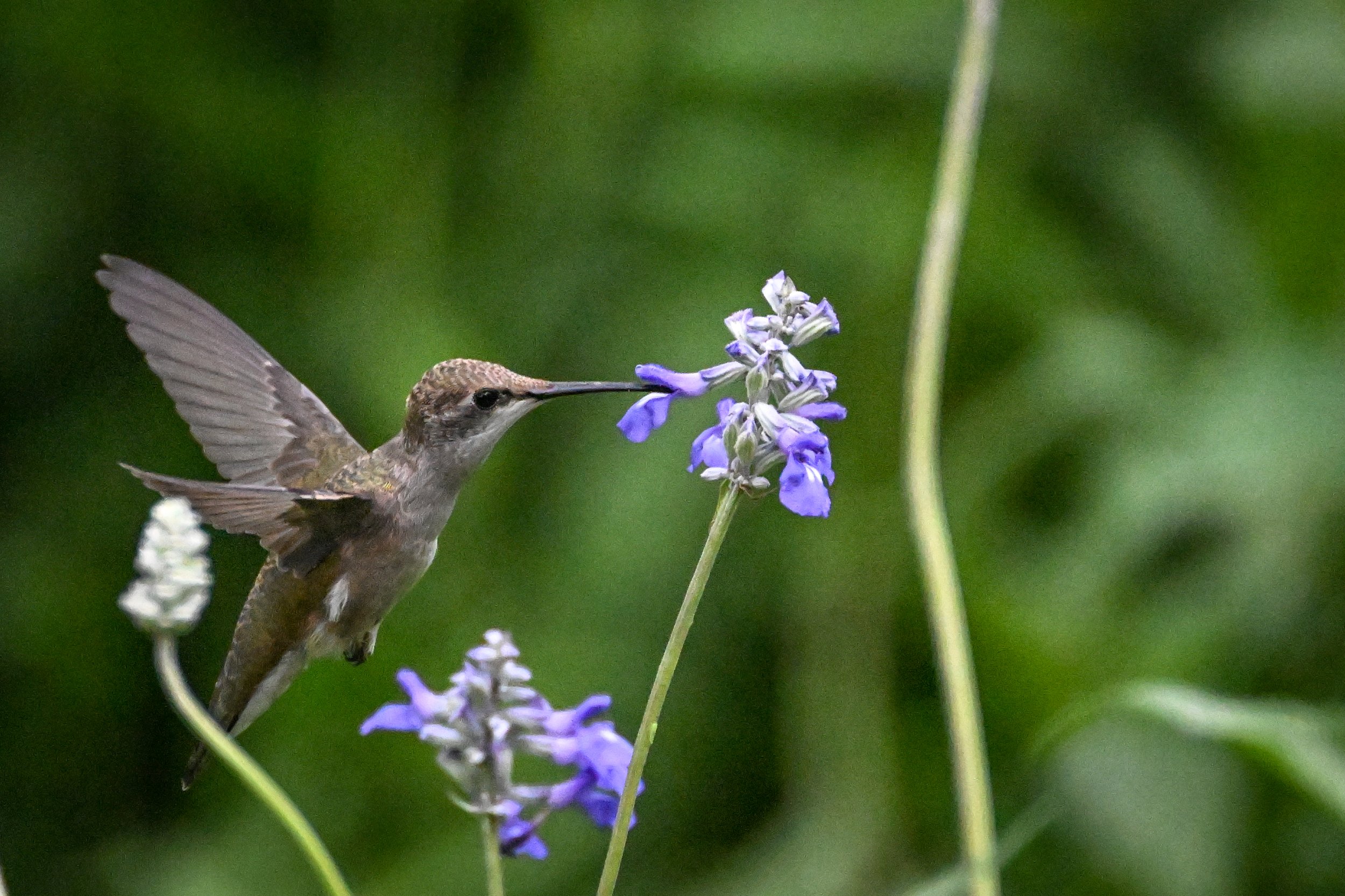
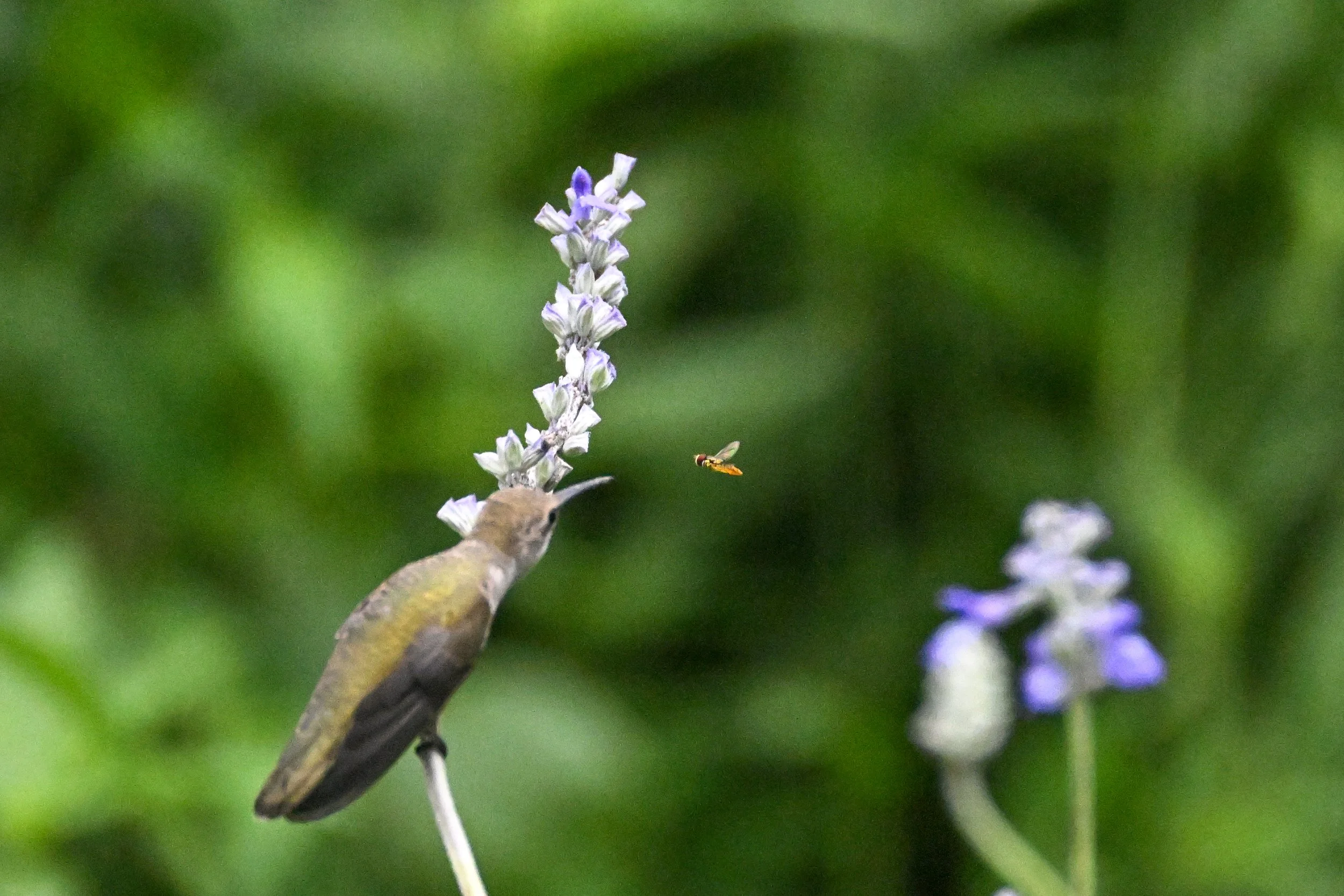
What interested me most about her behavior was her habit of buzzing among the flowers and then returning to the mealy blue sage to perch on its soft flower stems—sometimes nectaring from this resting position, or, in this case, appearing to intimidate a rival pollinator.
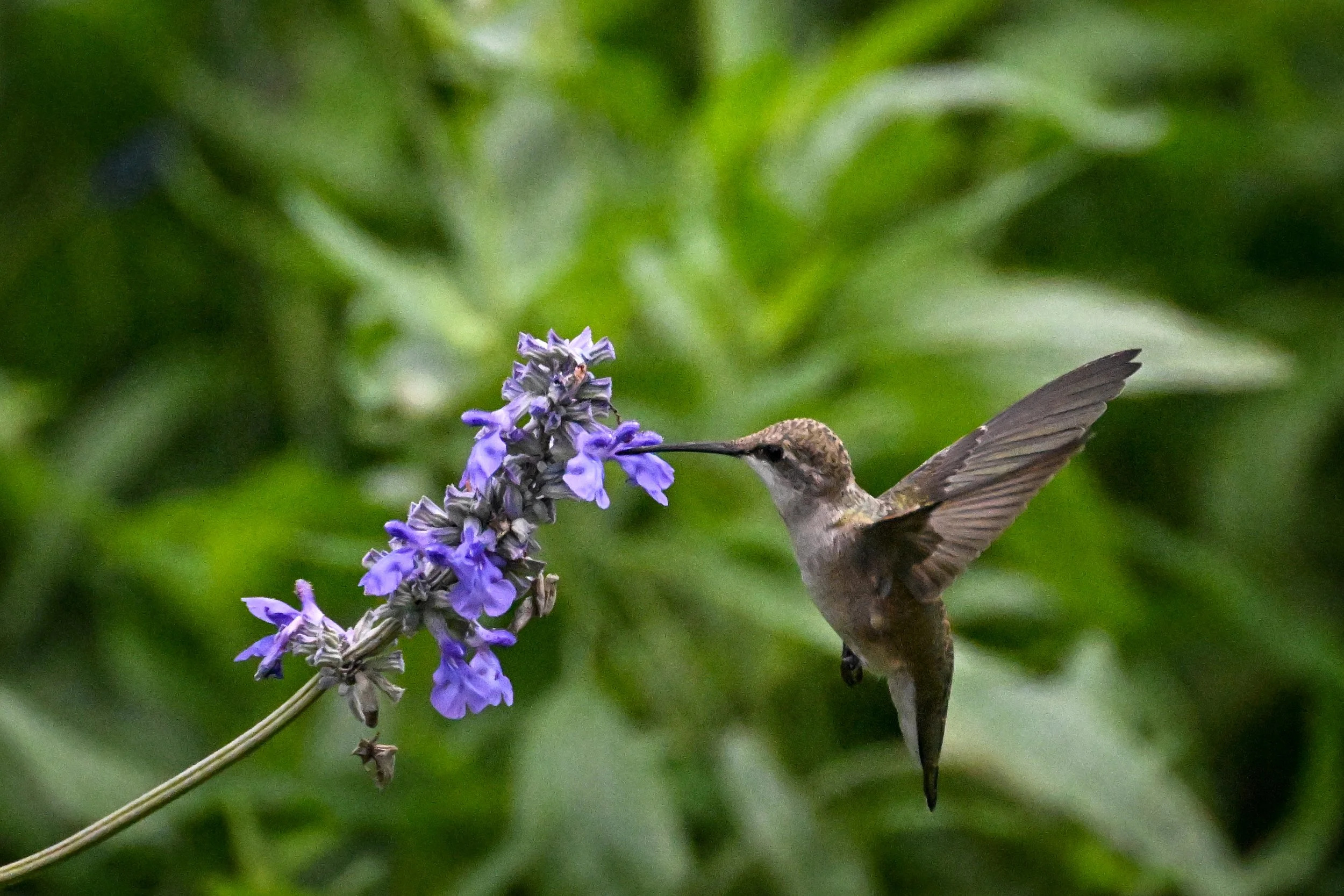
The mealy blue sage did seem to be her nectar source of choice.
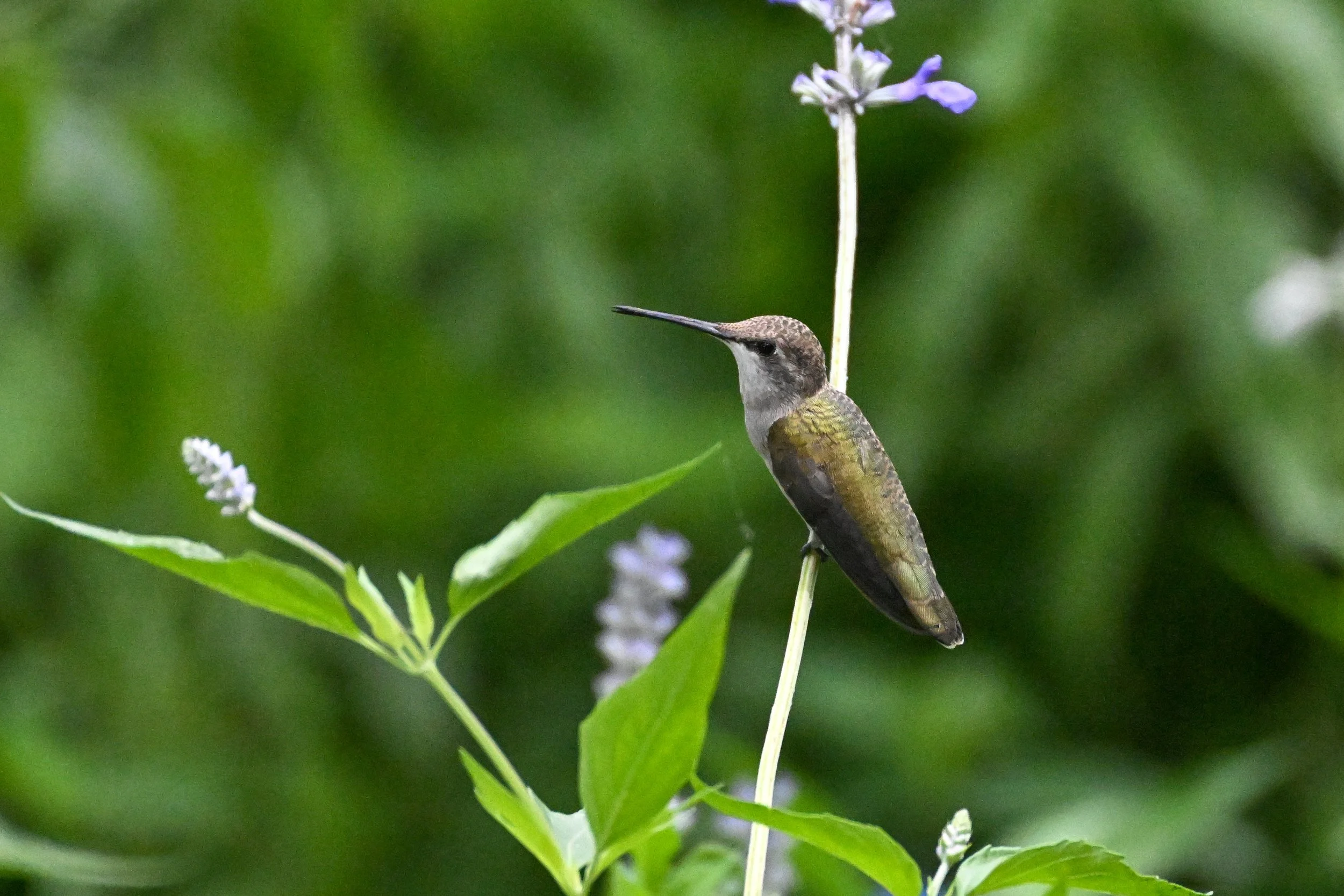
After visiting a few more flowers, she seemed to need another rest.
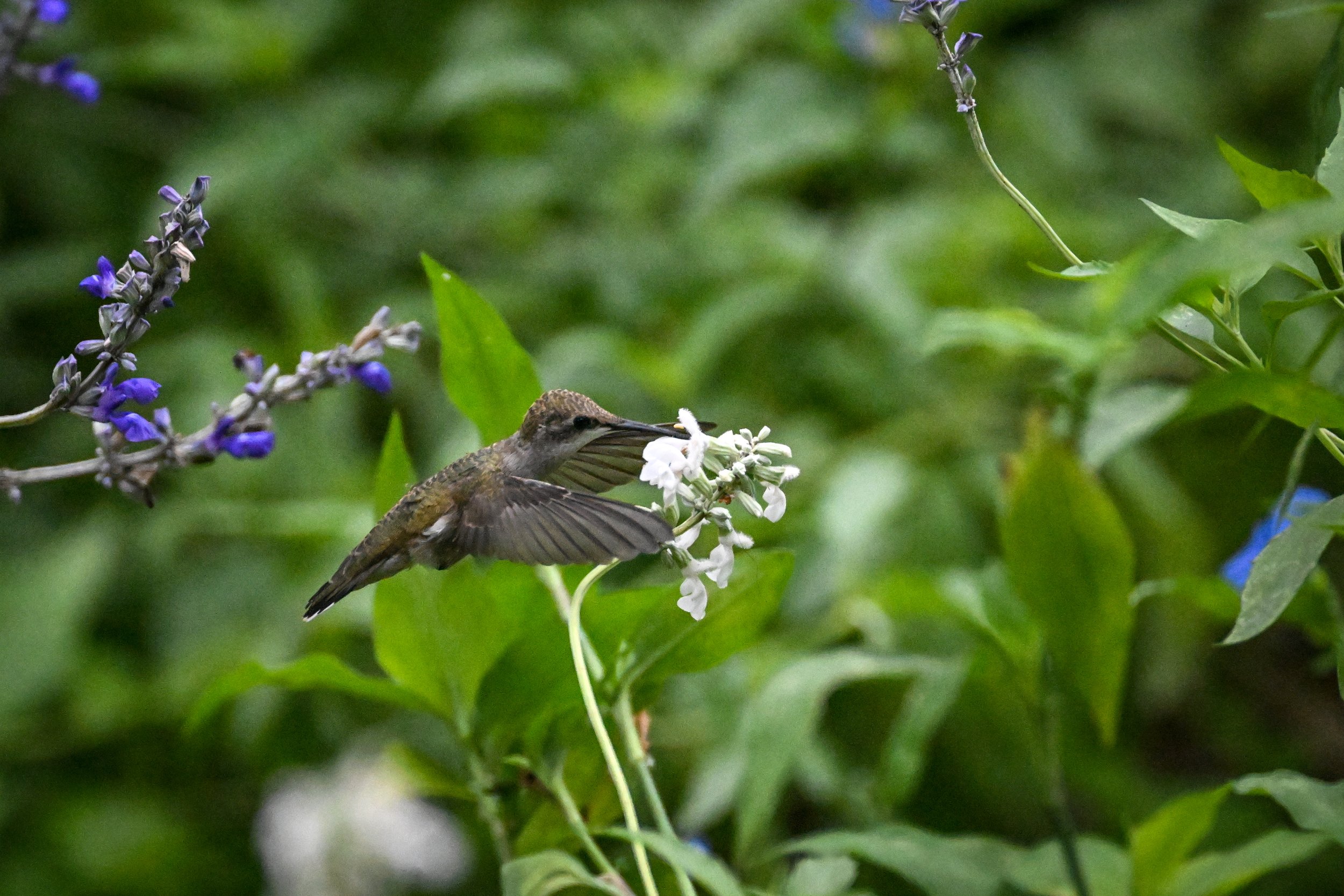
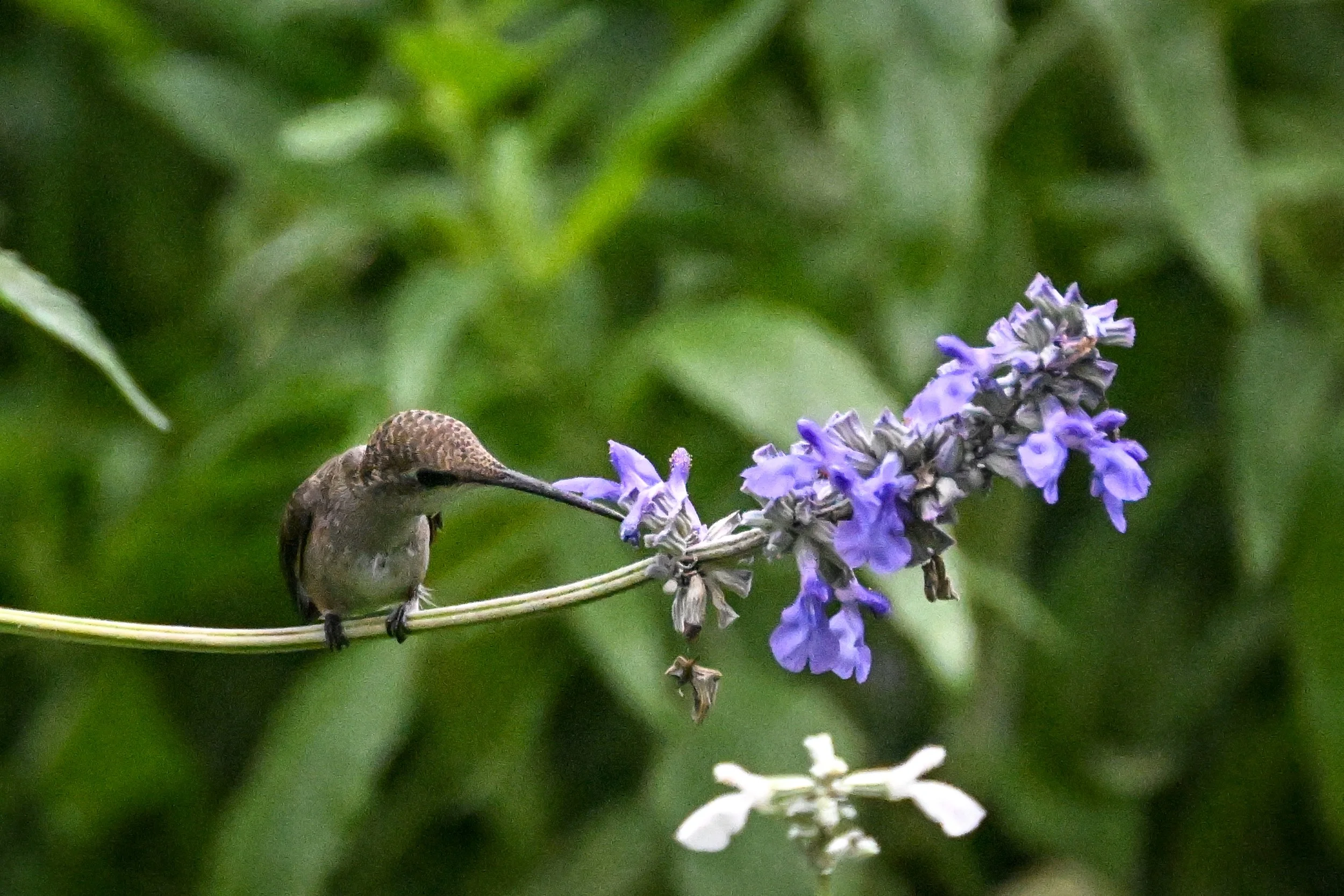
Before disappearing to parts unknown, she paused one final time on the mealy blue sage to rest and nectar. Of the many hummingbirds I’ve watched from my desk, she was the first I’d seen doing both at once.
National Pollinator Week, which ran this year June 22-28, is coordinated by Pollinator Partnership. Other organizations, such as the National Wildlife Federation, celebrate pollinators throughout the month of June.