About the Cover…
After the Rain
Jacob’s Well Natural Area—July 2026
All photos courtesy Betsy Cross
Leah Fenley Adrian with Betsy Cross
During one of her usual weekend walks through Jacob’s Well Natural Area, Betsy Cross checked the bird nest boxes and photographed the scenery along the way. Despite the late-July heat, the month’s generous rainfall had sparked an explosion of color—though on this visit, it was an unusual abundance of white blooms that caught her eye. Through Betsy’s photographs, we can share in the quiet joy of discovering the preserve in bloom.
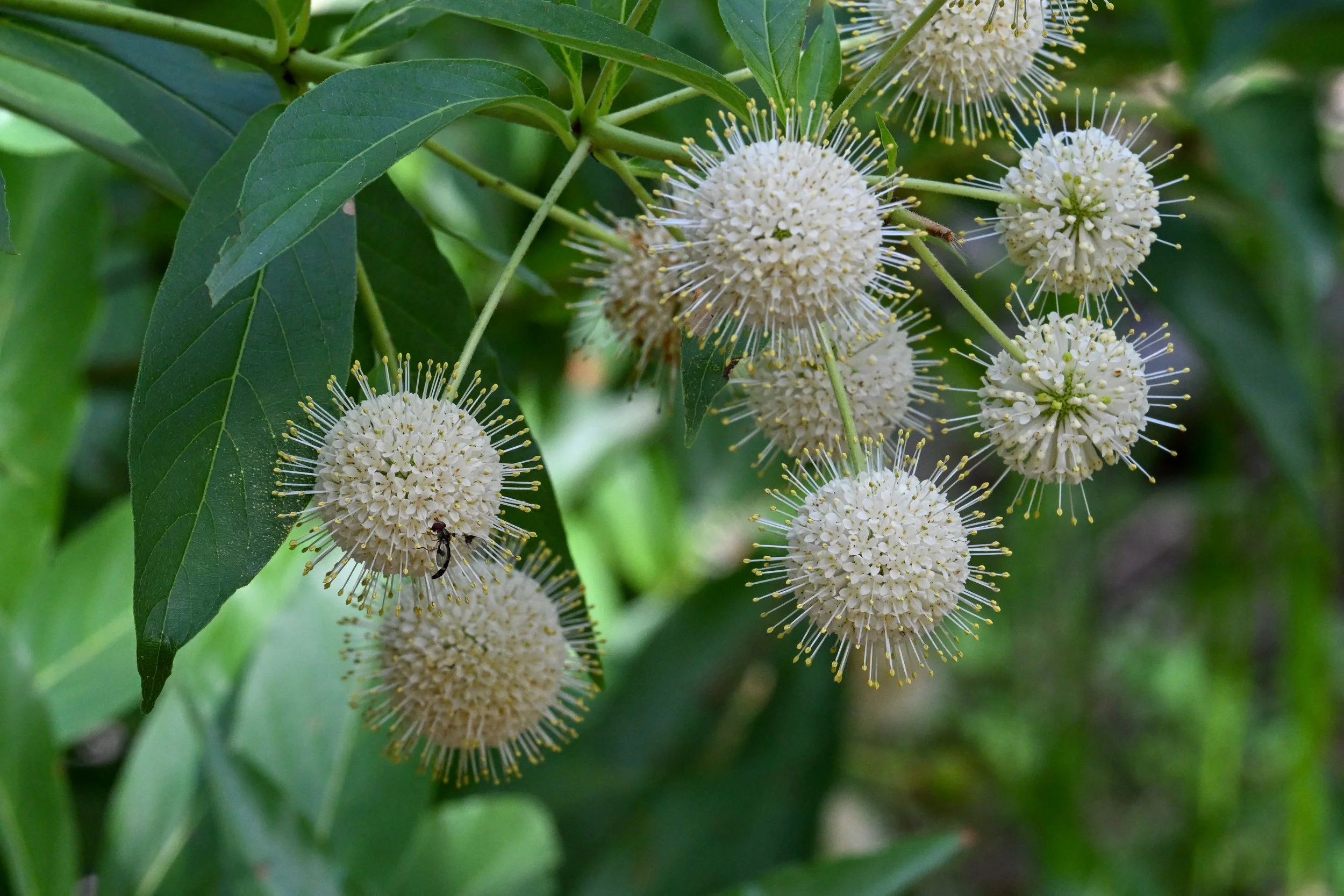
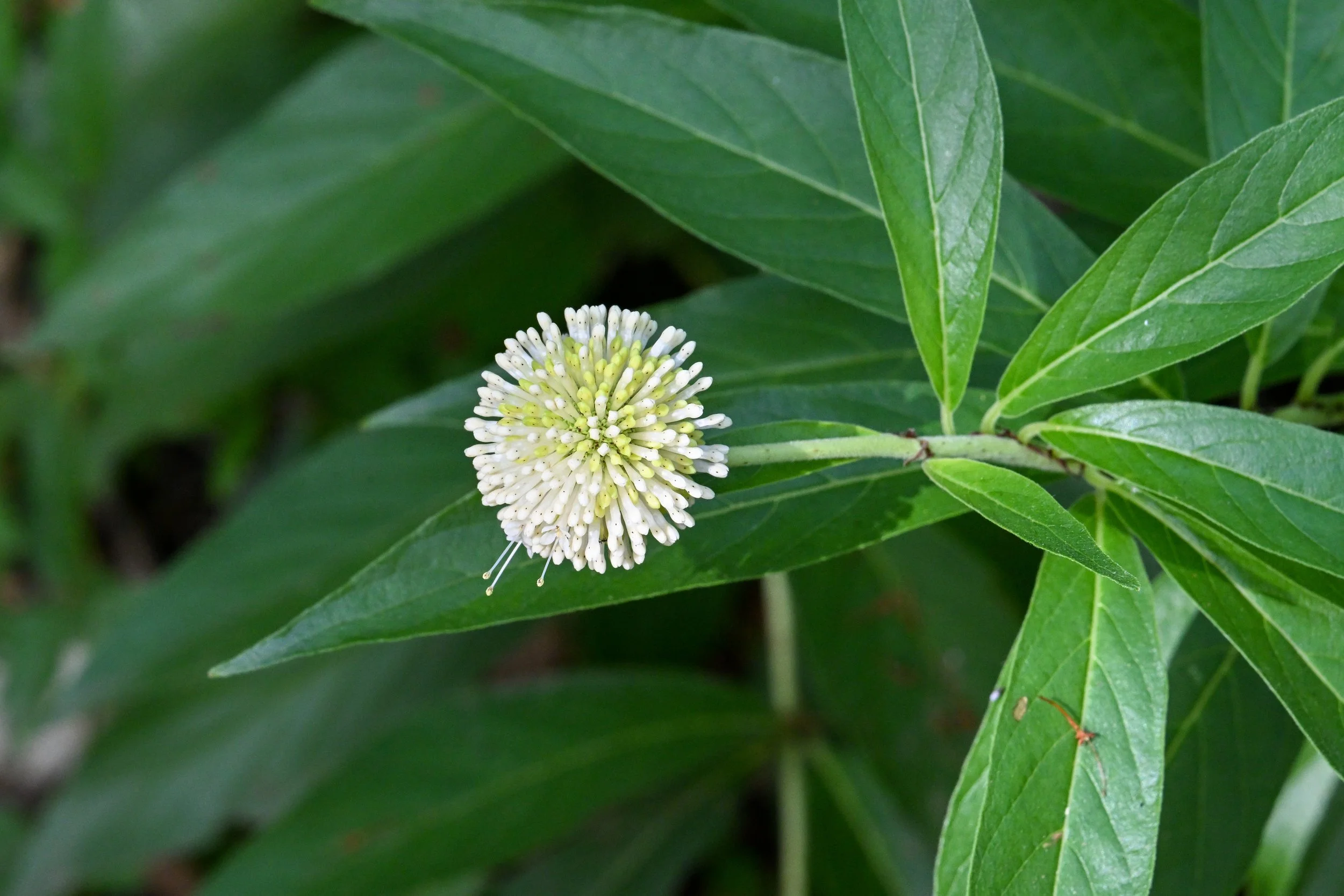
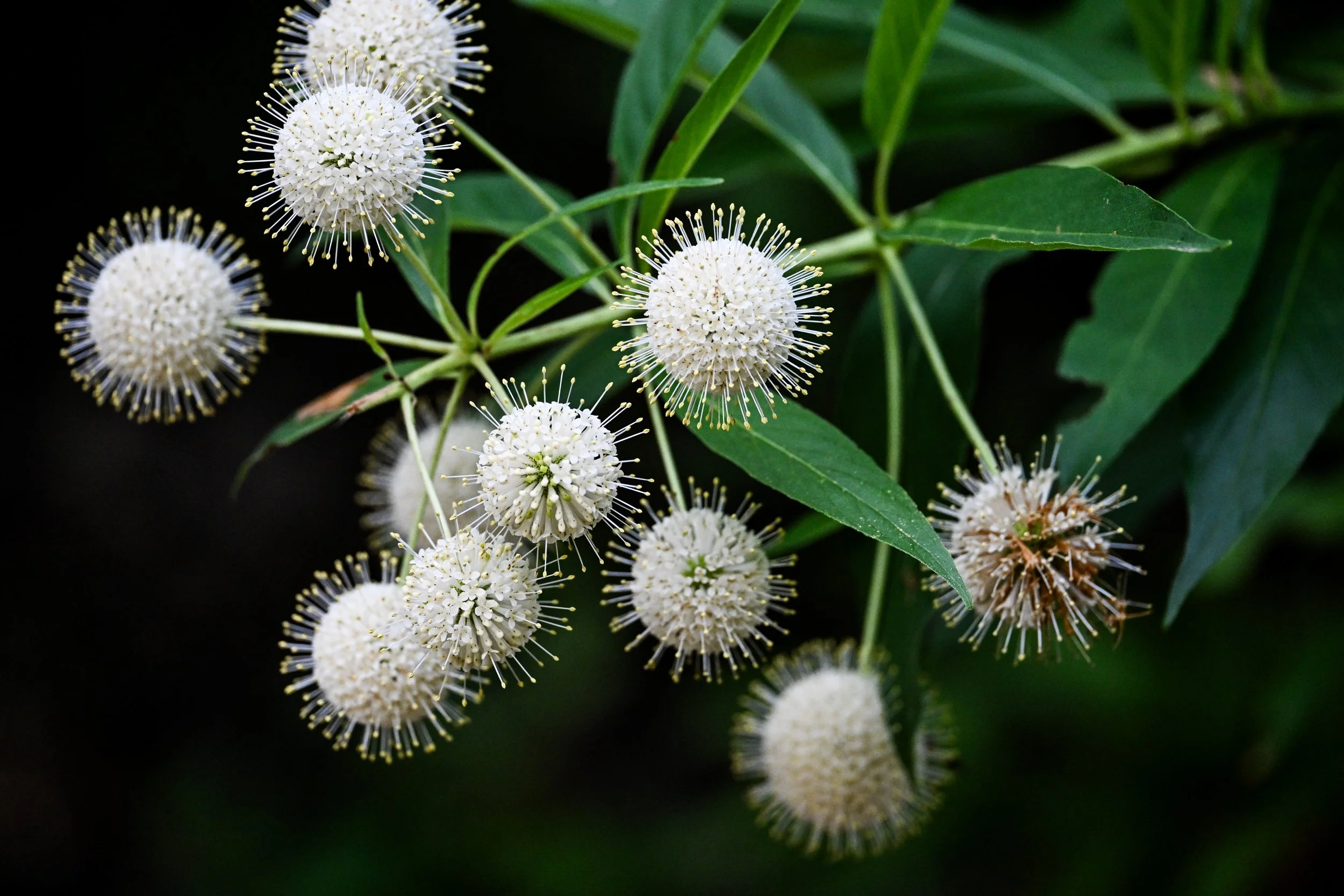
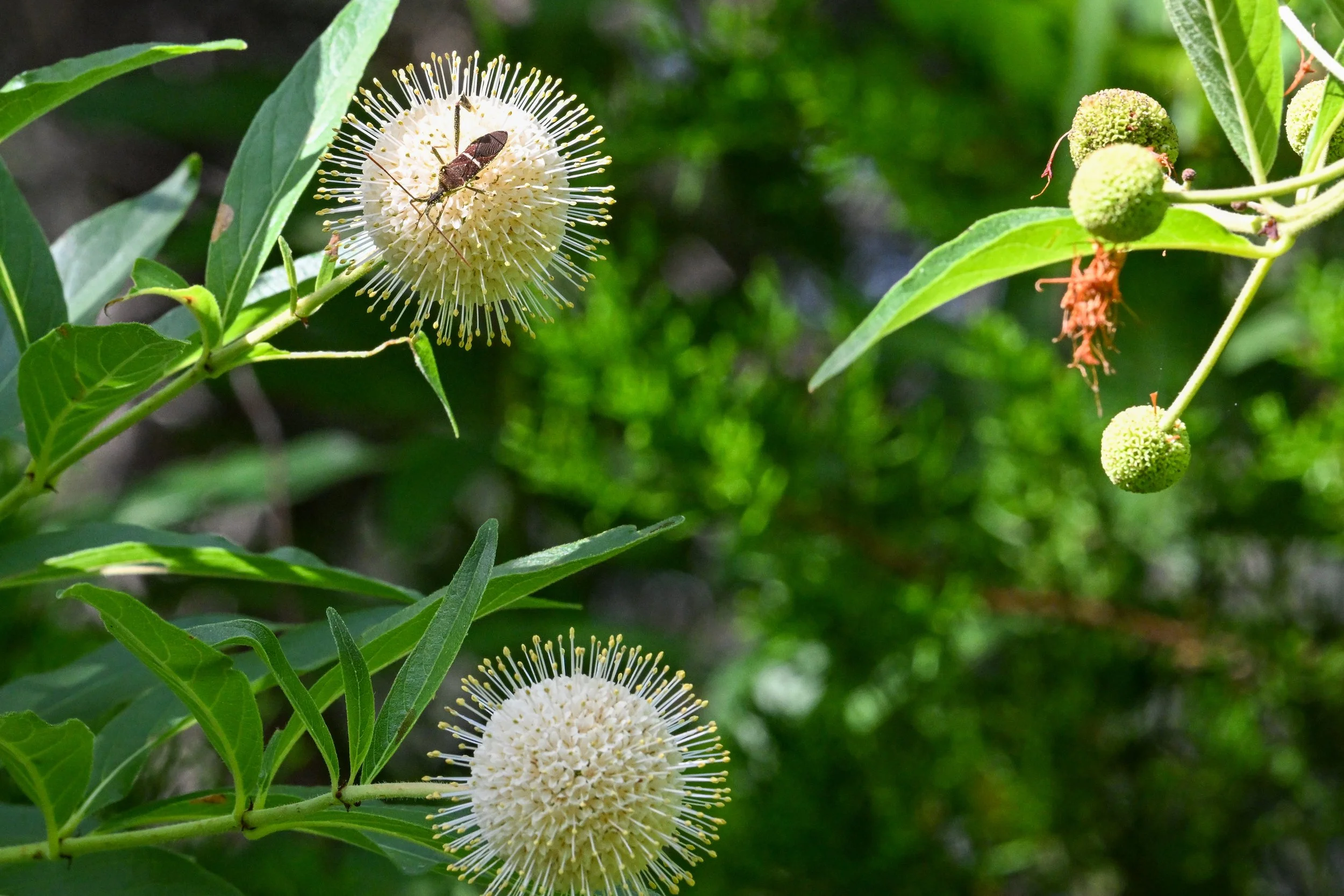
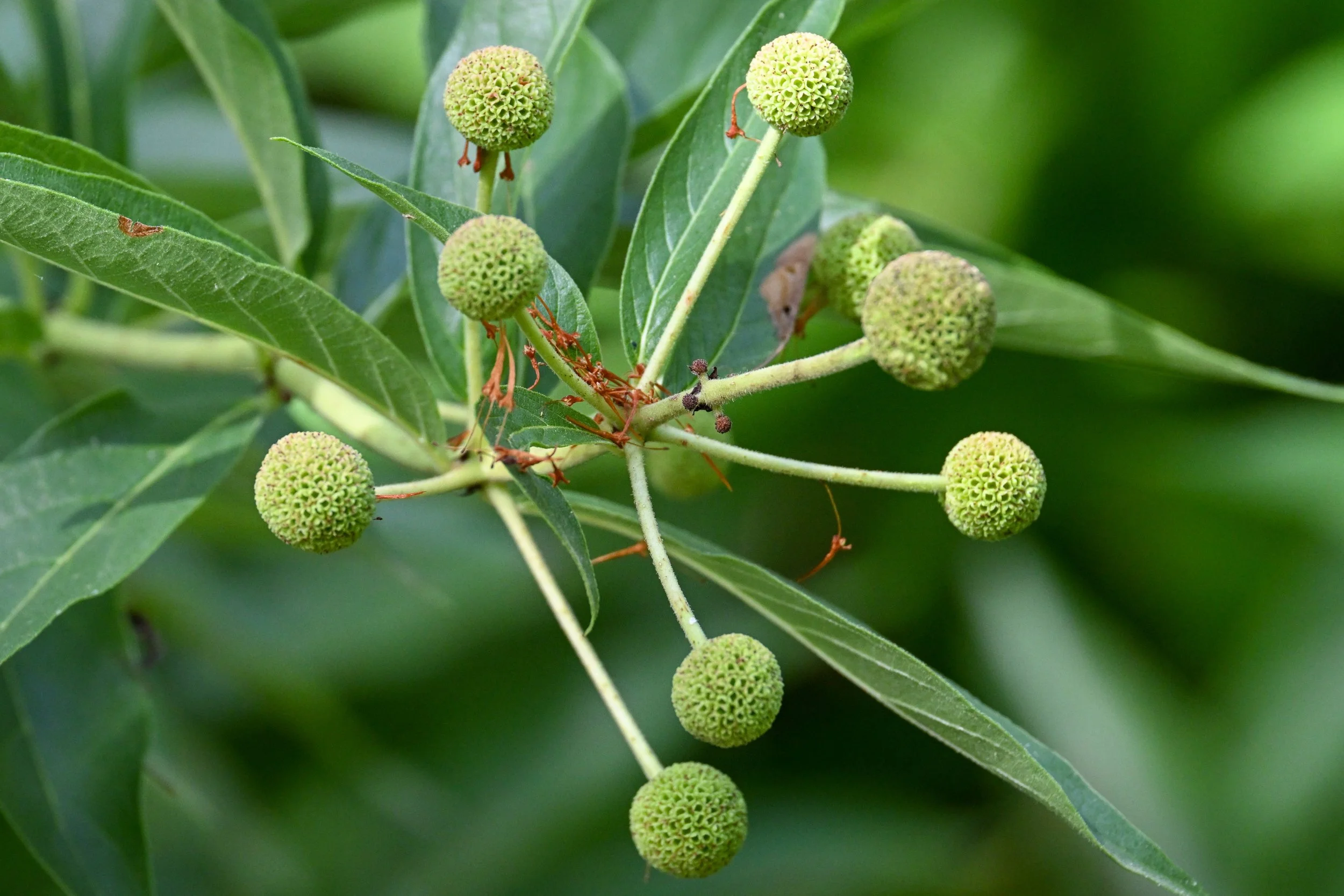
Buttonbush (Cephalanthus occidentalis)
From June through September, buttonbush brings a touch of whimsy to riparian areas, with spherical, Seussian blooms set against glossy, dark green leaves and twisting branches. Its nectar-rich flowers attract an array of insects and support honey production, while its seeds provide food for waterfowl and shorebirds. Handsome and ecologically valuable, it also makes a lovely addition to a home landscape.
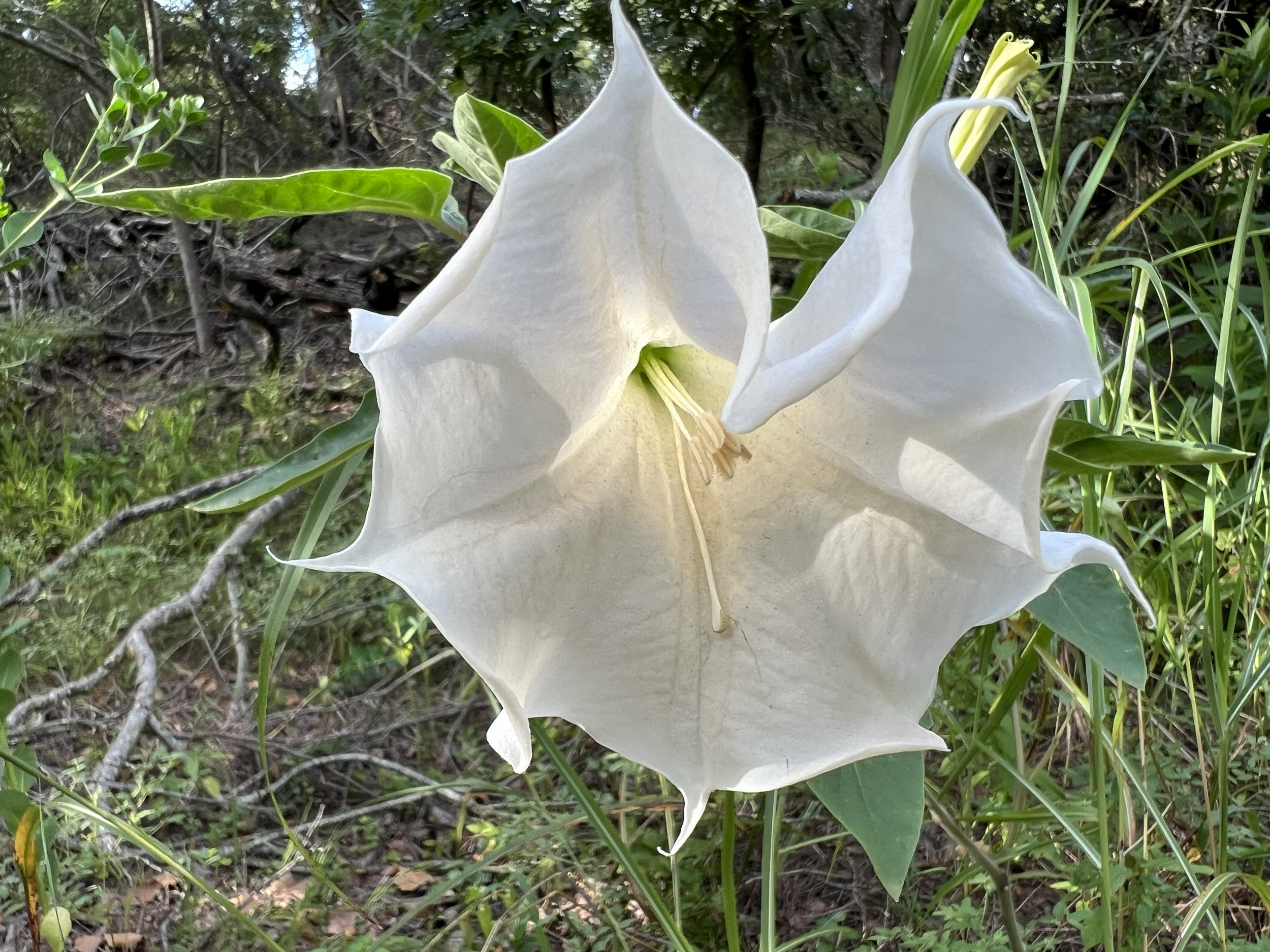
Sacred Datura / Jimsonweed (Datura wrightii)
From spring through fall, sacred datura unfurls enormous white trumpets that open in the evening, creating a bewitching scene in the night. The plant is closely entwined with sphinx moths: its leaves feed their caterpillars, while the hovering adults drink its nectar and pollinate the blooms. For thousands of years, some Indigenous peoples of the Southwest regarded datura as a powerful and sacred medicinal plant, incorporating it into healing practices, ceremonies, and oral traditions—but its beauty commands caution, as every part of the plant is highly toxic.
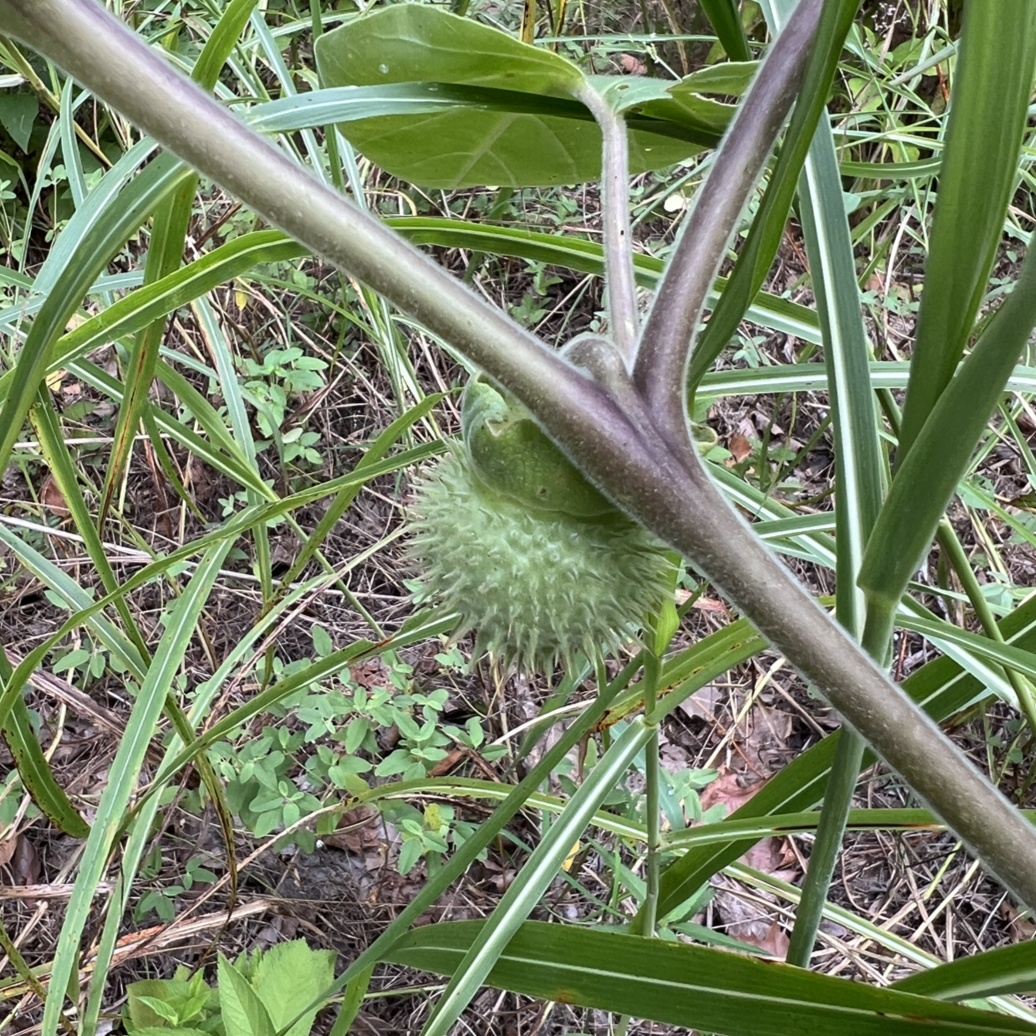
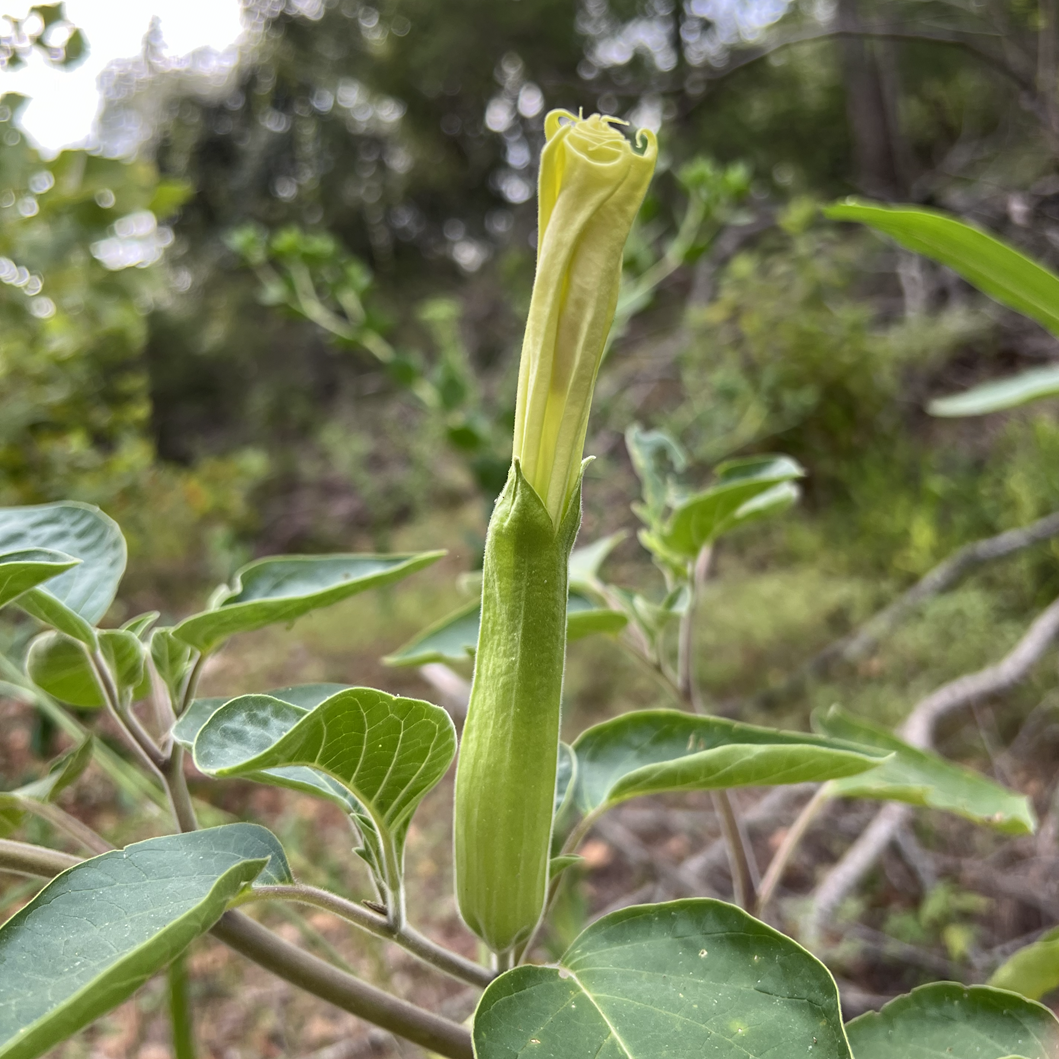
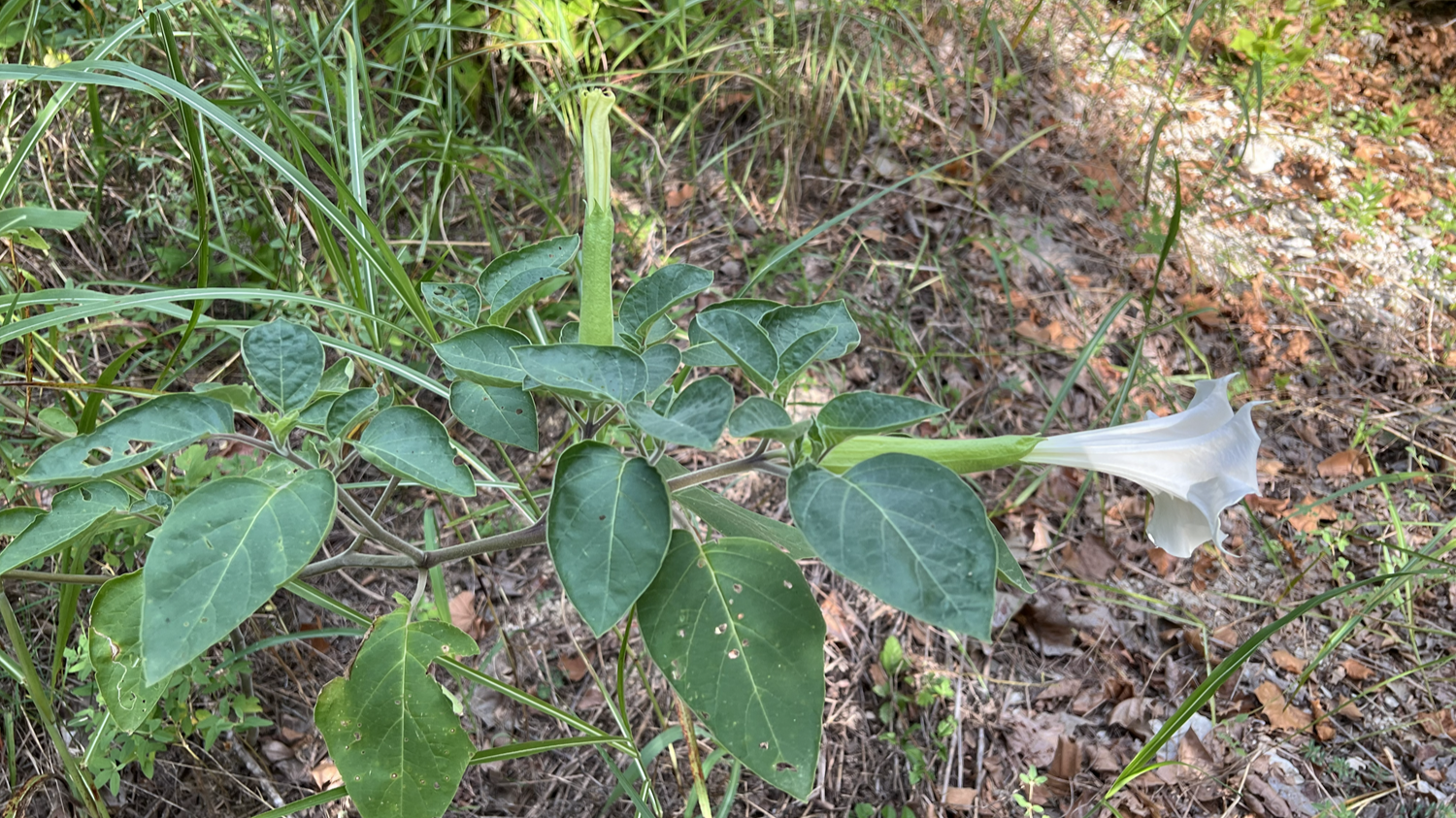
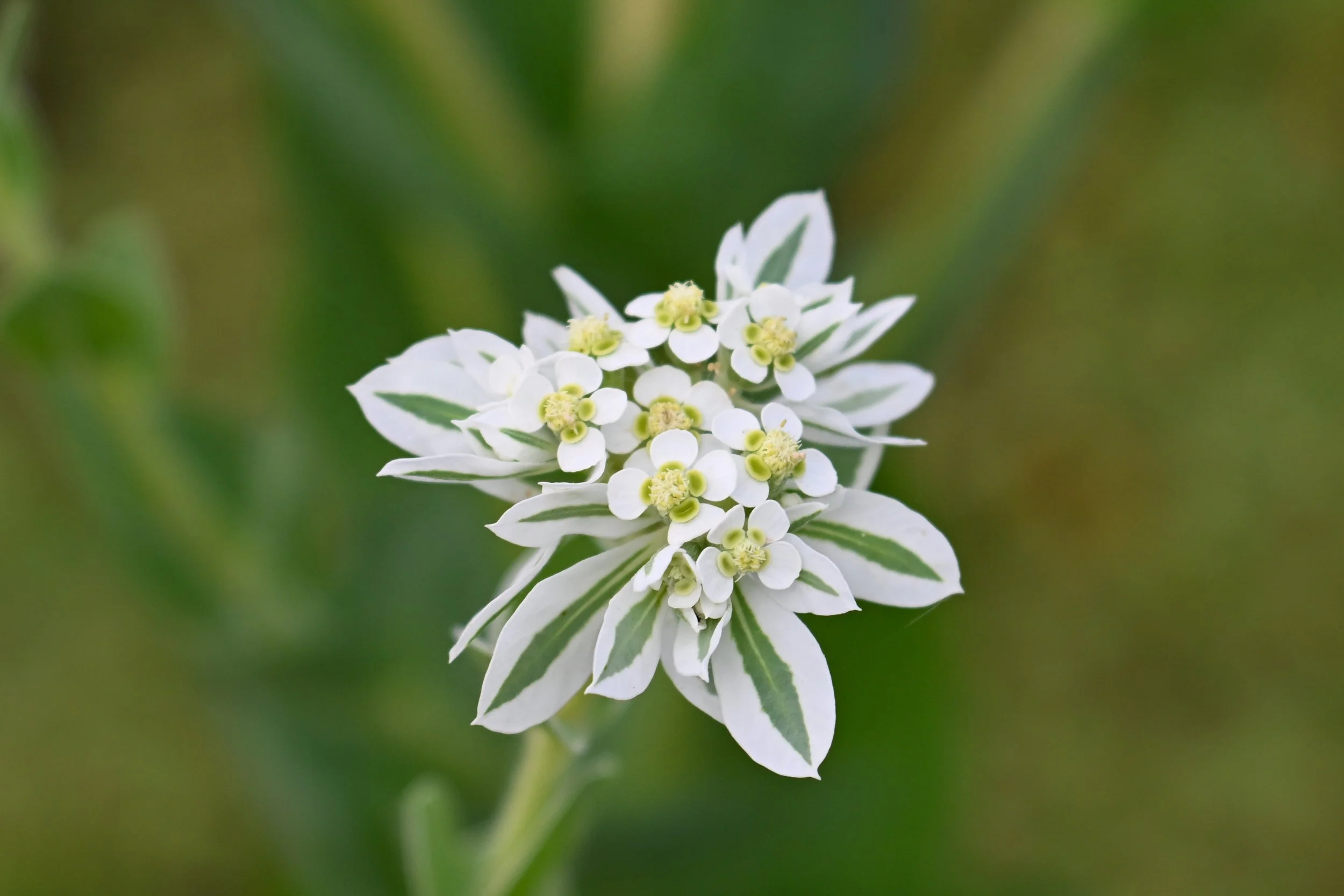
Snow-On-The Mountain (Euphorbia marginata)
From summer into fall, snow-on-the-mountain creates the illusion of a late-season snowfall, crowning its green stems with leaves edged in brilliant white. The true flowers are surprisingly tiny; it is the surrounding frosted bracts that produce the plant’s showy display and attract visiting pollinators. Beekeepers sometimes call honey made from its nectar and pollen “jalapeño honey” because it can irritate or burn the throat. This striking native annual thrives in dry, rocky soils, but admire it with care—its milky sap can also irritate the skin and eyes.
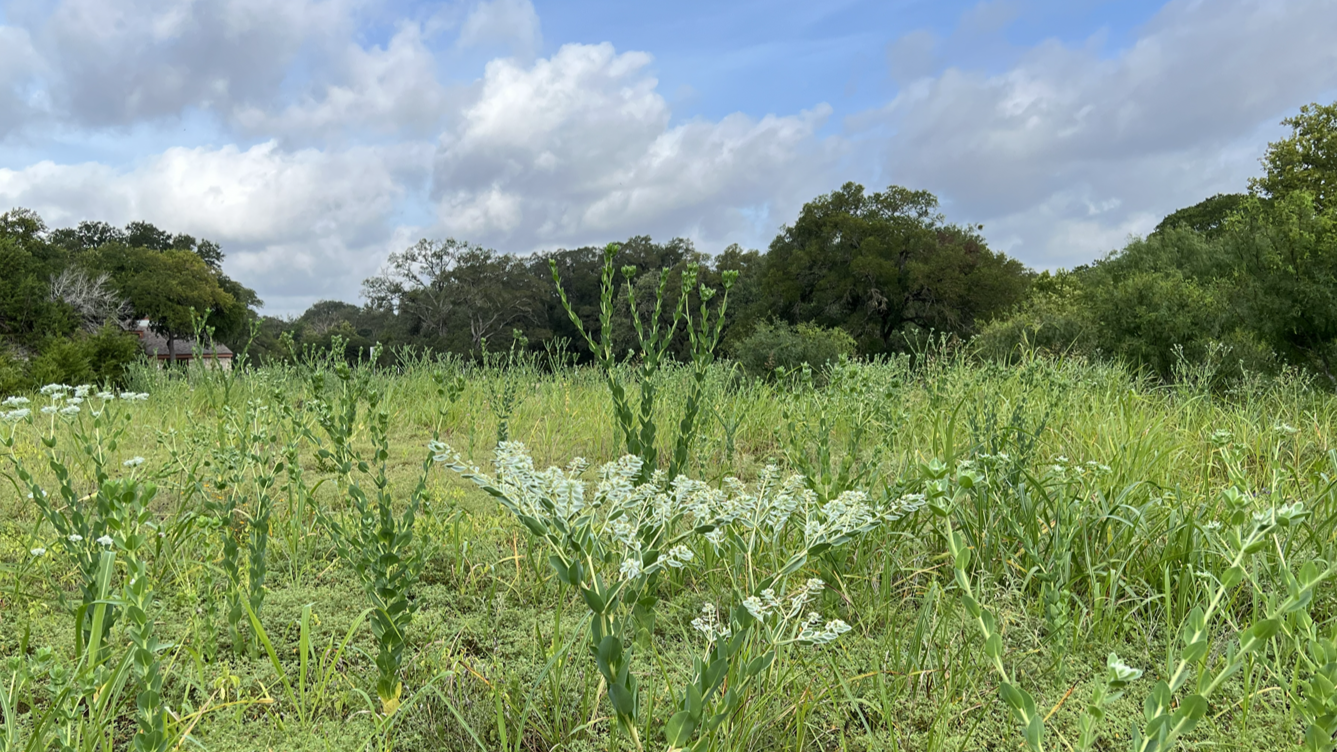
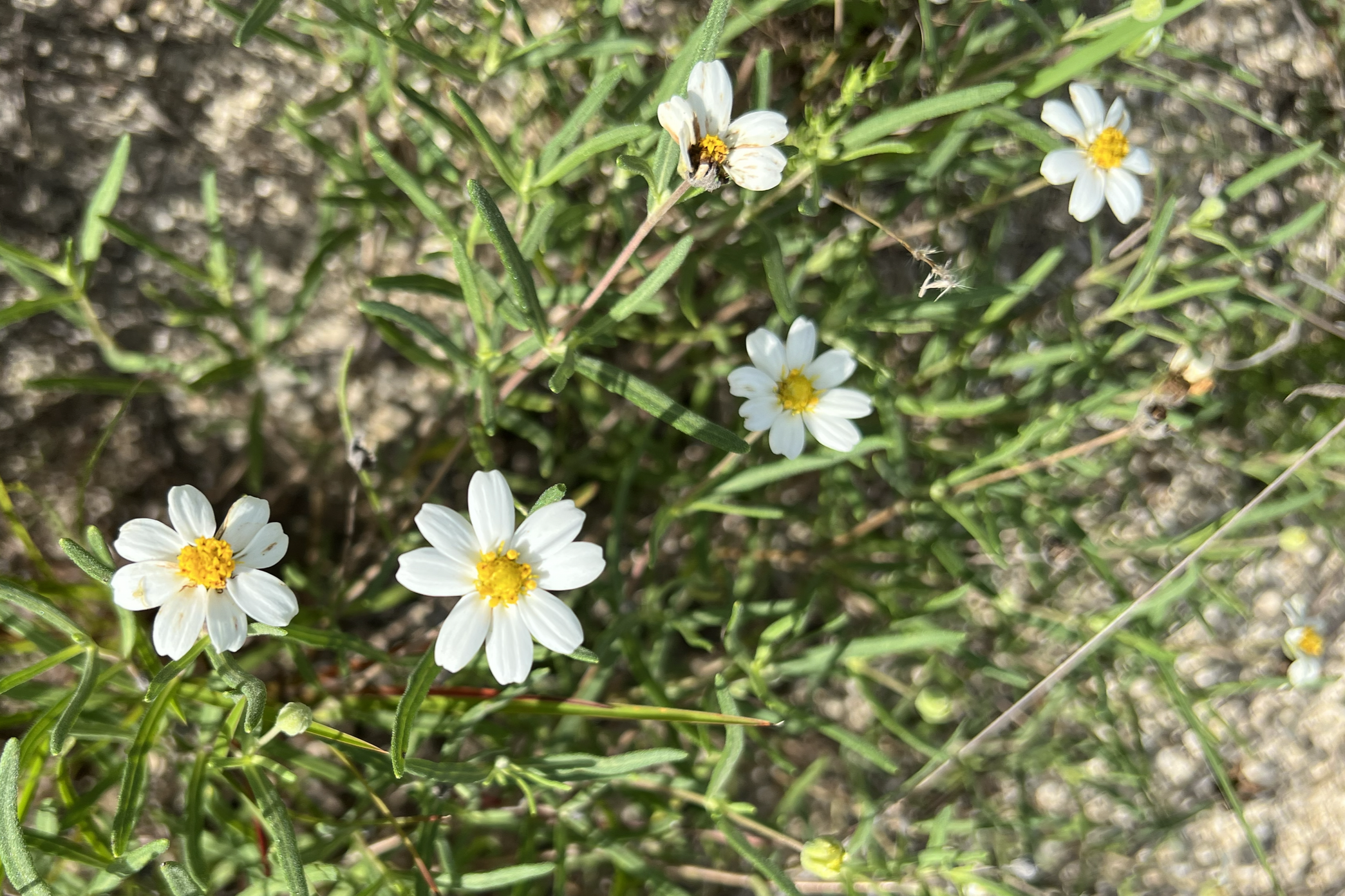
Blackfoot Daisy (Melampodium leucanthum)
From spring through fall, blackfoot daisy blankets rocky ground with cheerful white flowers surrounding sunny yellow central discs. They are basically the flower version of Dolly Parton—bright, charming, and far tougher than they look. This compact native perennial thrives in the heat, shrugging off drought and poor soils as long as its roots have excellent drainage. Its lightly fragrant blooms attract bees and butterflies, making this hardy little mound as valuable to pollinators as it is charming in the landscape.
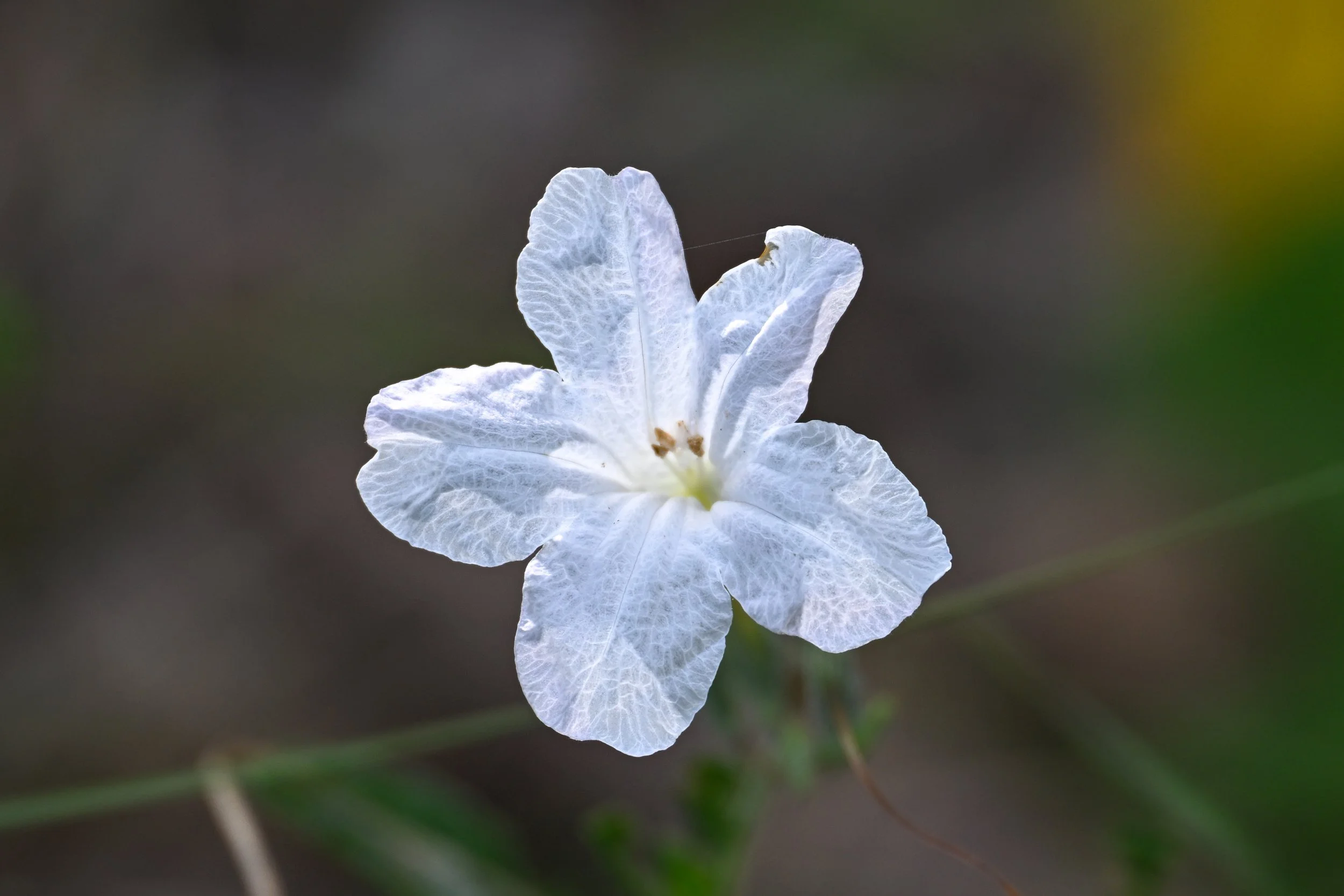
Wild White Petunia (Ruellia metziae)
From early- through mid-summer, wild white petunia lifts delicate, trumpet-shaped blooms above its soft green leaves, brightening limestone outcrops and rocky Hill Country soils. Despite its name, this Texas native is not a true petunia—and when it comes to gardening, it is firmly in its “leave me alone and watch me bloom” category. Heat, drought, and a little neglect suit it just fine, while its white flowers provide nectar for butterflies.
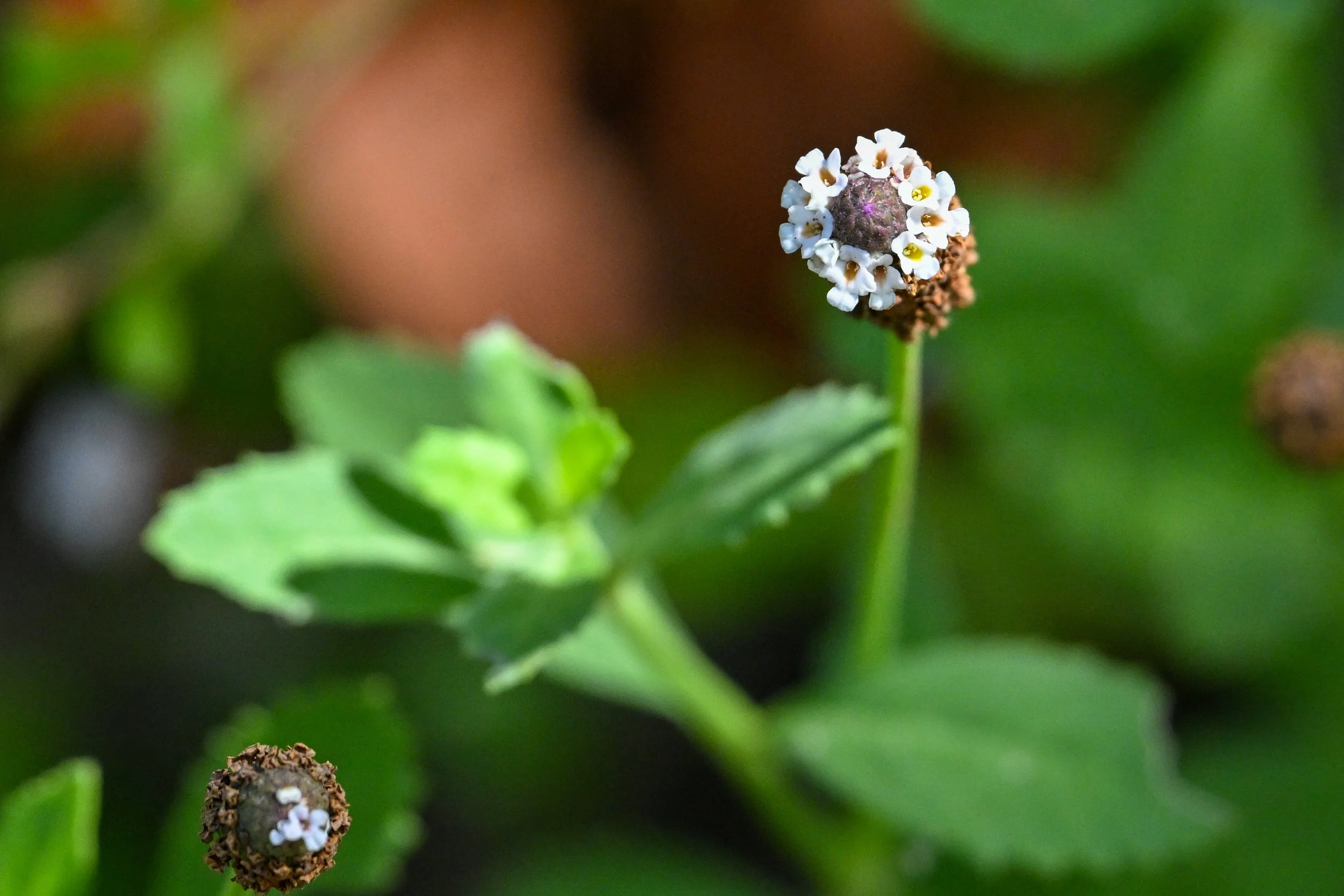
Frogfruit (Phyla nodiflora)
From spring through fall, frogfruit spreads a carpet of tiny white-and-purple blooms that attract bees, butterflies, and other pollinators. This tough native groundcover is a host plant for common buckeye caterpillars and happily tolerates heat, drought, foot traffic, and an occasional mowing. Frogfruit may be the low-maintenance friend that slowly takes over everything—but that’s okay: mow it down and walk all over it; it will still love you.